
Home>Research on Wars and Peace: Understanding Wars and Ending Them
21 April 2023
Research on Wars and Peace: Understanding Wars and Ending Them

What are the roots of wars and how have they evolved? How to build a lasting peace? Learn all about it in the latest issue of Cogito, Sciences Po's Research Magazine.
Given the egregious devastation caused by wars, the question of why they occur never ceases to be asked. The issue starts with this philosophical questioning, which takes shape in the analysis of different types of actual or potential conflicts: imperialism, nuclear threats, terrorism and counter-terrorism. It also looks at international justice, peacemaking and the conditions for their effectiveness.
Each of the contributions sheds light on Putin’s war against Ukraine. The goal of this issue is to equip us to establish lasting peace, if not the universal peace envisioned by Kant, who argued that democracies do not wage war against each other.
discover the issue on wars of peace of cogito, sciences Po's research magazine
As a teaser, read below the introduction written by Sergei Guriev, Sciences Po's Provost, and don't forget to suscribe to the Cogito newsletter.
Useful Knowledge About Wars and Peace
In his 1939 famous essay The Usefulness of Useless Knowledge, Abraham Flexner, the founding director of the Institute for Advanced Study in Princeton, argued that humanity greatly benefits from “the unobstructed pursuit” by scholars of seemingly “useless knowledge”. While Flexner himself was a very practical person (in particular, he played a key role in reforming medical education in the US), his essay is dedicated to research on questions that may seem to have no direct applications at the time of embarking on the initial study.
Fewer Wars, but Still Wars
Until last year, doing research on war could have seemed “useless” work. Indeed, after World War II, the world – in particular the West – has seemed to enter the era of eternal peace notably thanks to a sophisticated system of international institutions to protect it. As documented by Stephen Pinker, the level of violence around the world has declined substantially. In my own work, I have shown that this is the case even in non-democratic regimes.
Given the impression that the war was a species on the way to extinction, why would scholars choose it as a subject of their research? Was their work driven by their curiosity and would be generally ‘useless’ from the applied point of view? Unfortunately, as shown in this issue of the Cogito, despite the secular trend of decline in violence, wars are still very common. While the interstate war in Europe has indeed not happened since 1945, the rest of the world has seen many wars even in recent decades. Studies of peace negotiations, transitional justice, protecting and compensating war victims, peacekeeping operations, unfortunately, have remained very relevant.
They have become even more important in 2022 when Putin’s army invaded Ukraine. This is not just a large-scale interstate war in Europe. The invading country is the last remaining empire armed with nuclear weapons; its army is one of the largest in the world. Fortunately, Putin has not won this war; but the war has already caused a horrible suffering – and is still going on. This is why the articles that constitute this issue are so relevant – and immediately useful for understanding this war and its aftermath.
“Why War?” – A Philosophical Question?
Cogito starts with Frédéric Gros’ essay on the fundamental question, “Why war?”. While wars have taken place for thousands of years, to me, as an economist, this has always been a puzzle. War involves an enormous destruction of valuable resources. Victory is highly uncertain – and there have been many cases when the parties starting the war lost badly. Economists always argue that wars take place when parties underestimate the opponent’s military might (and Putin is certainly a great example of this). On the other hand, it is striking that wars still happen today – when information is more accessible and when gains from winning the war are at best very small while the costs are very large.
Frédéric Gros answers this question by departing from an individual logic to move towards the logic of the state. While the war brings suffering to the vast majority of individuals involved, it may create a major benefit to the state. In fact, being in a war, the state finds its raison d’être, its reason for existence. If there is a war, there is a state. Starting a war can only be done by the state. When the war is started, citizens need a state to win it. Therefore, in order to understand the state, we need to understand the relationship between the citizens and the state. If the state represents the citizens’ interests and only them, wars should be very unlikely – hence the famous conjecture of “democratic peace” which dates back to Kant’s essay Perpetual Peace (1795).Democracies do not engage in wars with other democracies.
Read here: "Why War?" – A Philosophical Question?
Counterterrorism: How to Systematically Fail
Didier Bigo, however, reminds that democracies have engaged in many military interventions in recent decades – mostly pursuing the cause of “counter-terrorism”. Didier explains why counterterrorism operations are so likely to arise – but also why they are very likely to fail. Didier documents the consensus among researchers and practitioners that counterterrorism is rarely effective as a means of protecting civilians – nor in terms of foreign policy. The reason is that by definition counterterrorism is different from conventional war, in particular, because it is hard to identify the enemy.
Read here: Counterterrorism: How to Systematically Fail.
Putin’s 2022 war is often compared to a terrorist action. His barbarian attacks against Ukrainian cities and energy infrastructure are indeed a typical terrorist rather than a military strategy. In the beginning of the war, Putin tried to take the whole world hostage by blockading Ukrainian grain exports. The research on counterterrorism implies that Ukraine and the West should prioritise (as they are already doing) Russian military targets rather than engage in counterterrorism-like operations on Russian territory.
Essays by Benoît Pelopidas and Sabine Dullin bring us back directly to Putin’s 2022 war.
Addressing Nuclear Vulnerabilities
Benoît Pelopidas addresses the most important fear we have when we discuss standing up to Putin – the fear of nuclear war. Benoît’s research shows that public opinion is very badly misinformed regarding the world’s nuclear arsenal and the risks of the use of nuclear weapons, not only for their use but simply of possessing them, considering that a flaw or an error cannot be excluded.
He discusses the intricate relationship between the salience of public debate about the “nuclear option”, the credibility of being ready to use nuclear deterrent, and the trust of the public in nuclear.
Read here: Facing Nuclear Vulnerabilities.
Imperialism Revealed in the War. Russia Exposed
Sabine Dullin discusses the other dimension of this war: Russia is one of the last empires (if not the last remaining), and the 2022 war is the imperial war against its former colony’s independence. Both the invasion and Putin’s inability to win his war are triggering demands for further decolonisation of Russia.
While Russia today is much smaller than the Tsarist or Soviet empire, Russian “Federation” still includes many ethnic “republics” that may want to opt for real autonomy or full independence. The war has suddenly surfaced this debate and, as Sabine writes, 2023 is already considered by a number of indigenous citizens of the Russian Federation as the "year of decolonisation".
Read here: Imperialism Revealed in the War. Russia Exposed.
Armed Conflict: The Growing Impact of International Law
The article by Adam Baczko responds to another question raised by Putin’s invasion. Does his blatant violation of international law mean that international law does not exist – or does not matter? On the contrary, Adam argues, in recent decades, international law has grown ever more important for all its perpetrators – who are increasingly aware of its existence and are investing more efforts in trying to circumvent it. This is evidence that international law is as sophisticated and as binding as ever. Adam also discusses the role of social media which makes hiding violations of international law very difficult.
Read here: Armed Conflict: the Growing Impact of International Law.
Regarding The Effectiveness of Transitional Justice
Helena Alviar Garcia and Julie Saada examine another fundamental aspect of war justice aiming to pacify societies torn by conflict.
Helena Alviar Garcia studies transitional justice for victims of the war, losing their property, including homes. Helena discusses the advantages and shortcomings of alternative ways for compensating the losses, in particular payment of reparations or rebuilding the destroyed assets.
Read here: Transitional Justice and Property: Inextricably Linked.
Julie Saada discusses the trade-off – or even dilemma – between the search for truth and the establishment of justice in the context of war crimes. Some critics argue that in order to uncover the truth, we need to offer amnesty and thus forego justice. In today’s world, however, and especially in the context of the 2022 war in Ukraine, the first large-scale war in the era of social media, it is very likely that we will be able to establish individual crimes. Julie compares this situation to the Nuremberg judgment which demonstrated that these kinds of trials not only can exact justice; they also make it possible to avoid revenge against the whole group. This per se can help post-war reconciliation between nations. This is why truth and justice are not only compatible; the combination of the two is highly desirable.
Read here: Truth Without Justice? The Law and Mass Crimes.
UN Peacekeeping: 3 Strategies on the Ground
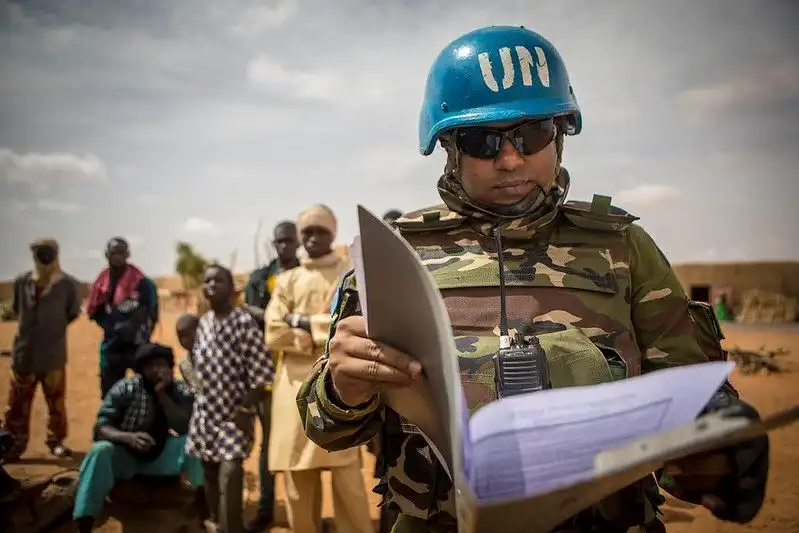
While one cannot predict how the war of Russia against Ukraine is going to end, it is not unlikely that we will need the intervention of UN peacekeepers. Chiarra Ruffa’s article provides a data-rich discussion of the history of UN peacekeeping and argues that it has mostly been a success – well beyond the conventional wisdom. Chiarra also discusses the growing t diversity and heterogeneity of UN peacekeeping missions, which often poses problems of cooperation between troops of different cultures. Based on field observations, it presents the three strategies used by the soldiers to cope with this diversity and analyses their impact and the key factors of success, in particular, the meaning-making.
Read here: UN Peacekeeping: 3 Strategies on the Ground.
The meaning of Putin’s invasion of Ukraine is very clear; there is no ambiguity on where there is good and where there is evil in this war. Unfortunately, the scholars of war and conflicts – in particular those, whose work is featured in this issue of the Cogito – continue to produce useful rather than useless knowledge. Let’s hope that this will change in the future.
Finally, I have to point out that this issue is a small overview of research conducted at Sciences Po by some thirty researchers and more than twenty-five PhD students from all disciplines whose work deals with conflict.