
Home>Making the state care: the history of a local policy
31 March 2026
Making the state care: the history of a local policy
About this event
31 March 2026 from 17:15 until 19:00
Outside Sciences Po
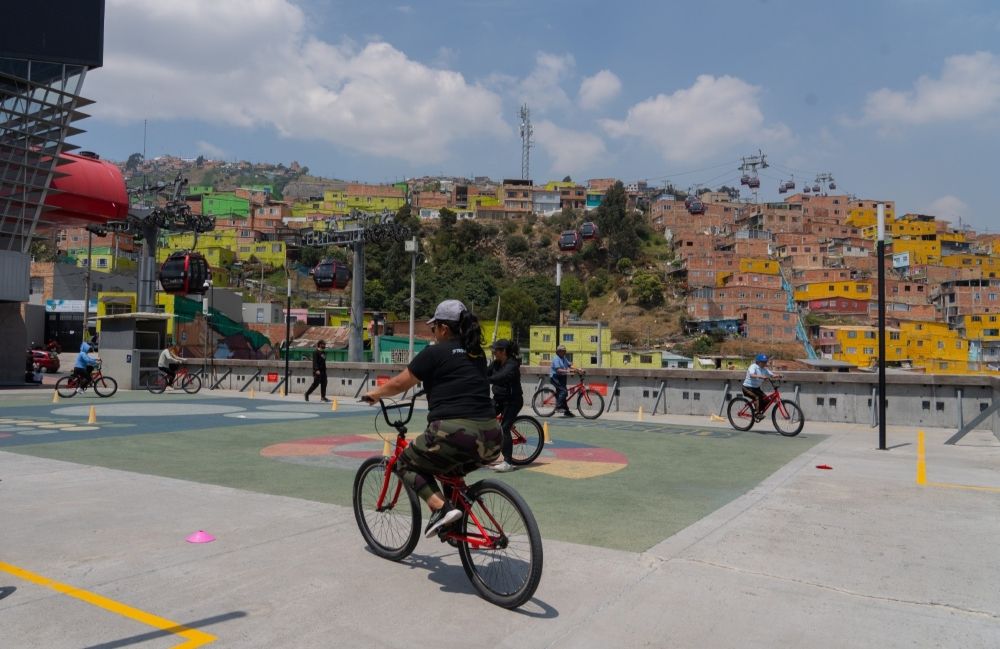
Care work is increasingly entering welfare discussions across the world. Latin American countries have made progress in implementing care-oriented public policies. A celebrated example is the District Care System (SIDICU) introduced in Bogotá, Colombia, in 2020. The policy aims at alleviating women’s unremunerated care burden through social services, education and recreational activities offered at Care Blocks (Manzanas del Cuidado) in underprivileged urban areas. This innovation has already received several international prizes and is being replicated in other cities and countries. In this presentation, María José Álvarez-Rivadulla will speak about how it works and what are some of its effects but also about the conditions that made the innovation possible.
While Bogotá’s experience offers inspiration for policymakers seeking to strengthen care systems, our research cautions against treating Care Blocks as a readily transferable policy model. Attempts to replicate the programme without recognising the feminist histories, institutional capacities, and political negotiations that underpinned its emergence risk producing symbolic infrastructure rather than transformative change.This is part of a comparative project that brings together different experiences of change in three cities: Belfast, Belo Horizonte and Bogotá.
María José Álvarez-Rivadulla is Professor of Sociology at the Universidad de los Andes in Bogotá and is currently a visiting scholar at Sciences Po CRIS. She is concerned about and interested in social inequality and her perspective to address it combines statistics with qualitative work, with a particular emphasis on networks and their segregation. She is also interested in public policies and interventions in general that can decrease inequality and increase welfare and has studied how they emerge and what their consequences are. She is the author of the book Squatters and the Politics of Marginality, on the political history of the informal city in Montevideo and the book Costly Opportunities, on social mobility in segregated societies (studying the SPP program).
Event co-organised with Elisa Grandi (Associate Professor in Economic History, Department of History - LIED) and Petia Koleva (Professor in Economics, UMR LADYSS), with the support of the Sustainability, Organisations and Institutions Graduate School (Université Paris Cité).
Venue: Room 105, 1st floor, Olympe de Gouges building, Université Paris Cité, 8 Place Paul Ricœur, 75013 Paris