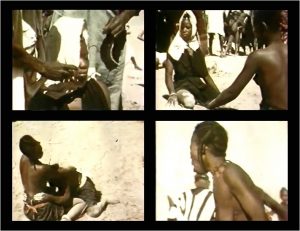
Jean Rouch discovered the rituals of possession among the Songhai populations of Niger when he was a colonial public-works engineer before quitting that job to devote his life to research. He began filming in order to document ceremonies during which things are “activators of affects” for purposes of healing. Clara Pacquet notes the correspondences ...
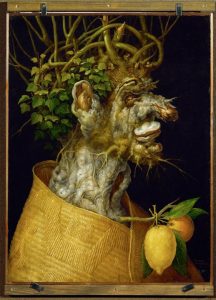
# 106 | Arcimboldo’s Metamorphoses | Thomas DaCosta Kaufmann
Thomas DaCosta Kaufmann has helped to bring Giuseppe Arcimboldo out of the comfort zone wherein critics had treated him as an ahistorical painter. Kaufmann has contributed toward a critical revision of Arcimboldo’s oeuvre as a whole by placing it back within the context in which Arcimboldo lived and painted, including his connection with the ...
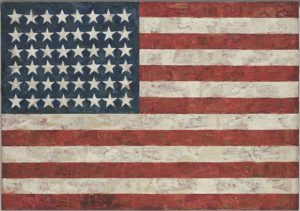
#105 | Everyday Politics | Paula Diehl
Paula Diehl takes an interest in political symbols and their usage in political ceremonies as well as in everyday life. Proceeding from an empirical study she conducted in the United States in 2014, she notes that the usage of political symbols plays several roles. The individuals she surveyed own several everyday objects bearing political ...
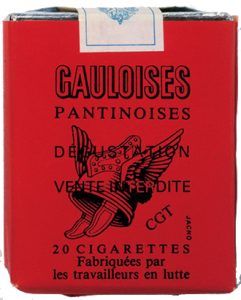
# 104 | Work-Related Things | Camille Richert
Camille Richert is preparing a dissertation around the notion of labor in Contemporary Art. Starting from the principle that our age has been altered by some major technological changes, she takes an interest in artists who are sensitive to the tools, materials, and products of the new forms of work—to things but also to ...
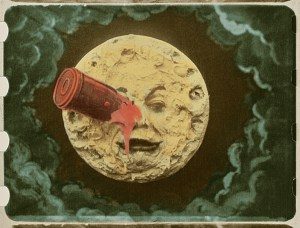
#103 | Technological Statuary on Extraterrestrial Ground | Elsa De Smet
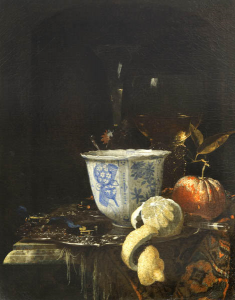
Considering a rocket as a gigantic thing, this object refers us back to the history of science and technology. But Elsa De Smet also describes it in industrial and political terms. Then, before being something really constructed, it was a prominent fantasy and, necessarily, a representation—in its own way, a “still life.” Laurence Bertrand Dorléac Technological ...
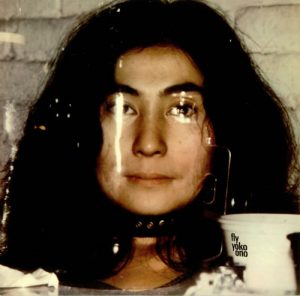
# 102 | The Albums of Yoko Ono | Prudence Bidet
Prudence Bidet studies the albums of Yoko Ono, who mixes everything together: music, politics, and autobiography. Less studied than the rest of her creative work, these singular objects, especially her first solo albums, contain strong symbolic charges while displaying her desire for liberation. In her fourth album, in particular, Feeling the Space (1973), she ...
# 101 | Domestic Interiors as Still Lifes | Manuel Charpy
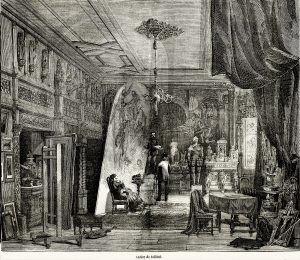
In drawing up an inventory of images and things in the nineteenth century, Manuel Charpy shows us how bourgeois domestic interiors ended up resembling still lifes, with curios, assembled in a certain order, accumulating there as within a picture. A painted or photographic portrait of a collector was, in this regard, edifying: his acquisitions ...
# 100 | Things in the Museum | David Guillet
Museums are not self-evident entities. David Guillet, who has experience thereof, reflects on the status of things—drawings, for example—whose complexity, materiality, and multiple qualities, as well as their diversity of significations, he wishes to grasp. He isolates problems without concealing the limits encountered by visitors when offered only a linear path through a museum’s collections. ...
# 99 | A Guerrilla War of Things | Paula Barreiro López
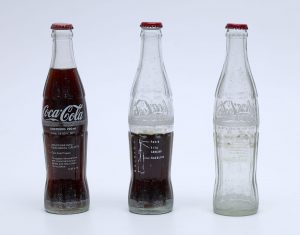
Paula Barreiro López connects guerilla tactics—which had become a common way of attacking established power, especially in regions that were called at the time the “Third World”—with the actions of artists who wanted in their own way to upset settled systems on both sides of the Atlantic. How did they set about doing this, ...
# 98 | Women’s Share in Museum | Charlotte Foucher Zarmanian
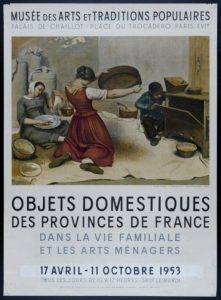
Charlotte Foucher Zarmanian is known for having extended the perimeter of research devoted to women. Here, she studies the issue of the conservation of things in the National Museum of Popular Arts and Traditions (Musée National des Arts et Traditions Populaires, MNATP), which was created in 1937. In taking a close look at the ...