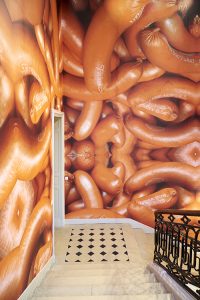
When contemporary artists use the sausage as a visual, a comical effect is to be expected. For Morgan Labar, who wrote his PhD on silliness and stupidity, this foodstuff, popularized through industrialization, deserves to be recontextualized within its long history. In earlier art and literature ribald and scatological references abounded but it is in ...
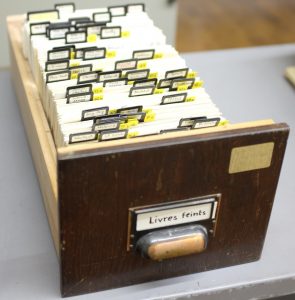
# 116 | Feigned Books | Philippe Cordez
Philippe Cordez takes an interest in book-shaped objects, whose functions may vary. A few examples: mechanical clock, drinking vessel, commode, firearm, gas cigarette lighter, and piggy bank. Cordez thus adds a chapter to the history of books since the Middle Ages. He does so in line with the work of Kurt Köster, who, as a pioneer on ...
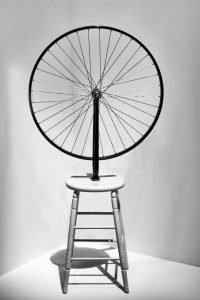
# 115 | Duchamp, words, and things | Thierry Davila
The readymade is one of art history’s most used, discussed, studied object. It is almost never written in the same manner, and its definition is made all the more unstable by Duchamp’s own refusal to make it into a “school”. In his wake, generations of artists have subverted it for their own profit, sometimes ...
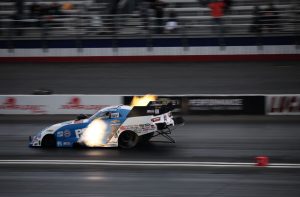
# 114 | Dragster | Paul Ardenne
The dragster is a machine-thing whose principal asset resides in its extreme speed: it brutally accelerates over a very short route, attaining the record of more than 500 kph. Connected to the danger incurred by its driver, its mythology looms large in certain milieus Paul Ardenne studies as an anthropologist of art in our ...
# 113 | Technical Objects and New Gestures | Anaïs Linares
Anaïs Linares is studying digital practices influenced by the methods of operation that are foreseen by the suppliers of devices, but that, in part, escape their control. An entire body of ethnographic research has taken an interest in gestures pertaining to technical objects that come under the headings “Personal Tactics” and “Digital Plumbing”: users ...
# 112 | Still Life, Living Nature | Chang Ming Peng
Chang Ming Peng undertakes a comparative approach between Western Art and Far Eastern Art. In this way, she proposes that we reflect on the status of “the still life” and “things” in one world as well as in the other. Across a few striking examples, she builds bridges while showing the limits to any ...
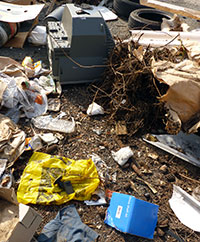
# 110 | Objects, Waste Products | Isabelle Bellin- Christian Duquennoi
Waste products, a part of our everyday lives, have become an object of study for scientists who examine here their physical and technological but also anthropological, sociological, economic, philosophical, political, and ecological dimensions. While this object has for a very long time been granted privileged status in the scrutiny of past societies, it also ...
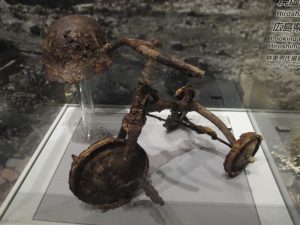
# 109 | In Catastrophe Museums | Annette Becker
Annette Becker is known for her fine knowledge of wars and genocides. She is now studying the conditions under which they are being exhibited in museums that have preserved traces thereof. Such museums have become sites of both commemoration and mourning. Especially since the 1990s, a bit everywhere in the world and there, too, ...