The Art of Limits In Un coup de hache dans la tête (2022), Professor Raphaël Gaillard demonstrates how psychological suffering does not fuel creation, even if, working through the gaps in their pain, it does not prevent some artists from creating major works. Following a similar approach—one that avoids romanticism while still acknowledging the unprecedented experiences born of constraint—Anne Picq and ...
# 136 | Alain Prochiantz | The diurnal and the nocturnal
A useful lesson from neurobiologist Alain Prochiantz The neurobiologist Alain Prochiantz gives us here a useful lesson. He reminds us that it is not only in art that one is alone and confronted with intuition and danger. He worries about a current organization of scientific production that favors safety over risk-taking, speed over long term, ...
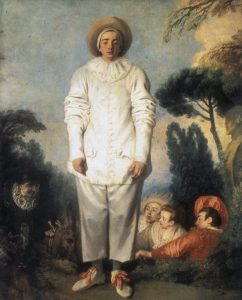
# 135 | Marika Takanishi Knowles | Pierrot marchand and the consumption of social character
Artworks are part of a long history that speaks not only of art but also of many other things. Marika Takanishi Knowles, a specialist of the Pierrot of the Comédie italienne, offers here her reflections on the character painted by Watteau, held (and recently restored) at the Louvre. Inspired by parisian fairs, the painter’s ...
# 134 | Art in the time of influenza: some points for consideration | Thibault Boulvain
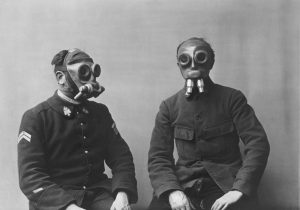
That the so-called “Spanish flu,” which claimed millions of lives worldwide between the spring of 1918 and the latter half of 1919, left almost no trace in art is surprising, to say the least. It is this mystery that has been plaguing art historian Thibault Boulvain, and which he has set out to unravel, ...
# 133 | Teaching imagination: the hidden depths of the Boltanski studio | Déborah Laks
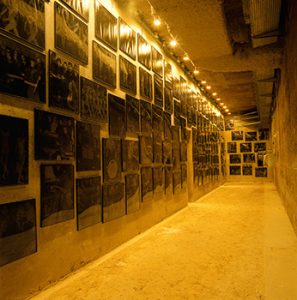
In 1991, Christian Boltanski created a work in one of the crawl spaces of the Conservatoire National Supérieur de Musique et de Danse of Paris. Hidden away, it preserves a memory—both real and fictional—of the institution's students and rejected applicants. Drawing on this work, Déborah Laks unfolds a unique reflection that intertwines teaching and ...
# 132 | Psycho-Politics Of Public Space: The Investigations Of Lea Lublin (1929-1999) | Hélène Gheysens
Take the floor! The floor is yours!”: in the second half of the 1970’s, Lea Lublin opened to all the possibility to speak freely about the nature of art. Hélène Gheysens recontextualizes this project – but also Lublin’s career - within a wider social, political and intellectual setting, one that compelled reinvention, up and ...
# 131 | Art for Society? | Louis-Antoine Mège
In 1978, Michael Baldwin and Mel Ramsden, then the two members of Art & Language, launched a stern attack on a certain type of political contemporary art. Their condemnation can only be understood in a context when yesterday’s utopia transformed into disenchantment. Thus, the two artists ask a question that remain topical, in a ...
# 130 | Art as social fact | Ghislain Mollet-Viéville
Following in the footsteps of Dada and Marcel Duchamp, a number of artists have linked art and life, to the extent that they sought to do without the object itself, which the workings of the art market had sacralised. Particularly active in the 1960’s, at a time when the status of the author was ...
# 129 | Greeks, Etruscans and the image | Alain and Annie Schnapp
Using Il leone sogna la preda (2001), written by etruscologists Bruno D’Agostino et Luca Cerchiai, as a starting point, Alain Schnapp invites us to further our thinking on The Greeks, the Etruscans and images - the title of a previous book written by the same authors. The questions this text brings up are topical : thus of the visual culture ...
# 128 | Art is unpredictable | Alexis Anne-Braun
A work of art is only active if a certain number of conditions are met, implying the collaboration of various actors, not least the public. Alexis Anne-Braun raises here the question of restorative practices in art, as well as the ethical issues they present, through the concept of artistic activation found in the writings ...