
Home>The CARE Program Summer School, 2026 Edition
16 June 2026
The CARE Program Summer School, 2026 Edition
The CARE–World Sufficiency Lab Summer School took place in early June and brought together 23 students: 13 from PSIA’s Master in Environmental Policy, Master in Environmental Science and Policy, and Master in International Energy Transitions, and 10 from Canadian partner universities.
This Summer School marked the culmination of six months of sustained commitment — joint research, online workshops and team‑based collaboration between students from PSIA, the University of Toronto, the University of British Columbia and the University of Guelph. Over the week in Paris, students explored how sufficiency can guide public policy in a world facing accelerating environmental and energy pressures.
Learning Through Practice
A defining feature of the programme was the opportunity for students to engage directly with practitioners shaping today’s climate and energy transitions. The Summer School opened with a session led by Alice Timsit, Deputy Mayor of Paris in charge of ecological transition, the Climate Plan, water and energy. Her presentation offered a concrete look at how the City of Paris translates ambitious climate objectives into public policy — a valuable starting point for students preparing to work in environmental governance.

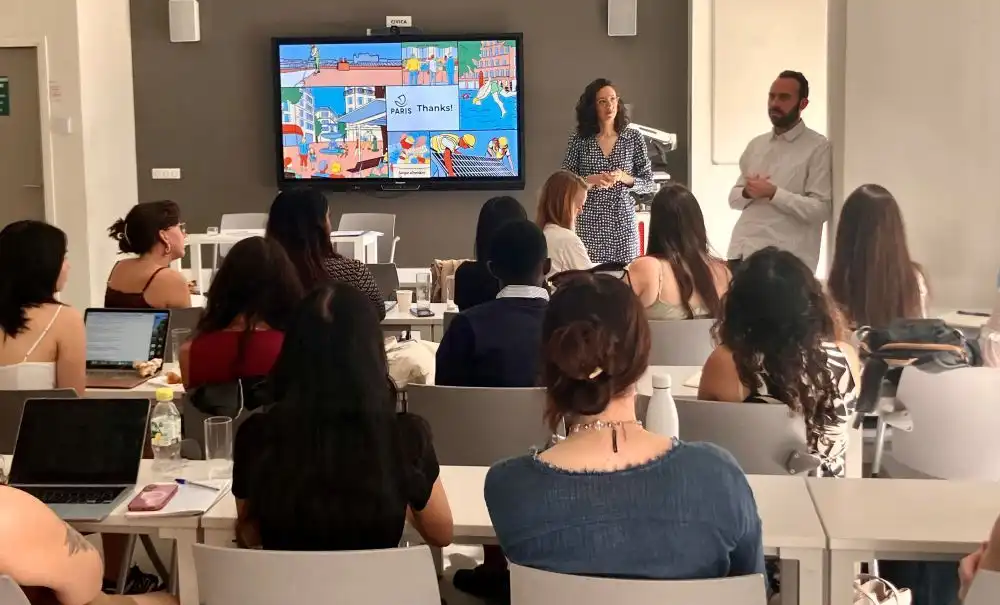
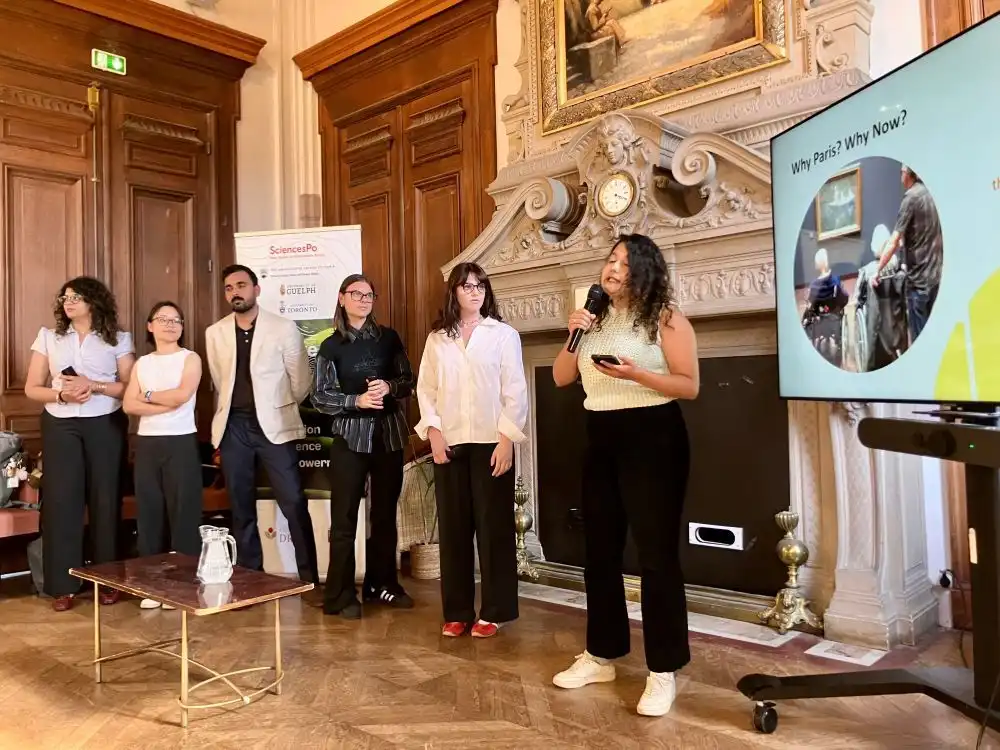
Students then presented their preliminary policy proposals to experts from the Ville de Paris, the Veblen Institute, RTE and Université Paris Dauphine. These practitioners had already reviewed the teams’ draft briefs during the online phase of the project, and their in‑person feedback helped students refine their analyses and strengthen their recommendations. For many participants, this exchange was a highlight: a chance to test ideas with professionals working at the intersection of climate policy, energy systems and sustainability transitions.

Throughout the week, expert lectures and workshops deepened students’ understanding of sufficiency as a policy framework. Sessions with leading scholars encouraged participants to question dominant approaches to sustainability and to consider how sufficiency might reshape notions of prosperity, well‑being and resource use. These discussions complemented the practical components of the programme, offering a strong intellectual foundation for the applied work students were developing.
Field visits around Paris and in the North of France also played a central role in connecting classroom discussions to real‑world examples of climate adaptation and socio‑ecological transformation.
Student‑Led Policy Innovation
Working in interdisciplinary and international teams, students developed policy briefs addressing contemporary urban challenges through a sufficiency lens. Their topics included:
- Caring for an ageing population in Paris
- Designing a sufficiency threshold for universal healthcare
- Advancing water sufficiency in Toronto and Paris
- Ensuring digitalisation of electricity systems without increasing energy poverty
- Embedding food sufficiency in international trade agreements
Throughout the week, teams refined their proposals through peer exchange and expert guidance. The programme concluded with a public presentation at the Académie du Climat, where students shared their findings with faculty members, practitioners and invited guests. Their presentations demonstrated both analytical depth and the creativity needed to translate ambitious ideas into actionable recommendations.
A Collaborative Commitment to Climate Leadership
Beyond the policy outputs, the 2026 Summer School highlighted the value of international and interdisciplinary collaboration in addressing complex climate challenges. By working across borders and academic backgrounds, students developed not only technical expertise but also the collaborative mindset essential for leading environmental and energy transitions.
The CARE programme reflects PSIA’s commitment to training the next generation of climate leaders through experiential learning, global partnerships and exposure to real‑world policy environments. For prospective students, it offers a unique opportunity to engage with cutting‑edge research, work alongside peers from leading universities and contribute meaningfully to the design of sustainable and equitable transitions.
Read the detailed report on the CARE Summer School
Discover more on the CARE website: https://www.care-climate.com/
Virtual Graduate Open House day, October 2025

On 17 October 2026: meet faculty members, students and representatives and learn more about our 30 Master's programmes.