


Home>Academics>Master Urban Governance, Policy and Planning>Governing the Large Metropolis Track
Master: Governing the Large Metropolis Track
Track offered as a part of the Master Urban Governance, Policy and Planning
Virtual Graduate Open House day – 17 October 2026

Interested in joining a master’s programme at Sciences Po? Come and discover our 30+ master’s programmes across our eight professional schools, as well as the admissions process. Speak with our deans, academic coordinators and students, as well as our admissions teams.
Training in governing the large metropolis
Big cities around the world are vibrant, dynamic, and full of opportunities. These global metropolises also grapple with significant challenges (housing, transport, new technology, climate change, economic growth, public services). The Governing the Large Metropolis Track of the Master Urban Governance, Policy and Planning, trains urban professionals to create innovative solutions in the public and private sectors for the city of the future.


Objectives and skills
- Social sciences (with disciplinary courses in sociology, political science, law, economics, policy analysis, and geography applied to metropolitan development)
- Regional studies (Africa, China, Latin America, Middle East, North America, South Asia, South-East Asia)
- Policy Sectors (urban and metropolitan planning, housing, transport, utilities and infrastructure (water, energy, sewage), smart cities and digital governance, urban welfare and social policies, migration, environment and sustainability)
- Methodological training in qualitative, quantitative, and GIS (Geographic information system) methods
- Management and professional skills (Professional training is provided in the first year through a capstone and collective study trip; in the second year, through case studies and workshops taught by professionals working in international organizations, NGOs, and private companies, and a semester-long internship).
The Urban School has connections with urban professionals and research groups around the world, including in Bogota, Lima, Mexico, Buenos Aires, Rio de Janeiro, Sao Paulo, Los Angeles, Chicago, New York, Beirut, Istanbul, Cairo, Manila, Mumbai, New Delhi, Jakarta, Beijing, Shanghai, Tokyo, Nairobi, Lagos, and Johannesburg.

Programme structure


Download the programme structure
The first year encompasses two semesters: Semester 1 covers interdisciplinary topics like public policy, digital politics, and urban planning, with a focus on research skills. This semester focuses on developing academic and professional writing skills, fostering teamwork (group project), and honing public speaking abilities. Semester 2 emphasizes practical experience, including a study trip, core courses in law, economics, statistics, and regional specializations.
Semester 3 focuses on professional development, with training in project management, policy skills, and practical tools. Students collaborate with professionals and choose policy specializations.
Semester 4 is dedicated to full professional immersion, requiring a minimum 14-week internship. Students complete either an Internship Report or a Professional Dissertation, which involves academic research related to their internship and is evaluated by a committee.
Students may choose to go for a semester exchange (semestre 4) in partner universities: Hong Kong University, Politecnico di Milano, Renmin University of China, UCL Bartlett School of Planning, University of Amsterdam, Zhejiang University, and UCLA.
Students enrolled in the entrepreneurial concentration (see below) must spend the semester in the Sciences Po Incubator to develop their business projects and startups. They may attend special workshops to design their business plan, organization, and marketing strategy. At the end of the semester, they must submit a Business Report.
Students enrolled in the research concentration (see below) must spend the semester in a large metropolis (outside of Europe), doing fieldwork and writing a Research Dissertation by mid-May. They work under the supervision of a GLM faculty member, as decided by a joint committee of the Urban School and of the School of Research of Sciences Po.
Course outlines
Note: Curriculum plans evolve every year to address various needs and developments.
Professional & field-based learning
Field-based learning and professional immersion are central to the Governing The Large Metropolis Track. The programme emphasises applied learning through projects, fieldwork and direct interaction with practitioners, preparing students for the realities of professional practice.
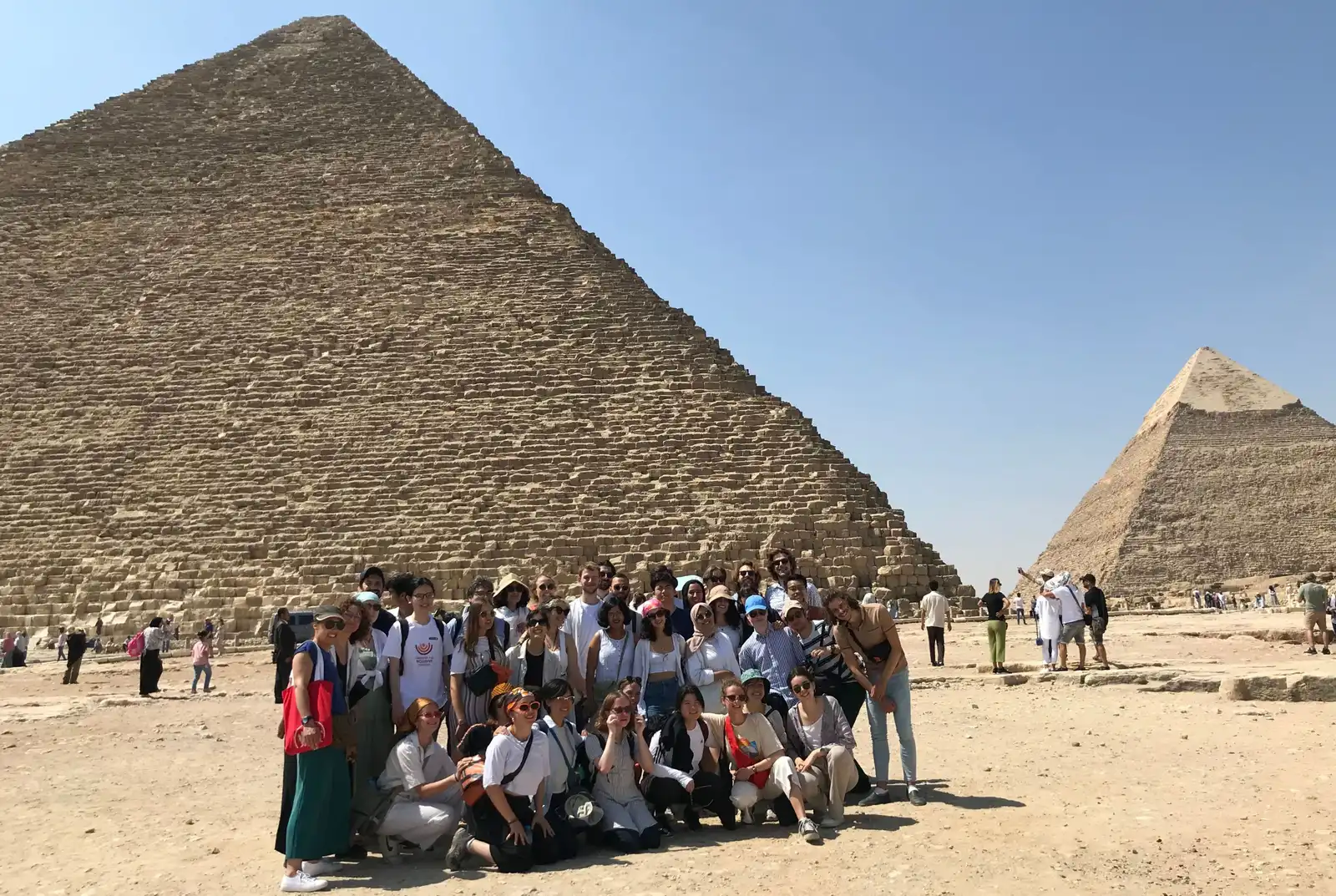
- Study trip – During a week-long study trip, students in first year visit a European city to analyse urban ecological and governance dynamics in situ, meet local stakeholders, and produce a collective report. Discover our latest trips to New Delhi and to Nairobi.
- Field visits & pre-semester activities – Before the start of each semester, students take part in field trips to discover a local projet, meet the stakehloders involved, and put what they have learned into practice.
- Group project / Capstone – Throughout the year, students work on practical, professionally oriented group projects that mobilise their analytical, methodological and collaborative skills. As part of the group projects, students take responsibility for organising their fieldwork, including travel and on-site investigations.
- Professional internships & apprenticeships – The second year includes a professional internship (minimum 14 weeks) or, for students on the apprenticeship track, an alternating rhythm between coursework and employer-based work.
Concentration (optional)
Students who intend to do a PhD can begin a research concentration in sociology or political science since the second semester of the Master's programme (faculty in charge: Laurent Fourchard). The research concentration is organised in collaboration with the Sciences Po School of Research and open to every GLM student in the second semester, but then it is submitted to a selection process by a joint committee of the Urban School and the School of Research at the end of the second semester. The selection is not based on a closed number of places, but on the skills of the applicant. Student’s grades, motivation and a preliminary research proposal are taken into account.
Students who intend to open their own start-up, or who want to acquire skills to work in a start-up, or who want to familiarize with open-management techniques for small-size enterprises on metropolitan topics can engage in the entrepreneurial concentration. It is organised in collaboration with the Sciences Po Entrepreneurial Center and open to every GLM student in the second semester, but then it is submitted to a selection process by a joint committee of the Urban School and the Entrepreneurial Center at the end of the second semester. Students may take specific courses in the second and third semesters and join the Sciences Po incubator to receive support on management, financing and marketing around a valuable business project.
Students interested in topic related to governance & planning of large metropolis may enrol in a Students Exchange Semester with the Luskin School of Public Affairs, Department of Urban Planning, UCLA. Each year, during the third semester, the GLM students going to UCLA will have classes at the Planning Department about urbanization, planning, globalization and regional development and quantitative analysis (faculty in charge: Sukriti Issar).
Dual degrees
- Dual Master in Global and Comparative Urban Planning and Governance with UCLA: to acquire skills in global comparative urban planning, and understand how to implement collective urban actions and policies.
- Dual Master in Global Urban Development with Tata Institute of Social Sciences (TISS) in Mumbai: to acquire skills in global comparative urbanism and urban governance with training in India and Europe.
- Dual Master's Degree in African and Southern Urban Studies with The African Center for cities (UCT): to access careers in both South Africa and France and acquire strong professional training in a comparative and critical research approach within the Global South.
Career opportunities in Urban Governance
Preparing for a career in a vibrant job market
GLM alumni work in cities and regions around the world, as executives, entrepreneurs, and researchers, in public, private, and third sector roles. They work in:
- Urban and regional governments in various sectors (transport, digital transition, environment, housing, development, culture)
- Urban planning agencies, economic development agencies, urban political organisations
- Multilateral organisations such as the United Nations, and OECD
- Private developers and international consultants
- Utility firms (on water, transport, waste management, energy)
- Environment, health, security and food organisations
- NGO's in different sectors (democratic governance, environment, housing, development, culture)
- Networks of cities (UCLG, 100 Resilient Cities, C40, ICLEI)
- Private companies, foundations and think tanks
- Academic careers through pursuing a PhD
You can contact some of them via the In Situ Association.
More about career opportunities after a Master's degree at the Urban School:
Student testimonials


Contacts
Academic Director : Sukriti Issar
Academic Advisor : Cyriel Pelletier
Administrative Manager ; support for international students : Antoine Tisserant


