


Home>Academics>Master Urban Governance, Policy and Planning
Master Urban Governance, Policy and Planning
Two-year Master's
Programme in English
120 ECTS minimum
Virtual Graduate Open House day – 17 October 2026

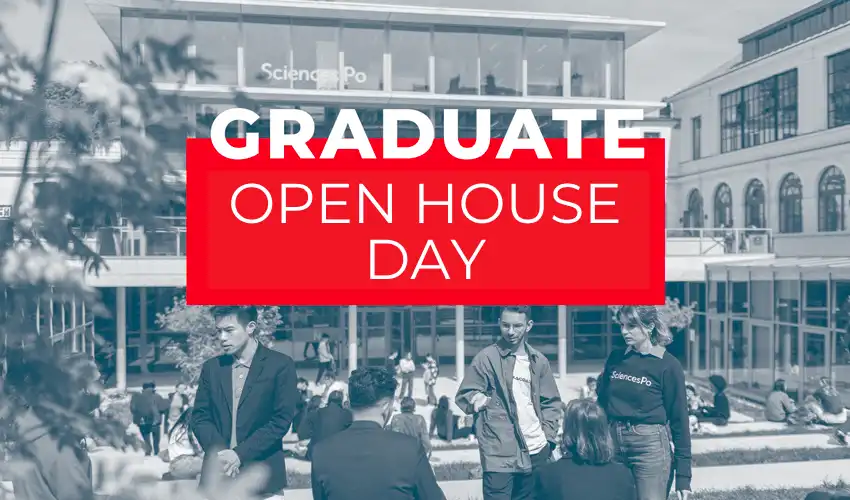
Interested in joining a master’s programme at Sciences Po? Come and discover our 30+ master’s programmes across our eight professional schools, as well as the admissions process. Speak with our deans, academic coordinators and students, as well as our admissions teams.
Understanding and governing cities and regions in a global context
The Master in Urban Governance, Policy and Planning trains future urban professionals to analyse, design, and steer the transformations of cities and regions worldwide. It equips students with the analytical tools and strategic skills needed to engage with the social, economic, political, and environmental challenges shaping the places we live in.
This programme is multidisciplinary, combining cutting-edge academic research with insights from professional practice. It brings together perspectives from the social sciences, urban planning, and policy analysis, and is open to students from diverse academic backgrounds, including social sciences, natural sciences, humanities, architecture, engineering, and more.
Main orientations & specialisations
From the beginning of the programme, students engage with professional practice through seminars, field visits, study trips, and a year-long capstone project conducted with external partners from the public, private, and non-profit sectors. Teaching combines academic perspectives with insights from experienced practitioners.
Graduates pursue careers across public institutions, consulting firms, NGOs, and international organisations, working on key urban issues including housing, mobility, environmental planning, social inclusion, and local economic development.
The Master in Urban Governance, Policy and Planning is structured around a shared core and is offered through two distinct tracks. Each specialisation reflects a specific academic focus, pedagogical approach and set of professional opportunities. When joining the Master, students must choose one of two different tracks:
Governing the Large Metropolis (GLM) Track is focusing on the metropolises of low- and middle-income fast-growing countries, with a comprehensive approach to aspects of urban governance, services, and infrastructure.
Find out more about the Governing the Large Metropolis (GLM) track.
Governing Ecological Transitions in Cities (GETIC) Track is focusing on Ecological transitions at the urban and local scale, with a comparative perspective on Europe and the “Global North”.
Find out more about the Governing Ecological Transitions in Cities (GETIC) track.
Students must choose their track at the time of enrollment, and no transfers between tracks will be possible at any stage of the program. Each track is built around a coherent logic, prepares for a distinct professional profile, fosters strong cohort integration, and is led by a dedicated scientific advisor and teaching team.
Objectives and skills
- Identify key actors and dynamics of urban transformation by mapping transition ecosystems, understanding governance processes and political dynamics, conducting territorial diagnoses, and change implementation, in delicate sectors like circular economy, slum upgrading, mobility, water regulation, affordable housing, land regulation, climate change adaptation and mitigation.
- Design sustainable and inclusive urban and regional policies at local, national, or international levels, combining social and environmental justice and proposing innovative strategies for territorial change.
- Lead and manage urban projects in diverse contexts, coordinating multidisciplinary teams and mobilising formal and informal stakeholders, understanding political and economic stakes, while navigating legal, technical, and financial frameworks.
- Analyse urban complexity using multidisciplinary approaches and technical tools (GIS or Geographic Information Systems, statistics, comparative qualitative methods) to understand territorial dynamics and support policy innovation
- Communicate effectively with a wide range of stakeholders by adapting messages to different audiences, articulating complex territorial issues clearly, and demonstrating leadership and adaptability in multicultural professional environments.
Career Opportunities
Graduates of the Master’s in Urban Governance, Policy and Planning are equipped to pursue a wide range of international careers related to the transformation of cities and regions. They go on to become project managers, urban policy advisors, consultants, analysts, decision-makers, and researchers, working at the intersection of governance, infrastructure, planning, and sustainability.
They are recruited by local and regional governments, national public agencies, international organisations (e.g UN-Habitat, World Bank, OECD), NGOs, utilities and infrastructure operators, real estate developers, engineering firms, planning agencies, development banks, and research centres. Many graduates also work in multidisciplinary teams within consulting firms or public-private partnerships, contributing to large-scale urban projects and policies.


