


Home>Academics>Two-Year Master's Programmes>The 11 Policy Streams of the Masters>Master, Policy Stream: Digital, New Technology and Public Policy
Master, Policy Stream: Digital, New Technology and Public Policy
Virtual Graduate Open House day – 17 October 2026

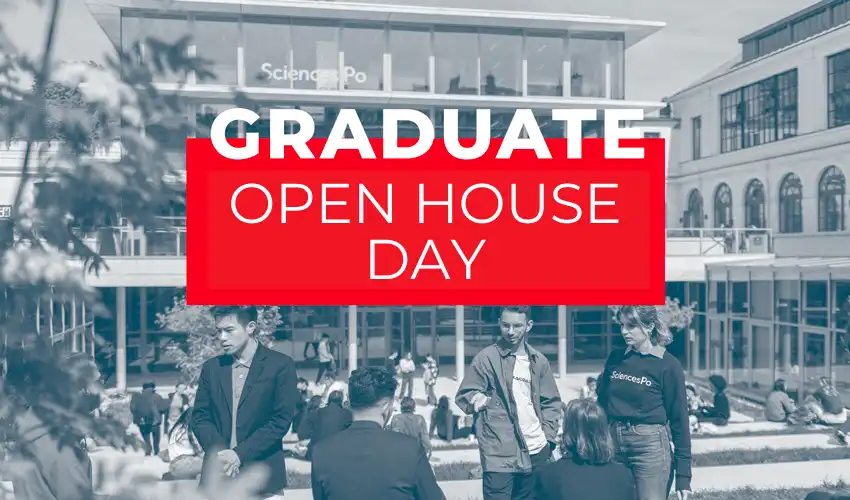
Interested in joining a master’s programme at Sciences Po? Come and discover our 30+ master’s programmes across our eight professional schools, as well as the admissions process. Speak with our deans, academic coordinators and students, as well as our admissions teams.
Description and objectives of the Digital, New Technology and Public Policy stream
The digital revolution has impacted all the areas of our society and the crucial issues that we face today will only be solved by decision makers duly equipped with digital-era skills. The Digital, New technology and Public Policy stream offered by Sciences Po’s School of Public Affairs is a unique interdisciplinary program in which students acquire the fundamental theoretical, practical and critical skills they need to shape the future of public policy in the digital era.
The courses are taught by both Sciences Po faculty members and practitioners from the digital sector, and enable students to understand the economic, social, legal, political and ethical impacts of new technologies (data, artificial intelligence and other algorithms, machine learning tools, etc.). The curriculum also gives them the opportunity to develop practical skills, anchored in data science and tech innovation, to strengthen their future capacities to drive and manage digital transformation projects in public and private sectors.
Please note that no technical prerequisites are required to join the program.
By the end of the programme, students are able to :
- Develop a critical approach to the digital world by using investigation methods to question the socio-technical impacts generated by these dynamics (e.g., algorithmic biases, digital interferences, etc.).
- Acquire a foundational technical culture (data analysis, data visualization, basic programming, machine learning) in order to make informed judgments about technological choices and their impacts, and to improve decision-making processes.
- Compare and analyze different digital regulation mechanisms by developing critical skills and a deep understanding of existing models.
- Regulate digital issues at different scales (local, national, european, international) by mobilizing an interdisciplinary approach (notably economics, law, sociology, computational social sciences).
- Design, implement, and evaluate digital transformation strategies in both public and private sectors, while taking into account impacts in terms of ethics, democracy, and governance.
- Anticipate the evolution of digital technologies and associated governance and regulatory mechanisms by developing monitoring capacities and continuously updating knowledge and skills.
Curious to learn more about the Digital, New Technology and Public Policy stream?
Focus on the curriculum of the Digital, New Technology and Public Policy stream
First year of master
In a rapidly evolving technological landscape, the programme prioritises analytical depth over short-lived thematic expertise. By grounding students in economics, sociology, law, and computational social sciences, the first year of the Master’s programme equips students with robust analytical frameworks drawn from multiple disciplines.
In the first semester, students explore digital technologies through the lenses of economics and sociology. The economics course provides tools to understand the functioning of digital markets, while the sociology course examines digital public spaces and their implications for democracy.
In the second semester, the focus shifts to computational social sciences and law. Students analyse how artificial intelligence can generate new forms of discrimination and inequality, and compare regulatory approaches to Big Tech, with particular attention to European and US frameworks.
In addition, students can take a module “Data Science in Policy Context”, which includes a mandatory three-day Python bootcamp at the beginning of the academic year. This equips students with essential skills in programming, data analysis, and visualisation, that will be directly mobilised in subsequent courses later in the semester. This bootcamp is complemented by optional workshops that support the application of these tools to students’ research projects.
Second year of master
Building on the multidisciplinary theoretical frameworks acquired during the first year, the second year of the Master’s programme adopts a more professional and practice-oriented approach.
In the third semester, students examine the interaction between digital technologies and public policy from two complementary perspectives: the use of data and algorithms to design transparent, ethical, fair and effective public interventions, and the organisational transformation of public administrations integrating AI and data into their practices.
In the fourth semester, students are ready to apply their skills and gain professional experience through an internship, a Master’s thesis or an academic exchange in a partner university.
Throughout the two years of the Master’s programme
The policy stream curriculum is complemented by common academic courses, core courses specific to the chosen Master’s track (Public Policy or European Affairs), elective courses, language classes, and optional courses. (see Master’s structure)
In addition, students have opportunities to engage in professional meetings with stakeholders from the digital sector and participate in the Policy Lab, which offers hands-on teaching modules designed to develop complementary skills (innovation, design, project management, negotiation, etc.) through modules such as the public policy incubator, case studies, or thematic programs (on gender equality and sustainability challenges), etc
Topics covered in the courses
The programme includes, among others, the following courses:
- Digital economics: Platform, Data and AI
- Sociology of the Digital Public Space
- Decoding biases in Artificial Intelligence
- Comparative Digital Law
- Data and algorithms for public policy
- Technology policy in global context: States, enterprises, power and progress
- Cyber Affairs: Technology, Politics, Strategy and Threats
Course Programme of the digital, new technology and public policy stream
Master in Public Policy - Digital, New Technology and Public Policy stream:
Master in European Affairs - Digital, New Technology and Public Policy stream:
Career outcomes after the Digital, New Technology and Public Policy stream
Graduates of the programme pursue careers across the public, private, and non-profit sectors, in roles addressing the governance, regulation, and transformation of digital technologies.
Public Sector:
- Digital transformation project management within public administrations (ministries, interministerial bodies, local governments, etc.).
- Policy analyst and sectoral expert positions focusing on the impact of digital transformation in public policies related to education, healthcare, transportation, etc.
- Regulatory authorities overseeing digital issues, such as national data protection authorities and media regulation bodies
- Legislative and parliamentary roles, assisting members of parliament engaged in digital policy or working within committees addressing digital topics.
European Institutions & International Organizations:
- European institutions : European Commission (ex: European AI Office, DG Connect), EU delegations in strategic tech hubs (ex: San Francisco, Beijing), European Parliament
- International organizations (ex: OECD, UNESCO, International Labour Organization (ILO), etc.)
Private Sector:
- Public affairs departments of tech companies
- Project Manager or Product Owner roles in various sectors facing digital transformation (ex: banking, insurance, cultural institutions, retail, etc.).
- Consulting roles in large firms specializing in digital strategy or in smaller consultancies offering services related to trust & safety and compliance
- Professional organizations dedicated to the digital ecosystem at national or European levels
Non-Profit Sector:
- Research and policy roles in think tanks
- Positions within non-profit organisations and advocacy networks addressing digital rights, privacy, data protection or digital inclusion and access to technology
Who are our students?
A typical cohort consists of around 30 students and is characterised by a high level of academic and cultural diversity. Students come from all over the world, with about fifteen different nationalities represented each year, and bring a wide range of academic backgrounds, including social sciences, political science, economics, statistics, engineering, international studies, law, media studies, etc. This diversity of perspectives and training is a key asset of the programme, fostering rich intellectual exchanges, interdisciplinary dialogue, and collaborative learning throughout the curriculum.
Discover the students' profiles and works
Learn more about the policy stream by reading the graduates' testimonials and the students' work presentations.
Students testimonial video:
Alumni testimonials
- Janine Ecker, Class of 2025
- Léa Roubinet, Class of 2025
- Eleonora Bonel, Class of 2024
- Uma Kalkar, Class of 2022
- Paul Auburtin, Class of 2020
- Torben David, Class of 2018
Students' works
- The “Sociology of Digital Public Spaces”: @Grok, what do you think?, May 2026 (article)
- Can AI benefit democracy?, July 2025 (5 papers published by students in a Tiered - Sciences Po Student Works Collection)
- Explicability in AI (Students Policy Brief)
- GDPR: A critical investigation of data subject rights (Students Policy Brief)
- Lessons learned from the course “Decoding Biases in AI” (article)
- The Metaverse: Challenges and regulatory issues (article + vidéo)
- Should we rethink the governance of platforms in order to create a system of checks and balances consistent with our democractic values? (article + vidéo)
Students' reviews on Master classes and other events
- Master class dedicated to artificial intelligence in defence - in French (April 2025)
- Inside the AI Action Summit: Student Volunteers from Sciences Po Share Their Experience (February 2025)
- Master class with Paula Forteza (November 2022)
- Master class with Michael Bailey (November 2022)
Scientific Advisor of the digital, new technology and public policy stream


After working as a researcher in digital social sciences at Orange from 2010 to 2023, Valérie Peugeot is continuing her work at Sciences po. She is academic director of the 'Digital humanities' executive master's programme, and a scientific advisor for the 'Digital, new technology and public policy' stream at the School of Public Affairs.
Vice-president of the Conseil national du numérique from 2013 to 2015, she has been a member of the CNIL's college of commissioners since 2016, where she is in charge of the health sector.
She has long been involved in the social economy sector, and is a member of the Board of Directors of the Fondation du Crédit coopératif.
Contact
- Academic advisor: Léa Douhard
- Academic assistant: Robin Picand