
Home>What Is the Future of Global Governance? The Video Report on the Youth & Leaders Summit 2026


13 February 2026
What Is the Future of Global Governance? The Video Report on the Youth & Leaders Summit 2026
From 27 to 28 January 2026, the 11th edition of the Youth & Leaders Summit brought together students, policymakers and global leaders to grapple with the core theme: “Wanted: A UN Secretary-General for a Broken World”. The Summit discussed stalled sustainable development, increased security efforts, technological transformation and examined the future of multilateralism. Across debates and panels, the Paris School of International Affairs (PSIA) students engaged directly with global leaders, shaping the conversation about the future of global governance.
Watch our three-minute video recap:
Also read the recap article of the Summit written by six PSIA student journalists : Madeleine François, Nesreen Yousfi, Giada Rosiello, Xihuan Yu, Tal Ben Yakir, Ellen Lemardeley.
Reimagining leadership together
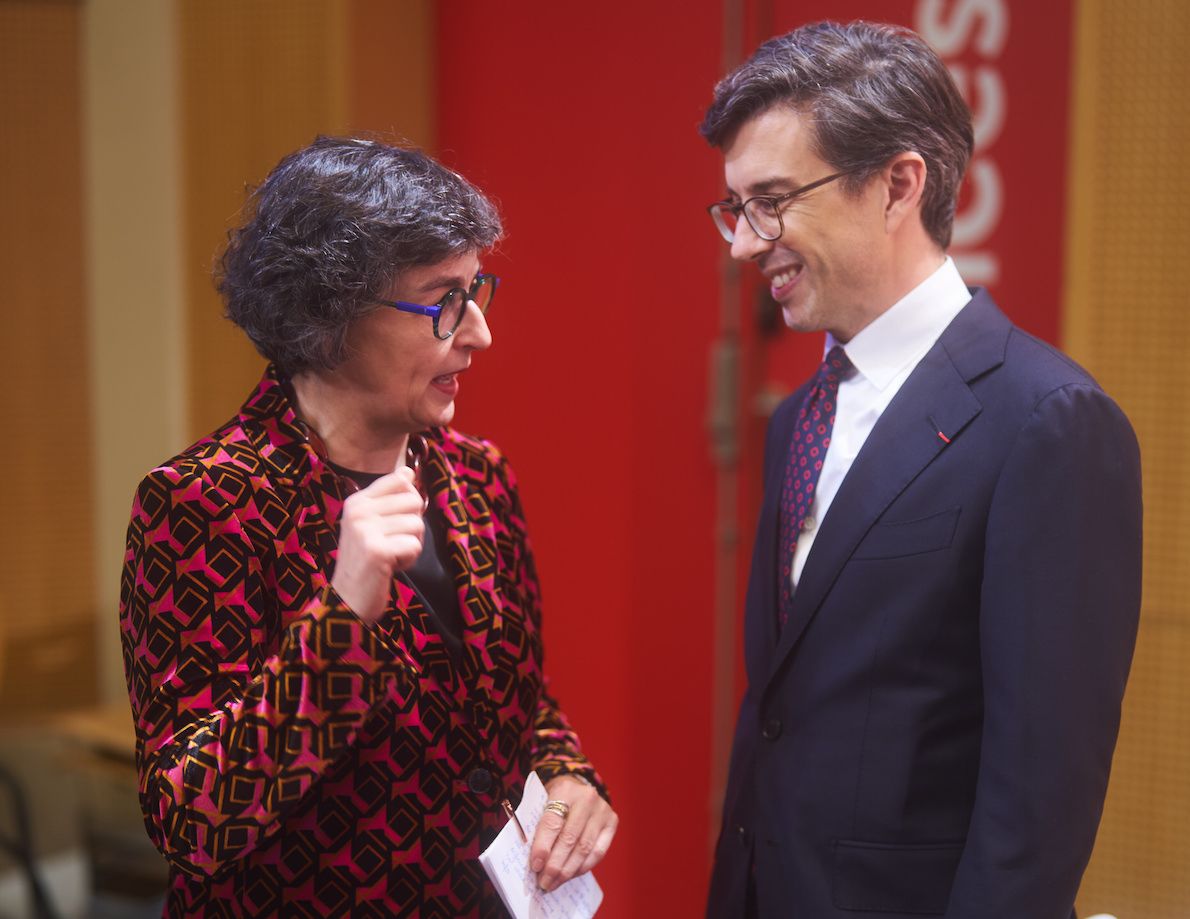
The Youth and Leaders Summit opened with a call for collective thinking. Sciences Po President Luis Vassy highlighted the enthusiasm of the current generation of students who remain deeply engaged with global affairs, stressing the importance of bridging theory and practice, as well as the value of thinking collectively rather than in isolation. PSIA Dean Arancha Gonzalez underlined the urgent need for effective leadership in a time of polarisation, climate pressure, and technological change, while framing the current moment as an opportunity to rethink leadership through intergenerational dialogue.
Standing Up When Solidarity Falters
The Summit started by discussing the tension between global solidarity and political fragmentation.
“As more people step away from global solidarity, those who choose to stand up for it need to be celebrated."
Ndidi Nwuneli, President and CEO of the One Campaign
From Minneapolis to Gaza, from Sudan to the streets of Iran, human suffering continues to demand both response and resistance. Yet in the eyes of youth, activism raises difficult questions: how can one stay engaged in the face of exhaustion, repression, or apathy? And how compatible is activism with an international career, when professional choices may clash with personal convictions at a time of weakening trust in institutions?
For the speakers, activism is not reserved for moments of protest or positions of power. It lives in everyday actions and ordinary choices. Activism means learning, showing up, and speaking out against injustice. History shows that courage often comes from those with the least power. It also requires building alliances and trust-based networks. Ultimately, activism is about finding the strength to keep going. As former UN Deputy High Commissioner for Human Rights Kate Gilmore put it, the real question is not whether one is an activist, but what one chooses to be active for.
Rethinking Security and Human Development
One of the most animated sessions was a New York Times-style debate titled “Guns or Butter: Which Should Come First, Security or Human Development?”
On one side, Alberto Alemanno and Oana Lungescu argued that security is the foundation of peace and societal stability. In an increasingly unpredictable and militarised world, democratic countries must be able to defend themselves. According to them, increased defence spending in Europe should be understood as deterrence, an investment in peace, because without security human development cannot exist. As Alemanno concluded, "you need guns to protect your right to eat your butter".
On the opposing side, Kate Gilmore and Gabriela Ramos argued that investing in development saves more life than investing in military equipment. They noted that the raise in defence spending creates a vicious circle of inequalities, protecting elites holding the power instead of the population. By highlighting that “security is well-placed when we invest in people and in their needs”, they invited the audience to embrace a human security approach rather than relying on traditional concepts of security.
While the opposing team ultimately won the debate, it raised an unresolved question: can development take place in the absence of security?
Governing the AI Revolution
Kicking off the second day of the summit, PSIA students Allegra Melli and Jack Rath discussed with Uljan Sharka, CEO of Domyn, how innovation, regulation and democratic values in AI could coexist. The conversation asked fundamental questions: why AI mattered, who it should serve, and how Europe could define a shared vision grounded in ethics, knowledge and inclusion, rather than competition alone.
The session addressed risks including biased datasets, disinformation, and regulatory frameworks that might exclude young people and innovators. Allegra Melli highlighted how missing social variables in data could reproduce inequality, while Mr. Sharka advocated for locally grounded AI models to better reflect diverse cultures and languages.
The session concluded that delivering on AI’s promises demands smarter regulation, ethical innovation, and collaborative leadership to ensure this transformation expands freedom and opportunity.
Wanted: A UN Secretary General for a Broken World
As the international system enters a period of deep uncertainty, the question facing the United Nations is no longer simply whether it is under strain, but whether it can still act in an increasingly fractured world. The 2026 appointment of the next UN Secretary General is seen as a decisive moment for multilateralism, as speakers agreed that the international order established after 1945 is increasingly fragile.
Once grounded in shared rules and norms, it is now shaped more visibly by power, military leverage, and competing spheres of influence. The paralysis of the Security Council, routine veto use, and selective enforcement of international law have weakened the UN’s credibility, particularly in the eyes of the Global South.
Rather than a sudden collapse, this moment is also an unmasking of long-standing contradictions between democratic ideals and undemocratic global structures. From a youth perspective, legitimacy emerged as the central challenge. The session concluded that the UN’s future depends less on institutional reform alone than on leadership willing to confront power, rebuild trust, and act when inaction becomes the easier choice.
Closing the Summit with a Shared Question
The 2026 Summit concluded with a poem by PSIA student Aisyah Lyana, “Enemy of the World”, which highlighted the urgency of climate change and the moral responsibilities of global leaders.
Enemy of the World
how dare you behead the forest’s trunks
slashing, hacking, pruning, felling
reborn as trash after a single meal
the jungle turns into a barren field
till habitats burn day and night
wildlife scatter in fight or flight
now no trees are left in plain sight
how dare you poison the river’s mouth
polluting, seeping, tainting, envenoming
opening drains where factories spout
letting toxic rainbows pour out
shells and fins surface with silvered eyes
sea-born giants falter in poisoned tides
your promises dissolve into froth and lies
how dare you rip open the womb of the earth
shovelling, blasting, mining, burrowing
black gold is bled from every fragile map
a stolen fortune settles in your lap
as drills bite deep into nature’s veins
you plunder the earth for fleeting gains
now seal your fate in lasting pain
In her closing remarks, PSIA Dean Arancha González invited participants to reflect on a deeper question:
"I do not think the choice is between a world at peace and a world as we would like it to be. The real choice is about the world we want to shape.”
The wide range of perspectives brought by the speakers – from different geographies, backgrounds, political positions, and life experiences – mirrored the complexity of the world itself. Dean González also emphasised how to engage with these differences: not through the volume of one’s voice, but through the strength of one’s arguments; not by cancelling or excluding others, but by debating through reason and basic principles. Diversity is a foundation for progress and is essential to truly exploring the possibilities of shaping the world.
Youth Engagement: Imagining Possibilities for the World’s Future
True to its name, the Youth & Leaders Summit was shaped as much by students as by senior figures. This year, around thirty PSIA students collectively supported the smooth running of the summit as volunteers serving as speakers, presenters, journalists, speakers’ liaisons, artists, and community managers. It was through this dual engagement, both on stage and behind the scenes, that young participants prepared themselves to become future leaders, while simultaneously imagining and shaping multiple possibilities for the world’s future.
To dive deeper into the Summit:
Open house days 2026
Virtual Undergraduate Open House day 2026
Come meet our teams and students at our campuses.
Virtual Graduate Open House day 2026
Meet faculty members, students and representatives and learn more about our 30 Master's programmes.