
Home>Training Tomorrow’s Global Actors: Inside PSIA’s Master in International Governance and Diplomacy
16 June 2026
Training Tomorrow’s Global Actors: Inside PSIA’s Master in International Governance and Diplomacy
What is the programme designed to achieve?
“The Master in International Governance and Diplomacy is conceived as a professional programme, and this orientation shapes every aspect of the curriculum. The ambition is to train students who can understand, analyse, design, implement, and evaluate public policies across a wide range of sectors. Governance is approached through a policy lens, with a strong focus on policy fluency and analytical confidence.
Diplomacy is treated as a practical skillset. Students learn negotiation, strategic communication, crisis management, and work through real‑world case studies. Many courses are taught by practitioners who bring their field experience directly into the classroom. Alongside this, students develop a solid understanding of the international system and the legal frameworks that structure global governance.”
How is the programme structured over the two years?
“The Master is taught in English and follows a four‑semester structure. Three semesters are dedicated to coursework, and the 3rd semester, is a professional semester. Students choose between an internship, an international exchange, or a research thesis supervised by a permanent faculty member.
Each student completes two concentrations. Diplomacy is mandatory, and the second concentration is chosen according to individual career goals. It may be thematic or regional , environment, intelligence, Africa, Europe, agriculture, project management, and more. The curriculum is intentionally multidisciplinary, combining law, economics, political economy, and strategy, all essential foundations for careers in governance.”
What kind of candidate thrives in the Master?
“Academic excellence is essential, but it is only the starting point. The programme seeks candidates who show genuine engagement with international affairs and who can articulate a coherent trajectory linking their experiences, ambitions, and the programme.
Applicants are encouraged to present a clear sense of direction. This does not require a rigid plan, but rather a thoughtful narrative showing how past experiences, academic choices, and professional aspirations connect with the current state of international affairs. Storytelling matters: how an interest in international affairs emerged, what contribution one hopes to make, and how the Master fits into that journey.”
How big, and how international, are the cohorts?
“The Master in International Governance and Diplomacy is one of PSIA’s largest, with around 180 students per year. 70% of the student body come from outside France, representing every region of the world.
This diversity is immediately felt in the classroom. Discussions bring together perspectives shaped by different political cultures, regional contexts, and experiences. The result is a genuinely global learning environment.”
What does teaching look like on a daily basis?
“Because the programme is professional in nature, interactivity is central. Seminars of around 25 to 30 students encourage group work, simulations, and case‑based learning. Larger lectures, usually between 50 and 80 students, cover core subjects such as international law and economics.
Most instructors are active professionals. They bring current negotiations, policy dilemmas, and field insights directly into the classroom. Students work on real‑life situations, often drawn from the latest developments in international affairs.”
How do you prepare students for their professional careers?
“Professional preparation begins from the very first week. Students benefit from practitioner‑led courses, a dedicated professional semester, and individual advising sessions to help refine their goals and strategies.
A mentorship programme connects second‑year students with alumni working in their target fields. Career advisors at both PSIA and Sciences Po organise workshops, job newsletters, career fairs, and meetings with international organisations. Weekly conferences bring global leaders to campus, giving students direct exposure to current debates and decision‑makers.”
Where do graduates go after completing the Master?
“Graduates pursue careers across sectors and continents. Many begin in consulting or international organisations before moving into diplomacy, public policy, or development roles.
Some join consulting firms in environmental policy, human rights, or public affairs. Others work at the OECD, UNESCO, or the World Bank. Several enter diplomatic services, EU institutions, or national ministries. Alumni also work in NGOs, peacebuilding initiatives, and conflict‑resolution programmes. The diversity of paths reflects the programme’s multidisciplinary nature and global orientation.”
Prospective students
Virtual Graduate Open House day, October 2025

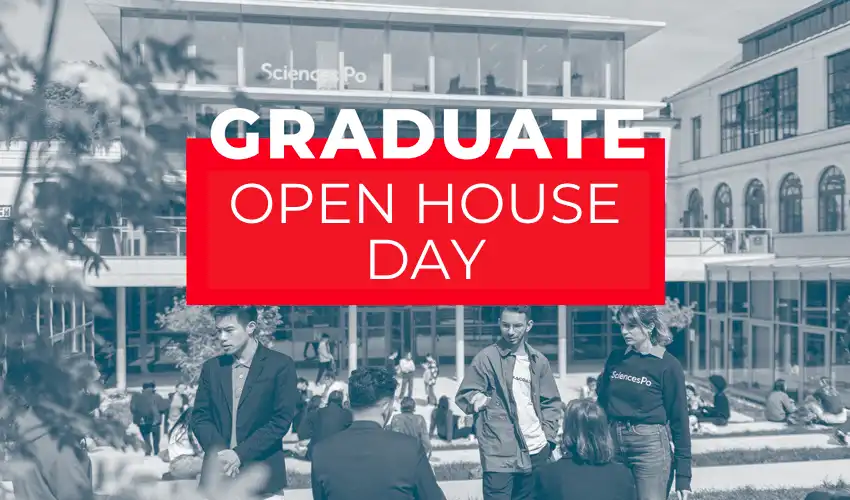
On 17 October 2026: meet faculty members, students and representatives and learn more about our 30 Master's programmes.