
Home>Sonali, Global Anti-Fraud Officer and Risk Specialist, ING
25 March 2026
Sonali, Global Anti-Fraud Officer and Risk Specialist, ING
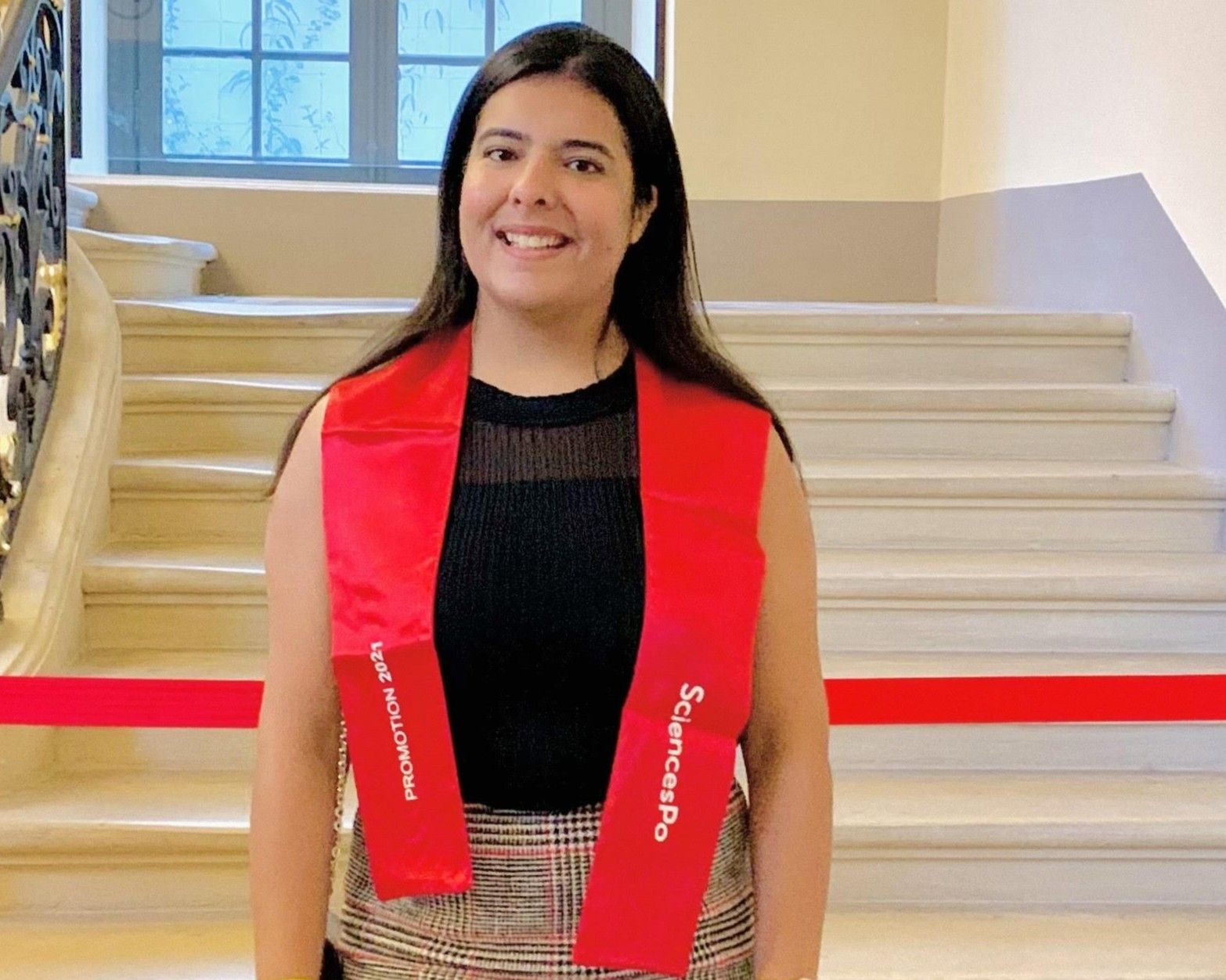
Sonali Khurana has graduated in International Economic Policy. Coming from India, she is Global Anti-Fraud Officer and Risk Specialist at ING, in Amsterdam (Netherlands).
What are your main responsibilities?
I work at the intersection of international economic policy, international security, and ethical governance—a space that strongly connects to what I studied at Sciences Po.
My core responsibilities include:
- Designing and implementing global risk management frameworks that help the bank to predict, prevent, detect, and respond to fraud and other forms of financial crime.
- Conducting risk assessments to identify emerging threats to improve risk preparedness for the financial institution.
- Advising senior leadership on risk exposures, translating technical risk insights into strategic recommendations that support sound policy-making and responsible business decisions.
- Monitoring regulatory & geopolitical developments to align our risk posture with global standards.
This role blends economic-policy thinking, analytical rigour, and communication skills, allowing me to apply both sides of my Sciences Po training—in Internal Economic Policy and Journalism—to real-world global risk challenges. The most essential skills in my role are critical thinking, a strong fact-oriented and risk-based approach, forward-looking, being a keen observer, and relying heavily on data-driven analysis.
How did you prepare for this role?
At Sciences Po, I combined my Master’s in International Economic Policy with a concentration in Journalism, which turned out to be the perfect foundation for a career in risk and investigations. Through investigative journalism courses, I discovered how much I enjoyed analysing complex systems, tracing hidden patterns, and understanding the mechanics behind financial crime and terrorism financing.
During my master’s internship, I worked as an Anti-Money Laundering investigator at a consultancy. That experience showed me how policy, regulation, global security, and financial crime intersect—and it confirmed that this was the field where I wanted to grow. After graduating, I continued building expertise across risk management, fraud, Anti Money Laundering /Counter Financing Terrorism.
I later obtained professional certification as a specialist in Anti-Money Laundering and Counter-Terrorism Financing (ACAMS), which strengthened my profile for global roles. This combination of academic training, investigative skills, and hands-on experience ultimately helped me step into my current position in a large financial institution.
What is the most fascinating part of this job?
The most fascinating part of this job is how it constantly keeps me curious and alert to what’s happening in the world. Fraud, global risks, and security threats evolve every day, and staying ahead of them requires continuous learning, awareness, and analytical thinking.
What also fascinates me is the broader impact of the work I do. Fraud and global risks don’t exist in isolation because they reflect economic pressures, regulatory gaps, geopolitical tensions, and human behaviour. Being able to connect these dots and contribute to strengthening global systems and protecting communities makes the job uniquely rewarding. In my last Fraud Threat Landscape report, we highlighted how geopolitical tensions and economic pressures can directly influence criminal behaviour.
How did your PSIA experience contribute to the position you hold today?
One of the best decisions I made at Sciences Po was choosing a third-semester internship, which gave me hands-on experience investigating politically exposed persons and white-collar criminals. This early exposure to real cases helped me understand the complexity of global crime networks and confirmed that this was the work I wanted to pursue.
Academically, the combination of classes I took became a perfect foundation for the role I hold today:
Country Risk taught me to analyse geopolitical and macro-economic vulnerabilities.
Econometrics strengthened my analytical discipline and data-driven thinking.
Investigative Journalism refined my investigative instincts and significantly improved my writing skills, enabling me to clearly articulate complex risks, draft investigations, and communicate insights with precision.
This combination of analytical rigor, investigative training, global awareness, and strong writing skills has made me well-equipped to fight economic crime in this increasingly interconnected world. My PSIA experience is deeply embedded in how I think, analyse, and communicate today.
what advice would you give to the current students?
I would advise the students to take full advantage of PSIA’s course catalogue as it offers incredible freedom to build unique combinations of classes that match your interests. Use that flexibility to shape a profile that is versatile, distinctive, and competitive. The right mix of courses can give you an edge over graduates from other schools and open doors to careers you may not have imagined yet. Stay curious, question everything, and seek real-world experience whenever you can.
Information Sessions: Masters
Find out more about the Masters programs and the wide choice of specialisations offered by the 8 Schools of Sciences Po during our webinars dedicated to applicants.