
Home>Rebeca Grynspan at PSIA: A unique encounter with a candidate for the highest UN office
19 May 2026
Rebeca Grynspan at PSIA: A unique encounter with a candidate for the highest UN office
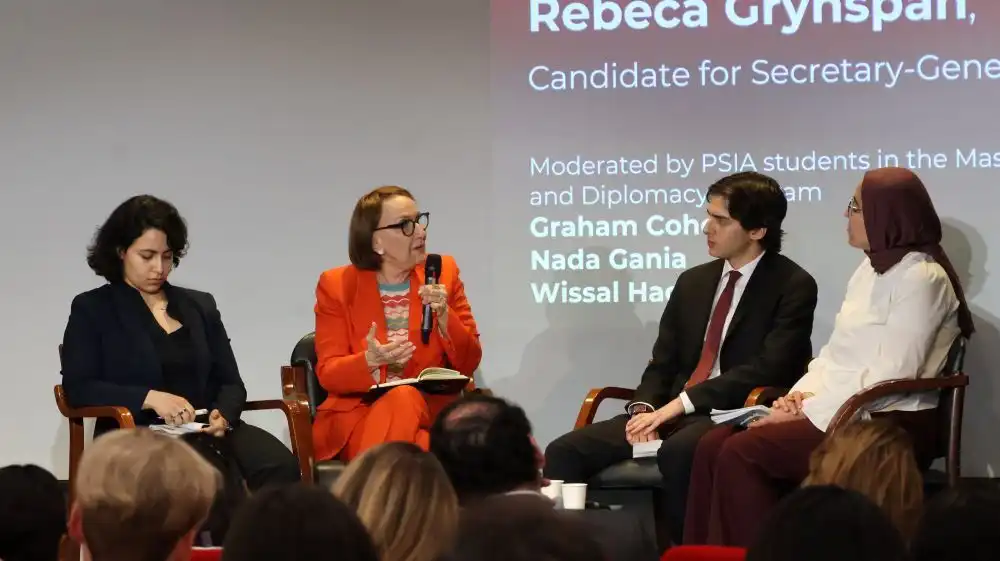
The Paris School of International Affairs (PSIA) at Sciences Po had the honor of welcoming Ms Rebeca Grynspan, former Secretary-General at UN Trade and Development (UNCTAD) and one of the four currently declared candidates for the selection of the next UN Secretary-General.
Watch the full video on replay : https://sciencespo.cache.ephoto.fr/publication/3c9igq/hwo1cm95mc5u0kg
Ms Grynspan addressed an inspiring keynote and extended conversation with students on the future of multilateralism and the reforms needed to strengthen the United Nations.
For PSIA students, many of whom aspire to careers within the UN system, the opportunity to engage directly with a candidate for the highest office in global governance was exceptional.

Understanding the context of the 2026 selection process
Under Article 97 of the UN Charter, the Secretary-General is appointed by the General Assembly on the recommendation of the Security Council. Candidates are nominated by Member States and take part in public hearings and interactive dialogues before the Council recommends one name. The 2026 process currently includes four declared candidates: Michelle Bachelet, former President of Chile, Rafael Mariano Grossi, Director of the International Atomic Energy Agency, Rebeca Grynspan, and Macky Sall, former President of Senegal. The first public dialogues took place in April, giving UN Member States and civil society a chance to hear directly from the candidates and ask questions of those seeking to lead the Organization.
This broader context framed Grynspan’s visit to PSIA, giving students a front-row seat to a historic moment in multilateral diplomacy.
A conversation on multilateralism, reform, and leadership
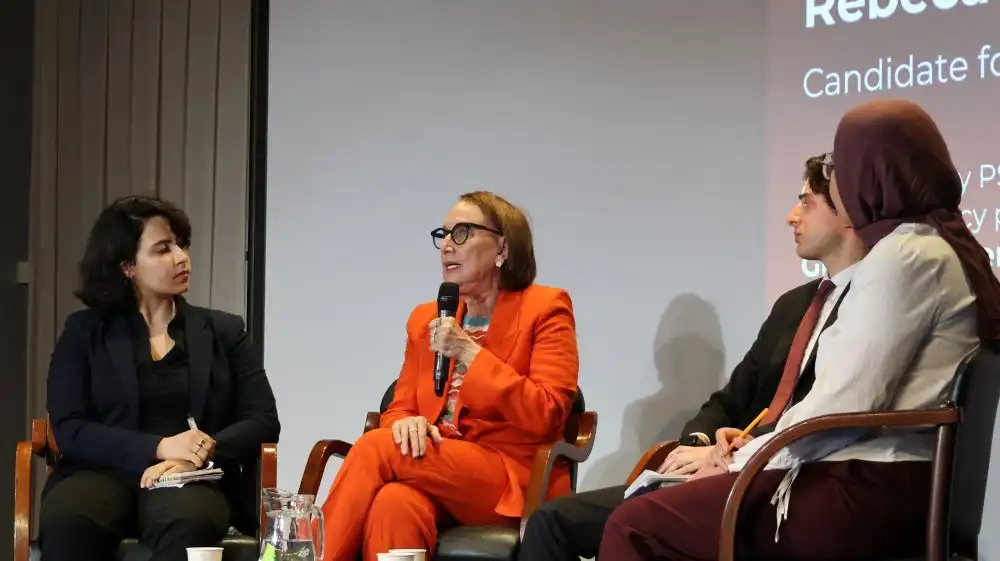
In her keynote, Grynspan reflected on the challenges facing the UN today and outlined the priorities she believes are essential for the institution’s future. She emphasized that peace cannot be sustained without development and human dignity, which she described as core pillars of the UN’s mission. She also highlighted the need to bring the UN back to the center of global discussion, at a time when competition between international organizations has intensified.
Financial resilience was another central theme. Not all Member States meet their financial obligations, which limits the UN’s ability to act. Strengthening trust in the institution, she argued, is essential to ensuring predictable resources. She also addressed ongoing debates on Security Council reform, including efforts to limit the use of the veto in situations of mass atrocities and the requirement for states to explain their veto before the General Assembly.
Throughout the discussion, she encouraged students to remain engaged and to recognize the importance of leadership grounded in responsibility and clarity of purpose. As she reminded the audience, “History is not linear. We have choices.”
A distinctive student experience at PSIA
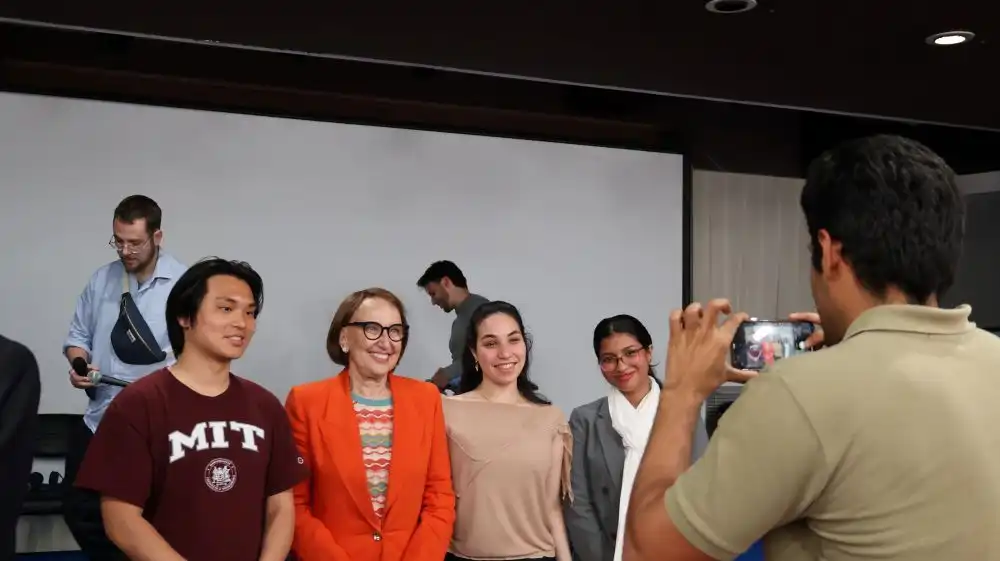
One of the defining features of the event was the central role played by students. Three PSIA students from the Master in International Governance and Diplomacy program, Nada Gania, Graham Cohen, and Wissal Hachadi, served as moderators for the discussion. They guided the conversation and engaged directly with Grynspan on issues ranging from conflict prevention to technological inclusion.
For many students in the room, the experience was both inspiring and formative. As future practitioners who hope to join the UN or its agencies, they had the rare opportunity to question a candidate for the position of Secretary-General about her vision, priorities, and understanding of global leadership.
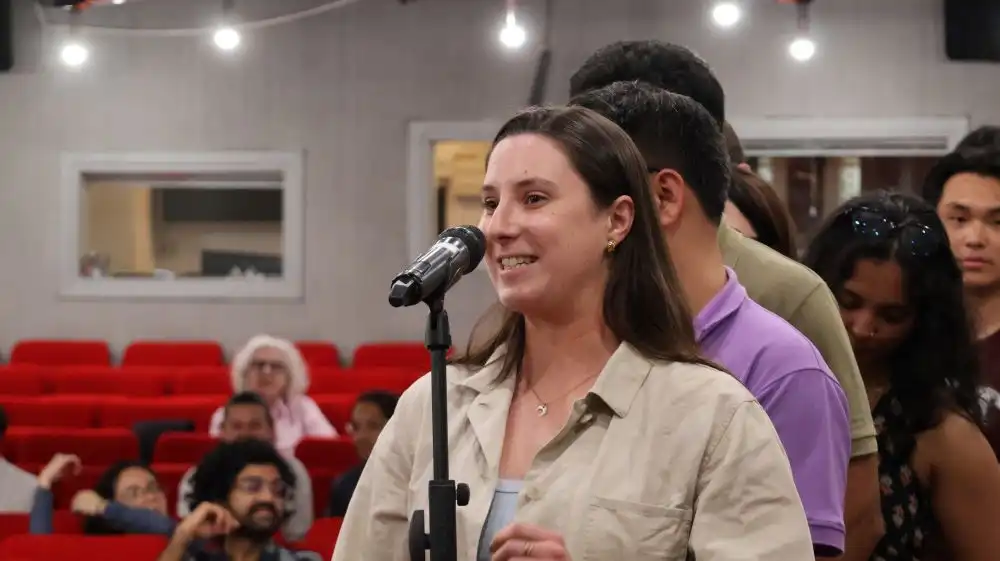
Graham Cohen noted how generous Grynspan was with her time and attention, insisting on taking every question from students still in line. Wissal Hachadi highlighted her response to a question on gender equality: “Equity will come when we no longer need to count.” Both described the encounter as a moment that will stay with them as they prepare for careers in international affairs.
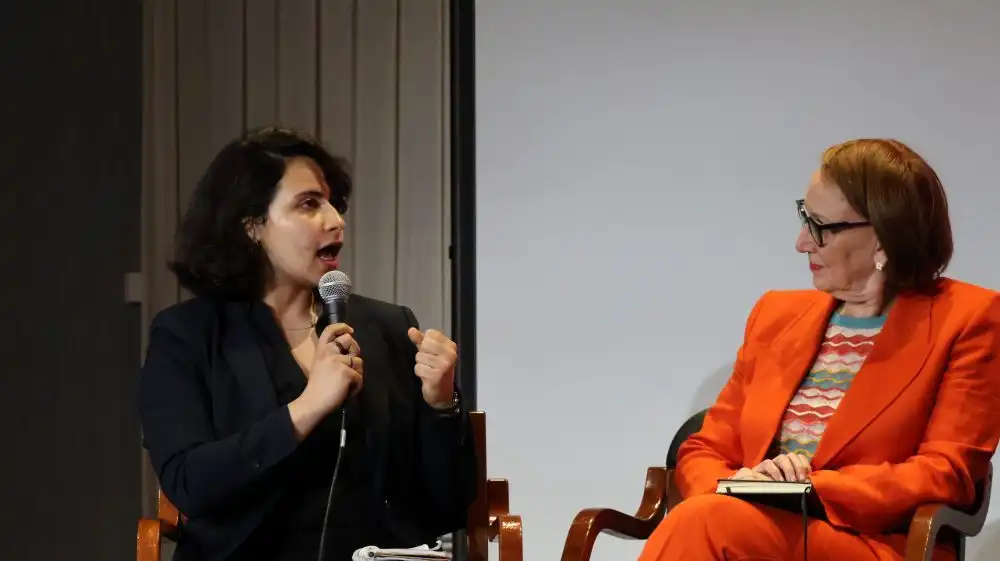
For Nada Gania, moderating the discussion has been “the highlight of [her] year”. She added “Given how busy candidates for UN Secretary-General are, seeing her take the time to speak directly with students, listening to our concerns and thoughtfully addressing all our questions, was truly inspiring.”
Preparing the next generation of multilateral leaders
At PSIA, students engage directly with the politics of multilateral governance, including through simulations of the Security Council’s recommendation of a Secretary-General. The visit of Rebeca Grynspan offered a vivid illustration of the dilemmas and possibilities that define global leadership today. It also reaffirmed the value of creating spaces where students can interact with practitioners at the highest level, especially at a moment when the future of the UN is being actively shaped.
Virtual Graduate Open House day, October 2025

On 17 October 2026: meet faculty members, students and representatives and learn more about our 30 Master's programmes.