
Home>Paulina, Ministry of Climate and Environment of Poland
11 May 2026
Paulina, Ministry of Climate and Environment of Poland

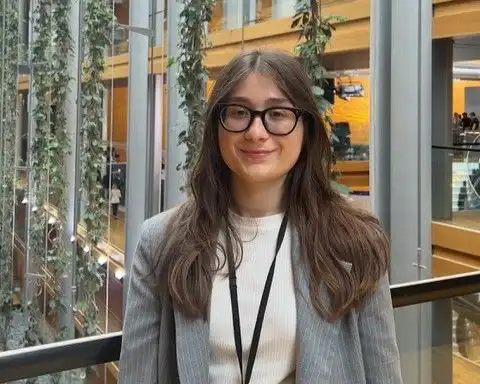
Paulina Jabczynska has graduated in Environmental Policy. She works as Acting Head of the Climate Negotiations Unit at the Ministry of Climate and Environment of Poland.
What are your main responsibilities?
I’m a climate negotiator for Poland and also part of the EU negotiation team under the UN climate process (UNFCCC). My role involves participating in climate COPs and June SB sessions in Bonn, as well as working year-round towards successful outcomes during negotiations. Because the EU negotiates as a bloc, my work takes place at both the national and European levels. There are many different negotiation tracks in this process, but I focus on adaptation, loss and damage, and response measures. In practice, this means participating in intensive negotiations, drafting and shaping policy positions, and working closely with international partners. I’m also a member of the Executive Committee of the Warsaw International Mechanism, a UNFCCC-constituted body focusing on loss and damage.
Beyond negotiations, my responsibilities include preparing briefing materials and draft statements for ministers. I also review and provide input on documents related to international climate policy across various international forums, including the OECD, the UN, and the EU.
As Acting Head of the Climate Negotiations Unit, I coordinate my team's work. This role means I’m also a Deputy Head of Poland’s Delegation to the UNFCCC, therefore I help organize the work of the broader Polish negotiation team, which includes representatives from other ministries and national research institutions. I also oversee Poland’s involvement in the IPCC and the Climate Club.
How did you prepare for this job?
My academic background and previous work experiences were closely aligned with this role. Studies at PSIA provided me with a strong foundation in many climate-related topics. Beforehand, I have also completed internships focused on climate policy at the European Parliament and the OECD. These experiences helped me understand how climate policy is developed and negotiated in practice. Overall, the combination of solid academic training and practical experience in climate policy made me already familiar with many of the topics, actors, and dynamics involved in international climate negotiations when I started this role.
What is the most fascinating part of your job?
One of the most fascinating parts of my job is actively participating in international climate negotiations, particularly during COPs. These conferences can be intense and sometimes chaotic, but they offer a unique opportunity to see how global decisions are actually made. It is also very rewarding to contribute to shaping the EU’s negotiation position and to work with colleagues from across Europe and around the world.
What makes the experience especially meaningful is seeing the full process of negotiations unfold. Knowing I’ve contributed, even in a small way, to progress on global climate action is very motivating.
How did your PSIA experience contribute to the position you hold today?
During my third semester at PSIA, I decided to write a master’s thesis on international climate cooperation, which deepened my understanding of climate negotiations. Furthermore, I took classes focused on adaptation that strengthened my understanding and interest in this topic. As this is one of the main topics I follow during negotiations, the classes I took gave me a solid foundation to build on in my daily work.
Beyond classes, the diverse environment and community at PSIA are invaluable. During negotiations, I often meet with friends I made during my studies and former professors.
What advice would you give to current students?
One of the most valuable things you can do at PSIA is invest in the relationships you build, both with your fellow students and your professors. These connections often stay with you long after graduation, and you may even cross paths again professionally, as I have. Make the most of your time at Sciences Po, as you’ve worked hard to get in, so take the opportunity to learn, explore, and enjoy the experience.
I know that finding a job after graduation is not always easy. So, I would encourage everyone to stay open-minded in their job search. Even if the position might not seem ideal initially, it can turn into an incredible experience. If you are thinking about joining international organizations, I would recommend starting by working for your national government, as this can help you build experience and relationships that could help you succeed in them.
Finally, focus on opportunities that genuinely interest you and help you grow. Be curious and willing to take initiative. In my case, being proactive and having a clear sense of direction helped me progress quickly.
Virtual Graduate Open House day, October 2025

On 17 October 2026: meet faculty members, students and representatives and learn more about our 30 Master's programmes.