
Home>Navigating the "Messy Middle": Why Energy Transitions defines international affairs
11.12.2025
Navigating the "Messy Middle": Why Energy Transitions defines international affairs
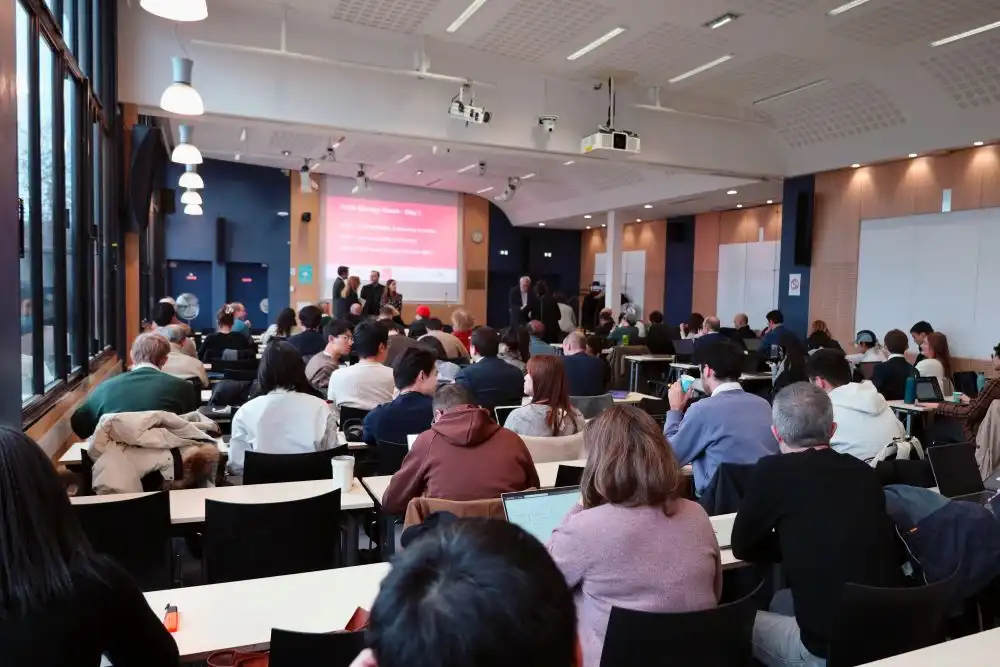
On December 1st, Sciences Po hosted the launch of the Paris Energy Week, a collaborative event gathering global leaders and energy experts marking the decade since the integration of energy into the Sustainable Development Goals (SDGs). The event served as a critical platform to debate the future of the global energy transition.
The mood was one of pragmatic urgency: the world is stuck in a "messy middle", where fossil fuel dependencies collide with new vulnerabilities in critical mineral supply chains, grid stability, and international trade.
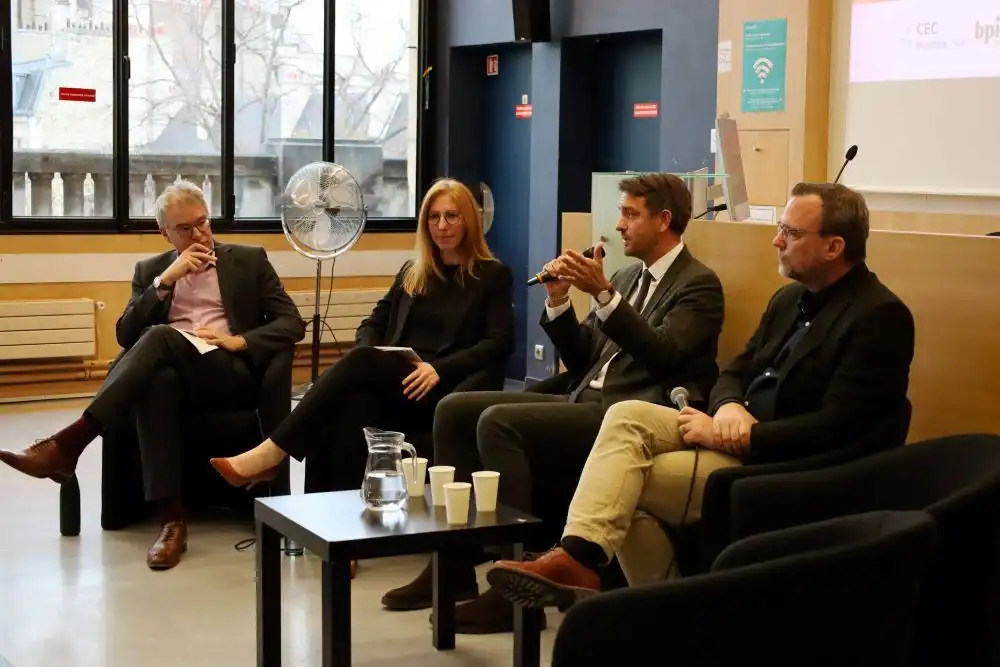
The Energy Foreign Policy of the Messy Transition
Michal Meidan, Director of the China Energy Programme at the Oxford Institute for Energy Studies and the Scientific Director of the Master in International Energy Transitions at PSIA, opened the first panel by challenging the room with a stark observation:
We don't move quite neatly from petrostates to electrostates; we are somewhere in the middle of a messy transition.
She warned that while the world moves away from the volatility of fossil fuel markets, it faces new insecurities related to grid stability and reliability.
The discussion quickly turned to the fragmentation of global trade. Pedro Brancante, Head of Energy & Mining Affairs at the Embassy of Brazil, cautioned against the formation of exclusive political clubs of countries to secure resources, advocating instead for broader cooperation.
However, Henning Gloystein from Eurasia Group offered a counterpoint, noting that such clubs, like the developing partnership between Canada, Norway, and the UK, are already emerging as a second-best solution in a world gridlocked by a constant threat of energy crisis.

The World Energy Outlook: When Technical Challenges Meet Political Urgency
Tim Gould, Chief Energy Economist at the International Energy Agency (IEA), presented the World Energy Outlook 2025. His message was clear: while the Age of Electricity has arrived, the climate goals set in Paris a decade ago are far from being reached.
However, there is a silver lining: as Gould shared with the audience, the current outlook is significantly better than projections made just a few years prior:
The last time we did a Current Policy Scenario was in 2019. And then, by mid-century, emissions were 10 gigatons higher than what we are all looking at today. So some of the changes that we've seen are working their way through into those emissions trajectories.
In the same vein, Isabelle Kocher de Leyritz, CEO of Blunomy and former CEO of ENGIE, highlighted the IEA’s finding that transitioning to clean energy could actually deliver lower prices.
She reminded though, that extreme weather events, which mostly affect vulnerable populations, demand sharp expertise in both mitigation and adaptation.
Marc Ringel, Chair for Sustainable Development and Climate Transition at Sciences Po, echoed the need for resilience. With the 1.5°C goal fading, adaptation policies must become a priority alongside mitigation efforts.


The Necessary Knowledge and Skills in Energy Transitions
These discussions reveal something crucial for PSIA students: energy transitions require a unique skillset that bridges technical knowledge, policy analysis, and geopolitical understanding.
When Gloystein described hydrogen's "sad hangover" after years of hype, citing the Port of Antwerp's struggle as an example, he illustrated how real-world energy decisions demand both technical literacy and policy judgment.
As the sessions drew to a close, a final, resonant warning cut through the technical debates on grids and minerals.
When asked to identify the most underestimated risk facing the energy transition, Michal Meidan, did not point to a geopolitical rival or a supply shortage.
It's misinformation. That’s the biggest risk... Not understanding, not having the facts.
In a world of messy transitions, the panelists agreed that the ability to ground decisions on rigorous analysis is invaluable.
The energy transition is irreversible, driven by the economic competitiveness of renewables. But its trajectory will be shaped by policy choices, geopolitical negotiations, and leadership decisions made in the coming decade. The question isn't whether the transition will happen, but how and who will guide it.
This is precisely what PSIA’s Master in International Energy Transitions is about. The program doesn't just teach energy policy, it integrates it with international relations, economics, and political analysis. Students learn to navigate the "messy middle," understanding both the technical realities of grid modernization and the diplomatic complexities of mineral supply chains.
For policymakers and industry leaders alike, the challenge now is to navigate this "messy" interim without losing sight of the ultimate goal: a secure, affordable, and sustainable energy future.
Information Sessions: Masters

Find out more about the Masters programs and the wide choice of specialisations offered by the 8 Schools of Sciences Po during our webinars dedicated to applicants.
