
Home>Mariia, Energy Portfolio Monitoring Specialist, the World Bank
29 June 2026
Mariia, Energy Portfolio Monitoring Specialist, the World Bank

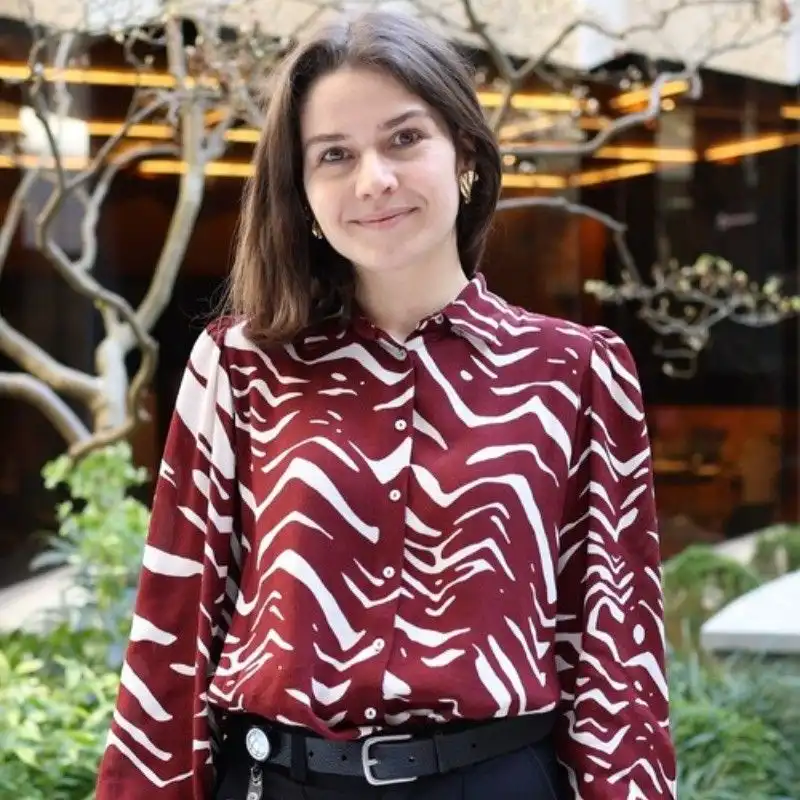
Mariia Melnyk has graduated in International Energy Transitions. Coming from Ukraine, Mariia is Energy Portfolio Monitoring Specialist at the World Bank in Washington DC.
What are your main responsibilities?
I am part of the Energy Policy and Regulation Unit and work for two teams. First, I contribute to the Energy Policy and Regulation Knowledge Unit, where we produce analytical work and knowledge products for the World Bank and governments. Second, I work with the Africa Region, supporting the delivery of Mission 300, the joint World Bank and African Development Bank initiative to connect 300 million Africans to electricity by 2030. My main responsibilities include monitoring and reporting on World Bank energy access projects, coordinating with Mission 300 partners and African governments, and supporting the implementation of National Energy Compacts—strategic reform plans for the energy sector. I am also involved in preparing a regional distributed renewable energy lending project in West and Central Africa, as well as analytical work on how utilities in developing countries can better harness the potential of renewable energy. These responsibilities require strong analytical skills, effective communication, and the ability to coordinate across multiple teams, stakeholders and institutions.
How did you prepare for this job?
My engagement with the World Bank began during my time at Sciences Po in 2019, when I was selected for an internship with the Europe and Central Asia Energy Team. That experience gave me valuable exposure to the institution and allowed me to start building a professional network within the organization.
Over time, I continued to strengthen those connections and deepen my interest in international development and energy policy. Before joining the World Bank full-time in February 2025, I gained additional experience at the OECD and the French Energy Regulator, both of which helped me develop the policy and analytical skills required for my current role.
What is the most fascinating part of your job?
The most fascinating aspect of my job is its diversity. My work covers a wide range of topics—from monitoring energy access portfolios and supporting the implementation of Energy Compacts, to collaborating with governments and Mission 300 partners. At the same time, I am gaining experience in lending operations as well as analytical and advisory services, which are at the core of the World Bank’s mission.
I am also inspired by the diversity of the people I work with. My colleagues come from all over the world and bring different perspectives, experiences, and ideas. This international environment reminds me of my time at PSIA, where I first discovered how much I thrive in multicultural settings. In many ways, my work at the World Bank feels like an extension of that experience: working with talented people from around the globe while continuously learning through training programs, conferences, and exposure to new ideas.
How did your PSIA experience contribute to the position you hold today?
My experience at PSIA played a key role in shaping my passion for international development and multicultural work environments. It taught me how to collaborate effectively with people from different cultural and professional backgrounds, and reinforced my belief that innovation and strong institutions are built through diverse perspectives. Academically, PSIA trained me to approach complex issues holistically. Challenges in the energy sector rarely have a single cause and are often rooted in political, economic, social, and cultural factors. This multidimensional way of thinking is something I use every day in my current role.
My third-semester experience in Norway at the Extractive Industries Transparency Initiative (EITI) was particularly valuable, as it deepened my understanding of the global energy and mining sectors. Overall, my time at PSIA was a foundational step in developing the skills, mindset, and international outlook that continue to benefit me today.
What advice would you give to current students?
I have two main suggestions. First, take full advantage of all the opportunities Sciences Po offers: classes, conferences, workshops, and informal conversations with classmates and professors. These experiences are just as valuable as academic learning. Second, use this time to explore what gives you purpose and motivation, whether through your gap year, third semester, internships, or extracurricular activities. You do not need to have everything figured out right away. Instead, focus on building a strong foundation of skills, values, and experiences that will guide you throughout your career.
Virtual Graduate Open House day, October 2025

On 17 October 2026: meet faculty members, students and representatives and learn more about our 30 Master's programmes.