
Home>Gabriela, Partnership Specialist, the Institute for Climate and Society
24 April 2026
Gabriela, Partnership Specialist, the Institute for Climate and Society

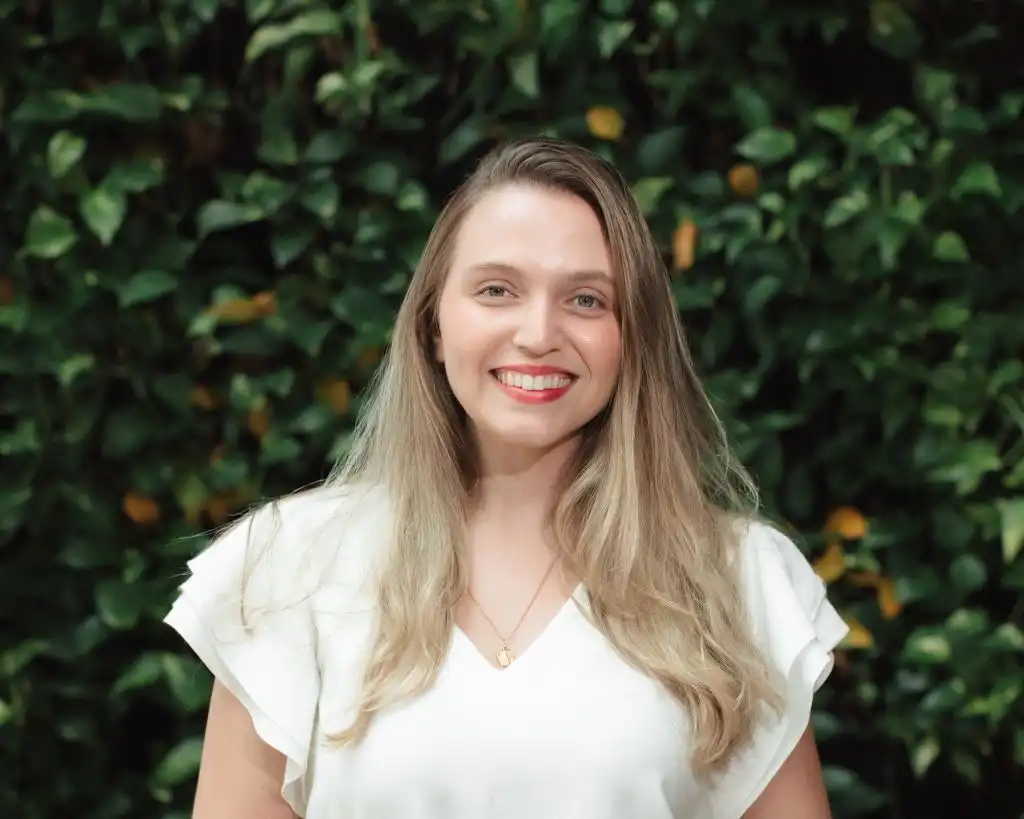
Coming from Brazil, Gabriela Campos Furtado has graduated in Human Rights and Humanitarian Action. She is a Partnership Specialist at the Institute for Climate and Society (iCS).
What are your main responsibilities?
As a Partnerships Specialist at the Institute for Climate and Society (iCS), a Brazilian philanthropic organization focused on climate action, sustainable development, and social justice, my role is to develop strategies to strengthen relationships with donors, philanthropic organizations, and other key stakeholders.
My work has always been about building bridges between different actors, sectors, and agendas. I am especially interested in translating complex issues into messages that are accessible, strategic, and action-oriented.
A large part of my work involves stakeholder engagement, strategic positioning, andcommunication. It is essential to align expectations, identify opportunities for collaboration, and help transform complex technical agendas into clear and compelling narratives for partners.
I work closely with different teams across the organization, including programs, communications, operations, and leadership. My role requires strong cross-functional coordination, project management, and the ability to navigate different perspectives and priorities.
I am also involved in drafting reports, preparing presentations, developing briefing materials, supporting events and convenings, and representing the organization in conversations with partners and external stakeholders.
For me, communication is not only about visibility; it is also about trust-building, influence, and creating the conditions for collaboration.
How did you prepare for this job?
I prepared through a combination of international academic training, professional experience, and networking.
Since graduating from Sciences Po, I have intentionally built a career at the intersection of sustainability, stakeholder engagement, communications, and multilateral relations.
Before joining iCS, I worked across the private sector, the UN system, and civil society organizations. During my master’s degree, I completed a six-month internship at L’Oréal headquarters, where I was exposed to corporate sustainability and consumer-facing communication strategies. When I returned to Brazil during the pandemic, I worked on ESG reporting and investor relations, helping translate technical sustainability indicators into structured and decision-useful reporting for investors and financial institutions.
My experience in the UN system was especially important in preparing me for my current role. At the UN Global Compact Network Brazil, I managed relationships with more than 2,000 companies and promoted the UN 2030 Agenda within the Brazilian private sector. This experience strengthened my skills in stakeholder engagement, negotiation, fundraising, strategic communication, public speaking, and corporate diplomacy.
Later, at UNDP, I worked in partnership with Brazil’s Ministry of Foreign Affairs in the context of the country’s G20 and BRICS presidencies. I supported negotiations involving government actors and international counterparts, produced diplomatic materials and briefing notes, monitored working groups, and contributed to high-level institutional positioning. This experience taught me how to navigate politically sensitive environments, align different stakeholders, and communicate clearly in highly complex and multicultural contexts.
Sciences Po was central to this preparation. Beyond the academic content, PSIA gave me strong communication, writing, public speaking, negotiation, and diplomacy skills. It also exposed me to multicultural environments and taught me how to connect different sectors, perspectives, and interests.
What is the most fascinating part of your job?
The most fascinating part of my job is the opportunity to connect people, organizations, and resources around solutions to some of the world’s most urgent challenges.
I am particularly interested in how climate, inequality, and economic development are deeply interconnected. I believe the most effective solutions are those that combine environmental ambition with social inclusion, stronger institutions, and long-term partnerships.
What I enjoy most is working in environments where different interests, perspectives, and priorities need to be aligned. Much of my role is about building bridges between stakeholders and creating the conditions for collaboration.
I also value the fact that my work is constantly evolving. I am continuously learning about new topics and developing presentations, briefing materials, and pitch decks on a wide range of issues, such as carbon markets, regenerative agriculture, critical minerals, bioeconomy, biofuels, renewable energy, oceans, and sustainable finance.
This variety makes the role especially stimulating, because it requires me to combine strategic thinking, communication, and curiosity while staying connected to some of the most important debates shaping the future.
How did your PSIA experience contribute to the position you hold today?
My experience at PSIA contributed to my career in ways that go far beyond technical knowledge.
What I developed most during my time at Sciences Po were communication, persuasion, public speaking, negotiation, and what I would call corporate diplomacy skills. PSIA taught me how to communicate with different audiences, navigate complex environments, understand multiple perspectives, and build consensus among stakeholders with different priorities.
These are skills that I use every day in my current role and throughout my professional trajectory. Whether I was working with investors and ESG data at Amaggi, corporate stakeholders at the UN Global Compact, diplomats and government representatives at UNDP, or philanthropic partners at iCS, my work has always depended on being able to build trust, create strong relationships, facilitate conversations, and translate complex issues into strategic and accessible messages.
The third semester experience was especially important because it marked the beginning of my career in sustainability. During that period, I worked as an intern in the CSR department at L’Oréal headquarters, which was my first professional experience in the ESG field. It exposed me to sustainability from a corporate perspective and ultimately shaped the direction of my career from that point onward.
My specialisation in Diplomacy was particularly relevant because it gave me a broader understanding of geopolitics, international cooperation, development, and institutional dynamics. I also always recall dearly the learning I gained from some of my favourite classes, such as Public Speaking, Political Speech Writing, and Humanitarian Negotiation. These courses helped me become more confident in presenting ideas, tailoring messages to different audiences, and navigating sensitive conversations — skills that remain central to my work today.
In sum, PSIA strengthened my ability to think critically, write clearly, present ideas confidently, and feel comfortable in multicultural and international environments. This became especially important as I built a career that sits at the intersection of sustainability, philanthropy, communications, diplomacy, and stakeholder engagement.
What advice would you give to current students?
I would encourage current students to be proactive and intentional about building both their technical expertise and their professional network.
It is important to explore internships, volunteer experiences, research opportunities, and conversations with alumni as early as possible. Often, career paths are shaped not only by formal applications, but also by relationships, informal conversations, and being visible in the right spaces.
Getting involved in student associations and extracurricular initiatives can also make a big difference. During my time at Sciences Po, I was part of Pour le Brésil, where I not only developed organisational, partnership, and event management skills, but also built friendships that I still maintain today.
It is equally important to stay open to interdisciplinary careers. I started with a Master’s degree in Human Rights and Humanitarian Action, but my career evolved into a multidisciplinary path that brought together sustainability, diplomacy, communications, stakeholder engagement, and climate agendas. Many of the most interesting roles today sit at the intersection of different sectors and areas of expertise.
Finally, do not underestimate the importance of writing and communication skills. Being able to explain complex issues clearly, adapt messages to different audiences, and build trust with stakeholders is incredibly valuable in almost any field.
Virtual Graduate Open House day, October 2025

On 17 October 2026: meet faculty members, students and representatives and learn more about our 30 Master's programmes.