
Home>Elise, Norwegian Ministry of Health and Care Services
6 May 2026
Elise, Norwegian Ministry of Health and Care Services

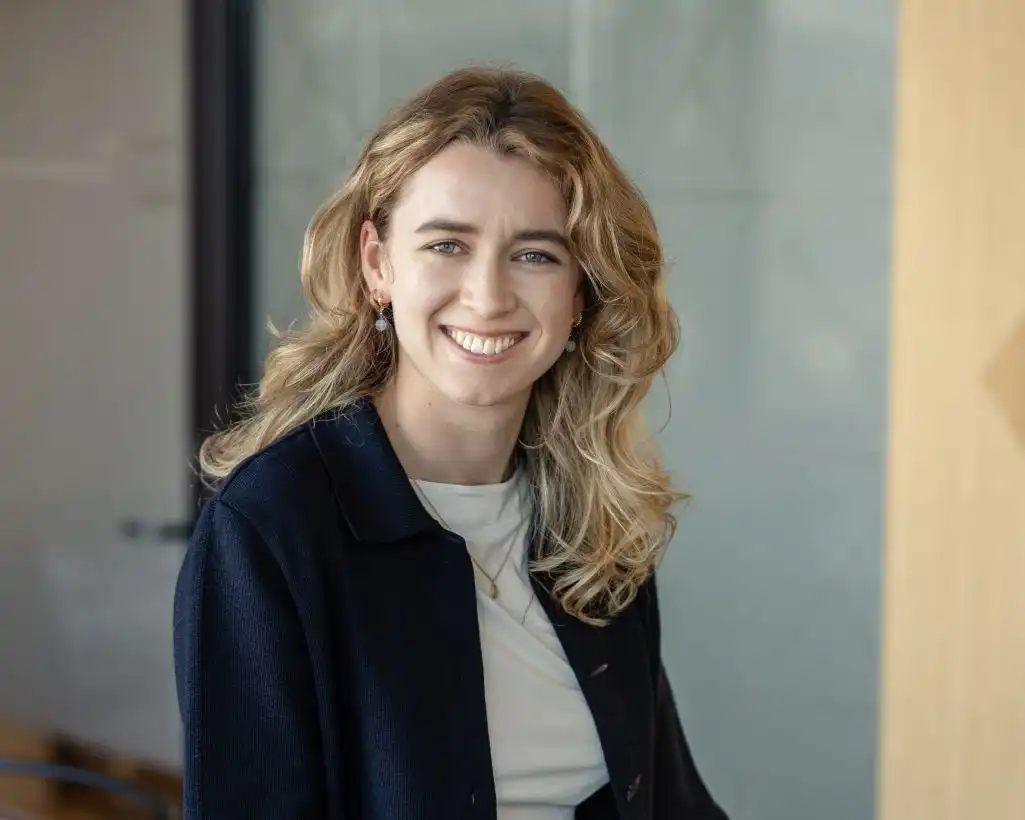
Elise Agdestein has graduated in International Security. Originally from Norway, she now works with international health preparedness and security in the Norwegian Ministry of Health and Care Services.
What are your main responsibilities?
I work in the Section of Security and Emergency Preparedness at the Norwegian Ministry of Health and Care Services, where I focus primarily on international cooperation in health preparedness and civil-military collaboration. The civilian health sector plays a vital role in the concept of total defence, which in recent years has gained renewed importance in strengthening Europe’s defence capabilities in today's security environment. My responsibilities include preparing presentations, talking points, policy briefs and recommendations, and coordinating and following up on allied, Nordic and European health preparedness initiatives related to total defence and civilian health support to the armed forces.
It is a dynamic and fast-evolving field. While the Nordic countries have cooperated closely on health preparedness for several years, NATO and the EU has recently launched several initiatives on civil security, total defence and military preparedness, where health preparedness is a central pillar. Through the EEA Agreement, Norway participates in several EU initiatives on health preparedness.
What is the most fascinating part of your job?
Before starting this role, I had little knowledge of the health sector and had hardly imagined working in it. However, I have found it truly fascinating to work in a sector that is so central in society, to both civilian and military preparedness. The health sector is a key pillar of national preparedness and defence overall. A well-functioning and resilient health service is, in itself, a form of military deterrence. This is a new aspect which I have learned in this job.
This sector operates with readiness every day, but it is also susceptible to risks like supply chain disruptions and cyberattacks. It must also be ready for a variety of threats, such as pandemics, guaranteeing a clean water supply, and making sure we have enough staff during emergencies. The job is exciting and dynamic because of the intricate risk and threat landscape.
Another fascinating aspect of my work is working in a democratically elected government. This means working close to political decision-making processes, following up on political priorities, and operating within the executive branch while also taking parliamentary decisions into account.
How did your PSIA experience contribute to the position you hold today?
One skill from my time at PSIA that I have found especially valuable is drafting concise policy papers. Many of our assessments were based on this format, which trained me to produce clear, structured analyses and practical recommendations for decision-makers. In addition, the huge amount of group work and oral presentations at Sciences Po helped me develop strong interpersonal skills. These have proven highly valuable, as my work involves close collaboration with colleagues, joint drafting of policy documents, delivering presentations, and coordinating with other ministries, agencies, and regional health authorities.
PSIA also equipped me to work on a variety of topics related to security and international cooperation. My academic focus at PSIA was risk analysis in relation to international science and economic relations. However, having taken classes on topics such as the defence industry, European security, military strategy, international organisations, and transatlantic cooperation, I have a better understanding of the dynamics and divergences of international security cooperation, as well as complex security in the civilian sector. I think that the diverse yet specific nature of the PSIA programme, combined with its strong focus on professional skills, has given me the adaptability to work across different sectors related to security and defence. In my view, the degree's generalist foundation, combined with practical professional training, provides broad competence and skills that can be applied to various positions within a certain field.
What advice would you give to current students?
When I was a student, I had a very clear idea of my dream job and the field I wanted to work in. Although I am not in that exact position today, I still feel that I am fulfilling both my professional ambitions and personal aspirations. My advice to current students would be to remain open-minded about the opportunities that arise along the way. Sometimes you may find yourself in a role that is just as interesting and meaningful as the one you originally imagined - working on similar issues, but from a different perspective and perhaps in a sector you had never considered before.
Virtual Graduate Open House day, October 2025

On 17 October 2026: meet faculty members, students and representatives and learn more about our 30 Master's programmes.