
Home>Christin, Portfolio Manager, KfW Development Bank
3 June 2026
Christin, Portfolio Manager, KfW Development Bank

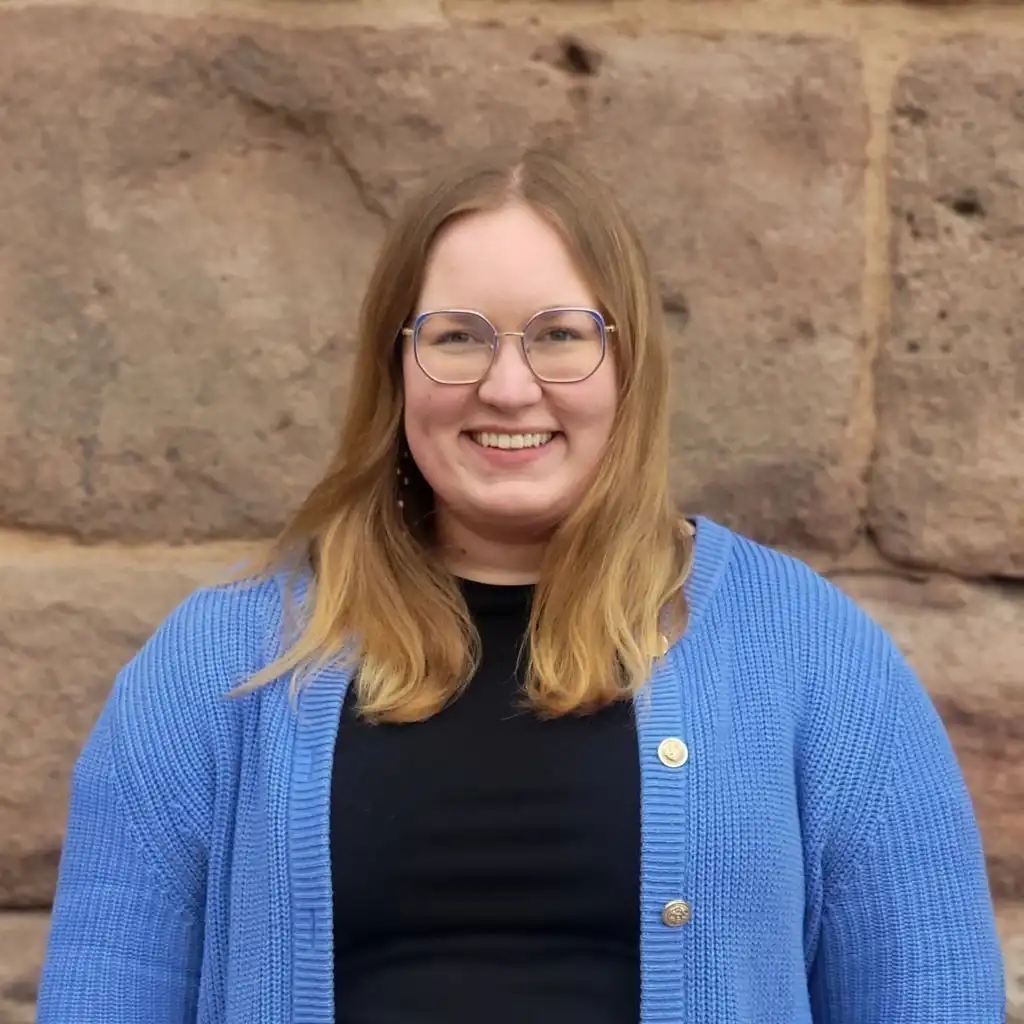
Coming from Germany, Christin Moß graduated in 2022 from the Dual Degree program in International Affairs between PSIA and the LSE. At PSIA, she studied Human Rights and Humanitarian Action and was part of the Law Clinic. She is now working as an energy portfolio manager at the German Development Bank KfW in Frankfurt.
What are your main responsibilities?
KfW Development Bank is financing development cooperation projects for more than 60 years on behalf of the German Government and other donors such as the European Commission in so-called developing countries and emerging economies worldwide with grants and favourable loans. Climate change mitigation and the Sustainable Development Goals are central to KfW, and the projects mainly involve public sector players, such as Ministries and Agencies but also state-owned companies and international organisations.
I joined KfW for a trainee program in 2023 which allowed me to gain experiences in several departments. In 2024, I got promoted to a portfolio manager position and am since working in the Energy Division for the Western Balkans, more precisely on Kosovo and Montenegro. As portfolio manager, I am responsible for both the conception and preparation of new projects, including project appraisals, credit approval and contract negotiations, as well as monitoring the implementation of ongoing infrastructure projects. This includes analysing progress reports from our clients and consultants, reporting to the German Ministry for Economic Cooperation and Development (BMZ) and the European Commission, aligning with co-financiers, reviewing procurement documents, approving disbursements, and negotiating contract amendments.
Luckily, we work closely as a project team, and I learn a lot from our national portfolio coordinators in our country offices, electrical and environmental engineers as well as procurement, contract and disbursement specialists.
How did you prepare for this job?
I enjoyed reading the PSIA career newsletter, participated in the career fair with International Organisations and also joined some career talks. While in the end I didn’t opt for any of the organisations and companies present at these events, they really helped me to better understand the job market in general and my personal interests in particular. It was also really helpful to practice and improve networking skills at these events.
As I studied a double degree, I did not have a third semester for a long internship. Instead, I applied for summer internships between my two master years. This way, I first joined KfW for 3,5 months as an energy intern. This experience and the networking within KfW helped getting into the graduate program.
What is the most fascinating part of your job?
My role has many fascinating aspects, let me try to mention the three most important for me.
First and foremost, it’s the privilege to work this closely with our national colleagues and benefit from their vast knowledge and both regional and project management experience.
Second, it’s working at the intersection of political and economic reforms and just transition. The Western Balkan is part of Europe’s past, present, and certainly future, with all countries aspiring to join the European Union. The projects financed by KfW support the countries to meet the EU Energy Acquis and phase out highly pollutant lignite-fired power plants.
Third, it’s learning so much about renewable energy technologies and witnessing how these technologies and innovative projects come to live in the Western Balkans because of ambitious energy utilities and their highly motivated employees.
How did your PSIA experience contribute to the position you hold today?
I deepened my theoretical understanding of socio-economic rights, development as a concept and measuring development with impact evaluations through the courses I took as part of my Human Rights and Humanitarian Action Master. At the LSE, I added seminars on gendering international politics and Chinese development cooperation and also wrote my dissertation on the latter. The theoretical coursework was supplemented by the Law Clinic on Human Rights, Economic Development, and Globalization (HEDG), which gave me practical insights and the chance to work on a project for the French Development Agency AFD together with two brilliant law students.
Overall, both PSIA and the LSE significantly improved my ability to read efficiently, identify key information in long and complex texts, and create concise writing. I moreover gained knowledge on how to adapt my communication style to adjust to the needs of interlocutors, be it engineers, donors, politicians or clients. Lastly, but most definitely not least, the community of international students and open discussions challenged my perspective and pushed my critical thinking capacities.
What advice would you give to current students?
As simple as it may sound: Follow your gut – but dare to be bold.
I didn't fit every need in the job description when I applied for both my master's program and my present position: My expertise in credit and banking was limited, as was my knowledge of renewable energy technologies. Nevertheless, I was hired, and ever since, I've been able to work on something that I'm passionate about.
Putting the people above the actual tasks is my second piece of advice. The people you spend the most time with will be your coworkers. Nothing will help you advance in your career as much as having colleagues that encourage and support you and provide you with a space where you can grow professionally.
Virtual Graduate Open House day, October 2025

On 17 October 2026: meet faculty members, students and representatives and learn more about our 30 Master's programmes.