
Home>Antonio, Economist, Société Générale
30 September 2026
Antonio, Economist, Société Générale

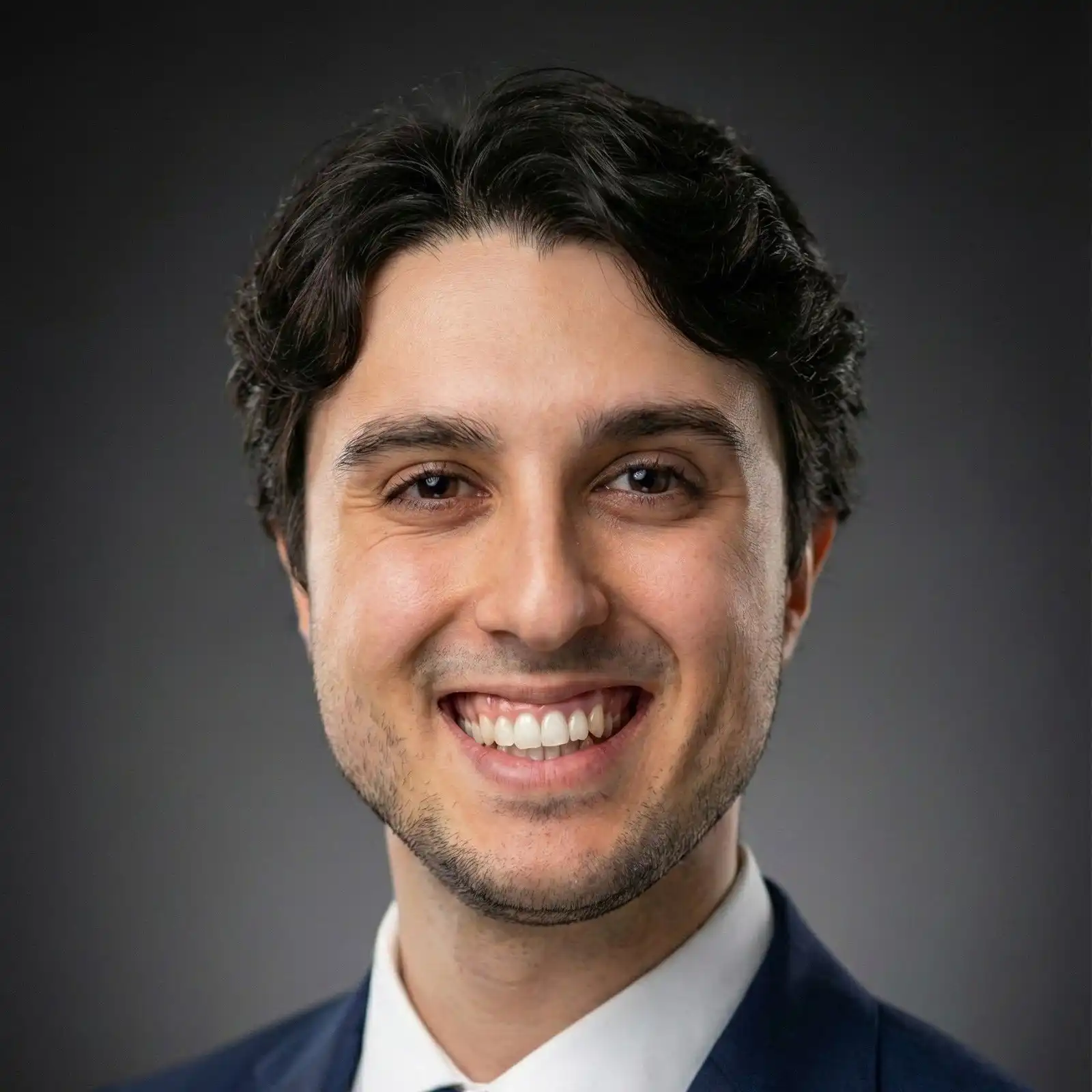
Antonio graduated Summa Cum Laude in International Economic Policy. Coming, from Italy, he is now Economist - UK Macro, Geopolitical & Climate Risk in the Economic Research Department of Société Générale, at La Défense.
What are your main responsibilities?
I am a macroeconomist. Alongside my core forecasting work, I specialise in how geopolitical and climate risks affect the macroeconomic outlook.
- UK macro and rates: I produce the bank's view on the UK economy and interest rates, as well as its internal UK sovereign credit rating.
- Geopolitics: I co-cover geopolitical risk, quantifying how geoeconomic shocks shape the macro outlook. I am also finance chapter co-lead and editor of the Helsinki Manual on Corporate Geoeconomics (Springer, forthcoming 2027), a practitioner manual on how institutions and investors can assess and build resilience to geoeconomic risk.
- Climate and nature: I lead the department's climate insurance scenario modelling and build sovereign vulnerability indicators for climate and nature risk.
How did you prepare for this job?
PSIA gave me a solid theoretical base. Courses in advanced econometrics, macroeconomics, monetary policy, and economic security provided the tools I use every day.
Many of my professors were practitioners as well as academics, so the teaching stayed close to how these ideas are applied inside institutions.
Soft skills mattered just as much. An economist in a bank spends a lot of time presenting analysis to people who have to act on it, and the analysis only has an effect if it convinces them.
What is the most fascinating part of your job?
Much of what I work on is still new territory for economics: how a geopolitical shock moves growth, inflation and rates, how rising climate risk changes the insurance sector, how biodiversity loss or water stress feeds through to the economy. A lot of this relies on scenarios. We map how the world could unfold along different paths and estimate the impact of each. For many of these questions there is no established method yet, so we build it as we go.
What I value just as much is seeing the analysis used in the bank's decisions. My UK forecasts feed into its balance-sheet projections, the climate and nature work into its stress tests, and the sovereign rating into how much exposure it takes to the UK and how much capital it holds against it.
How did your PSIA experience contribute to the position you hold today?
The most direct link was my third-semester internship, which I did in the same Economic Research team I work in today, supporting the economist covering Central and Eastern Europe and Russia. The classes at PSIA had given me the quantitative methods and the economic theory; the internship taught me to apply them under deadlines, for readers who needed an answer they could act on. At the end of the internship, I was offered a permanent position.
What advice would you give to current students?
PSIA gives you a lot of freedom in how you build your profile, so use it deliberately. I would weight your courses towards quantitative ones and those taught by practitioners. Quantitative training makes you useful from day one, and practitioner-led courses show you how theory is used inside institutions, which is what most distinguishes PSIA from other schools. Take your relationships with those professors seriously too, since they know the field from the inside.
Make the most of the fact that PSIA teaches economics alongside geopolitics and climate. Geopolitical and climate shocks increasingly shape the macroeconomy, and being able to work across all three puts you in a good position.
Virtual Graduate Open House day, October 2025

On 17 October 2026: meet faculty members, students and representatives and learn more about our 30 Master's programmes.