
Home>Andrea, Foreign Trade Policy, MEAE
30 April 2026
Andrea, Foreign Trade Policy, MEAE

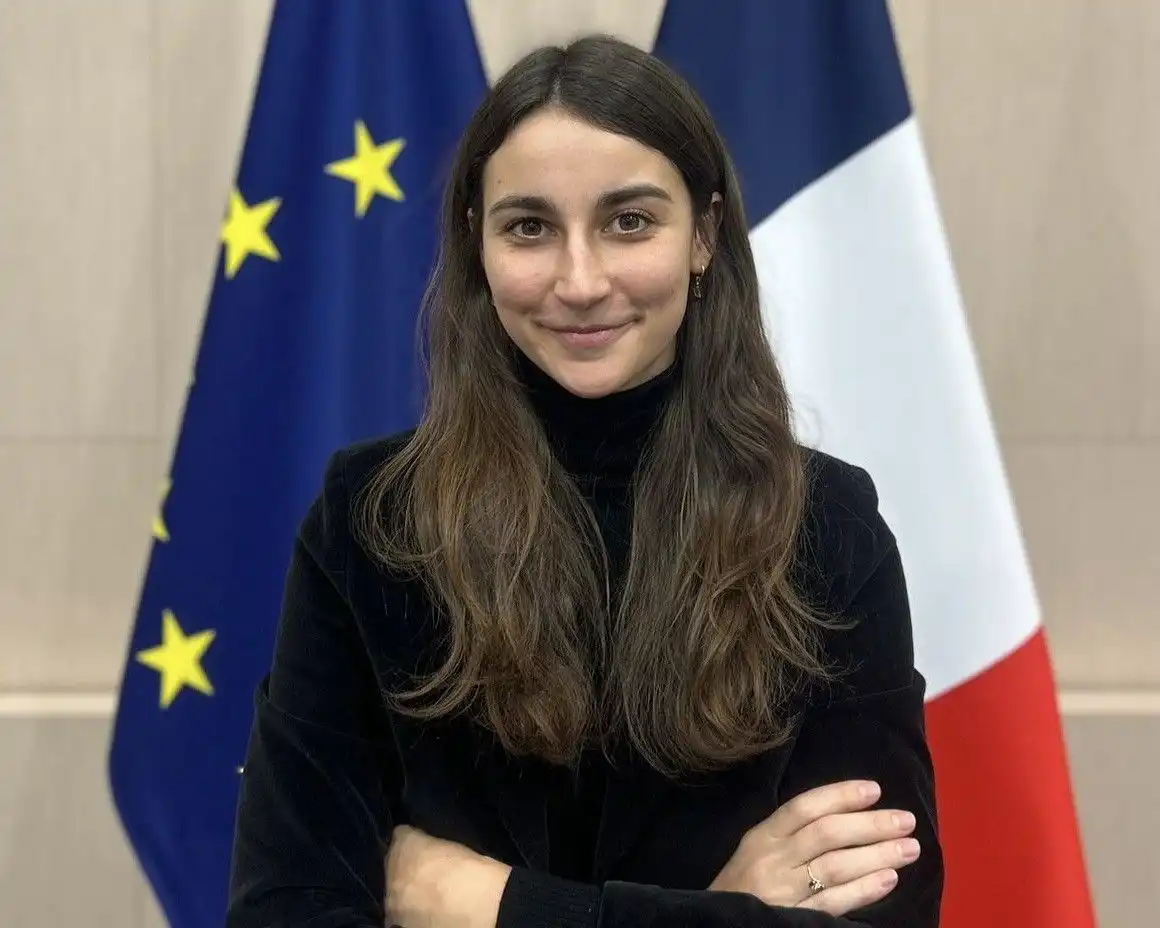
Andrea Valluy has graduated in International Development. During her second year, she participated in the selective “apprenticeship track” which allows students to spend their 2nd year of Master's between work and school. She now works as the Foreign Trade Policy at the MEAE.
What are your main responsibilities?
As a foreign trade policy advisor at the Ministry for Europe and Foreign Affairs, I ensure that the actions and missions of actors in foreign trade are in line with the broad guidelines of our economic diplomacy and work to improve the effectiveness of economic diplomacy. Two examples: (i) I ensure the supervision of Business France, the French public operator responsible for supporting SMEs and mid-cap companies in their export activities. In concrete terms, I ensure that Business France incorporates the government's policy guidelines into its activities and that the public subsidy is used to finance the government's priorities. (ii) I represent the MEAE in interministerial committees that grant public funding to companies to support their export projects. This requires defining priority export countries and sectors and directing public funding accordingly.
My role is to ensure the operationalisation of the government's political priorities on foreign trade, at a time when foreign trade and, more broadly, economic diplomacy have been designated as one of the annual priorities of the Foreign Ministry, given the importance of geo-economic issues in international relations at that time.
How did you prepare for this job?
I adopted a strategy of quality and quantity: high-quality applications, in large numbers. High-quality because its essential to be on the top 5% of applicants that will get an interview, and quantity because even if you’re the perfect candidate there is an element of chance in recruitment, criteria that are sometimes difficult to understand, the job market is not always open, and above all, many other highly qualified candidates. I believe that to maximise your chances, you shouldn't focus too much on a single offer, because you can never control the recruitment process, even if you do your utmost to submit the best application and deliver it by hand to the recruiter. In my opinion, you should aim broadly, always focusing on subjects that interest you, but being open to different types of organisations and unexpected opportunities, in order to maximise your chances of getting to the end of the process.
In addition, for each of my applications, I identified the management team and established contact with them, not to ask for favours but to communicate in person my motivation for joining their team. I believe that the human factor is essential in the application process. This is the aspect I invested the most time in.
I also think that the work-study year I did during my master's degree at SciencesPo was a great added value.
What is the most fascinating part of your job?
There are two things I love about my job that make it rewarding: (i) the opportunity to work on subjects that have long fascinated me, namely international relations, but from an economic perspective, (ii) working on a daily basis with brilliant people and interacting with a wide variety of individuals (this is partly due to the fact that I work at the intersection of the public and private sectors). This is further enhanced by the fact that economic diplomacy is now at the heart of geopolitical issues, so I am fortunate to work on topics that change every day and require a great deal of adaptability, I love that !
How did your PSIA experience contribute to the position you hold today?
The work-study year allowed me to capitalise on my professional experience, which is essential when looking for your first job, and on the many professional development seminars I attended at SciencesPo as a work-study student.
Furthermore, since I decided to look for a job without limiting myself to a specific type of organisation (public/private) or role, I was able to draw on the skills I acquired in a wide variety of courses at Sciences Po. In fact, I am now capitalising on courses that I never imagined at the time would form the basis of the skills I would use professionally. This opportunity to study a wide variety of courses is a great added value of a degree at SciencesPo. I now enjoy looking back on the many courses that have given me a better understanding of the issues I deal with on a daily basis.
What advice would you give to current students?
Use your years of study to reflect on what you want to do professionally. It's not an easy task, as it raises many questions, including personal ones, but it's valuable in identifying the organisations and roles that will make you happy professionally. Finally, if you change your aspirations when you start working or a few years later, listen to yourself and don't censor yourself. There may be dozens of different paths you can take, but they will sometimes lead you to the same end point. The important thing is that you enjoy your work, that your job matches the pace and lifestyle that will make you happy, and all of this will surely evolve along the way, so you will need to evolve too and see it as an opportunity. Listen to your instincts and do things for yourself!
Virtual Graduate Open House day, October 2025

On 17 October 2026: meet faculty members, students and representatives and learn more about our 30 Master's programmes.