
Home>Graduate profile: Basile Mulciba
6 May 2026
Graduate profile: Basile Mulciba

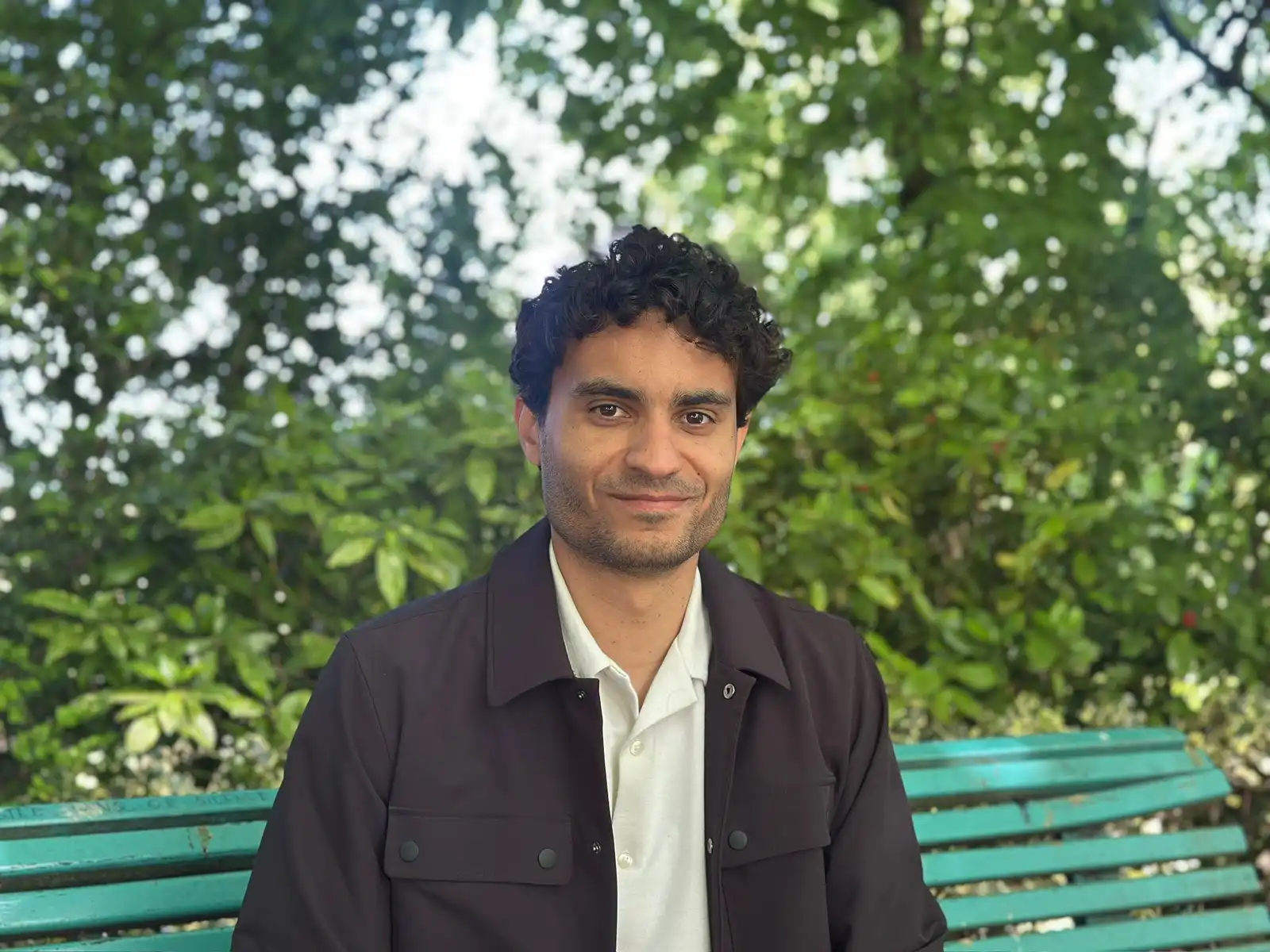
Basile Mulciba graduated with a Master’s degree in Regional and Urban Strategies from the Urban School in 2017. Basile is involved in the voluntary sector whilst also writing: he has just published his second novel, Des vies à bâtir, with Gallimard (ed).
What path led you to your current career?
I started out wanting to work in film: writing screenplays, directing films. I spent three years in a literary preparatory class to acquire as much knowledge as possible in literature, philosophy, and the humanities and social sciences – a foundation for building stories.
It was during those early years that my interest in urban and regional issues grew to the point where it became my first choice for further study, leading me to graduate from EHESS and complete a Master’s in Regional Urban Studies at the Urban School.
It was at Sciences Po that another major area of commitment took shape: social policy. I had the opportunity to work with the CAF in Paris as part of a collective Master’s 1 project, which resonated with the CAF's strong values of solidarity and mutual aid. I began my professional career in the social protection consultancy sector. I then met Anne Charpy, the founder of VoisinMalin, a brilliant charity working in working-class neighbourhoods, which recruits and trains local residents to go door-to-door to inform and mobilise their neighbours about the services and rights they are unable to access. I have worked there from 2018 to the present day as Director of Development, responsible for securing funding, managing nationwide projects, leading regional development initiatives and overseeing impact assessments.
I have just concluded this very rewarding experience at VoisinMalin and I fully intend to continue my commitment to the field of solidarity, with a strong focus on territorial issues.
What led you from your studies at the Urban School to writing fiction?
The desire to write predated my time at the Urban School; I had rough drafts of film scripts and ideas for short stories, though they hadn’t fully taken shape. Two or three years after starting work, the urge to write came back with a vengeance. It was a time when I was reading a lot, when I’d started writing short stories again and was beginning to share them with others. I enjoyed it. Then came the Covid period and the lockdowns, and like many, I asked myself what I really wanted to do, what I’d regret not having tried. I’m quite frightened by the passing of time and by the idea that we might miss out on what really matters to us.
I had a screenplay tucked away in a drawer, already set against the backdrop of a changing landscape: the story of a young man who puts his medical studies on hold to spend a season at a ski resort during a winter when the snow is slow to fall. That screenplay became my first novel, published by Gallimard in August 2023.
Were there any lessons, areas of study or methods from the STU Master’s programme that informed your writing?
Writing draws on everything we experience, everything that interests, shocks or obsesses us, the people we have met and those with whom we share our daily lives.
In that respect, the two years of the STU Master’s programme were extremely enriching and stimulating. If I had to identify the aspects I consciously drew upon in my two novels, I would first mention certain courses: political sociology, Renaud Epstein’s course on governance and urban policy, the architecture module in the second year of the Master’s, but also the study trips, particularly the incredible visit to the port of Dunkirk. There, I also discovered this way of understanding a territory by taking into account its physical, historical, economic, political and human dimensions—all the ingredients needed to establish a setting, construct scenes and develop characters’ trajectories. Urban and territorial dynamics hold within them wonderful stories to be written and told.
How does this story resonate with contemporary urban issues?

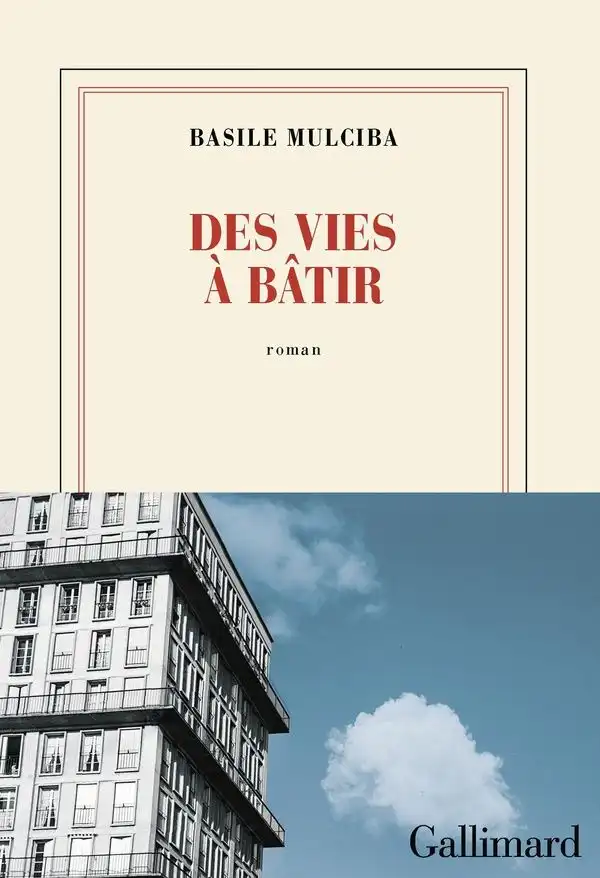
My two novels are at the heart of territorial and urban issues. Hors saison (now available in “Poche”) uses as its backdrop the question of the future of mountain resorts and adaptation to climate change, both from an economic perspective and in terms of the relationship to work, but also from a more personal angle: how do we build ourselves and continue to find our bearings in a world that is changing irreversibly?
Des vies à bâtir, my second novel, published in March by Gallimard, is set largely in Le Havre between 1949 and 1954. We follow the story of Emilien, a Parisian architect, who becomes involved in the massive reconstruction project of the city, which had been reduced to rubble by bombing. In doing so, he becomes estranged from his wife, Monica—herself a talented architect who remained in Paris—and their newborn daughter.
In Le Havre, Emilien rubs shoulders with all the professions that shape the city (architects, elected representatives, government bodies, businesses, etc.) and finds himself immersed in a series of situations, tensions and dilemmas that echo very contemporary issues: the role of residents in urban projects (in Le Havre, Perret’s architecture and the city’s new layout were imposed), urban planning, land reallocation and spatial organisation, power dynamics and the relationship between a centralised state and the demands of local elected representatives, the consideration of political agendas at various levels… All these elements are woven into the narrative, making the reconstruction a powerful driving force in the novel, within which the characters attempt to find their way. I sought to interweave the upheavals experienced by the people of Le Havre – a city striving to rebuild itself – with the more personal upheavals of a couple at a pivotal moment in their lives.
What would you say to a student who is hesitating to pursue a creative path alongside their studies?
I would obviously advise them to listen to that little voice; I would tell them that it’s all about balance and that, for everyone, that balance can lie at a different point.
At first, I thought I was giving up on film to study local public policy, even though deep down, I enjoyed it. Writing eventually resurfaced, and I made room for it until it took on considerable importance.
I want to continue working in a salaried role, full-time for the moment, both because I love what I do, because I feel useful and in my element, and because it gives me the stability I need to write whatever I want. Others choose to work part-time, to set up their own business; some decide to try giving up all other work to devote themselves fully to writing, even though it is very difficult to make a living from publishing novels, regardless of which publisher takes you on.
For me, the two feed into each other: publishing novels has given me new confidence in navigating professional environments; it provides an opportunity to enrich certain relationships and to facilitate others. The experience of publishing also brings greater sharpness and rigour to finding the right word or making a statement or piece of work more impactful.
I won’t comment on other art forms, but I know that other alumni are also engaged in professional artistic activities (in the visual arts, dance, singing, etc.). I don’t know if they find the balance I’m talking about, but as far as I’m concerned, I would find it hard to separate the two today.
Virtual Graduate Open House day, October 2025

On 17 October 2026: meet faculty members, students and representatives and learn more about our 30 Master's programmes.