
Home>Back-to-school Week Spring 2026
28 January 2026
Back-to-school Week Spring 2026
Before the start of the spring semester, students from the Urban School participated in a pre-term week from 19 to 24 January 2026. Designed as a time for exploration and in-depth learning outside the traditional academic framework, this week offered students the opportunity to engage in a wide range of workshops, conferences, and field visits.
A few examples of activities:
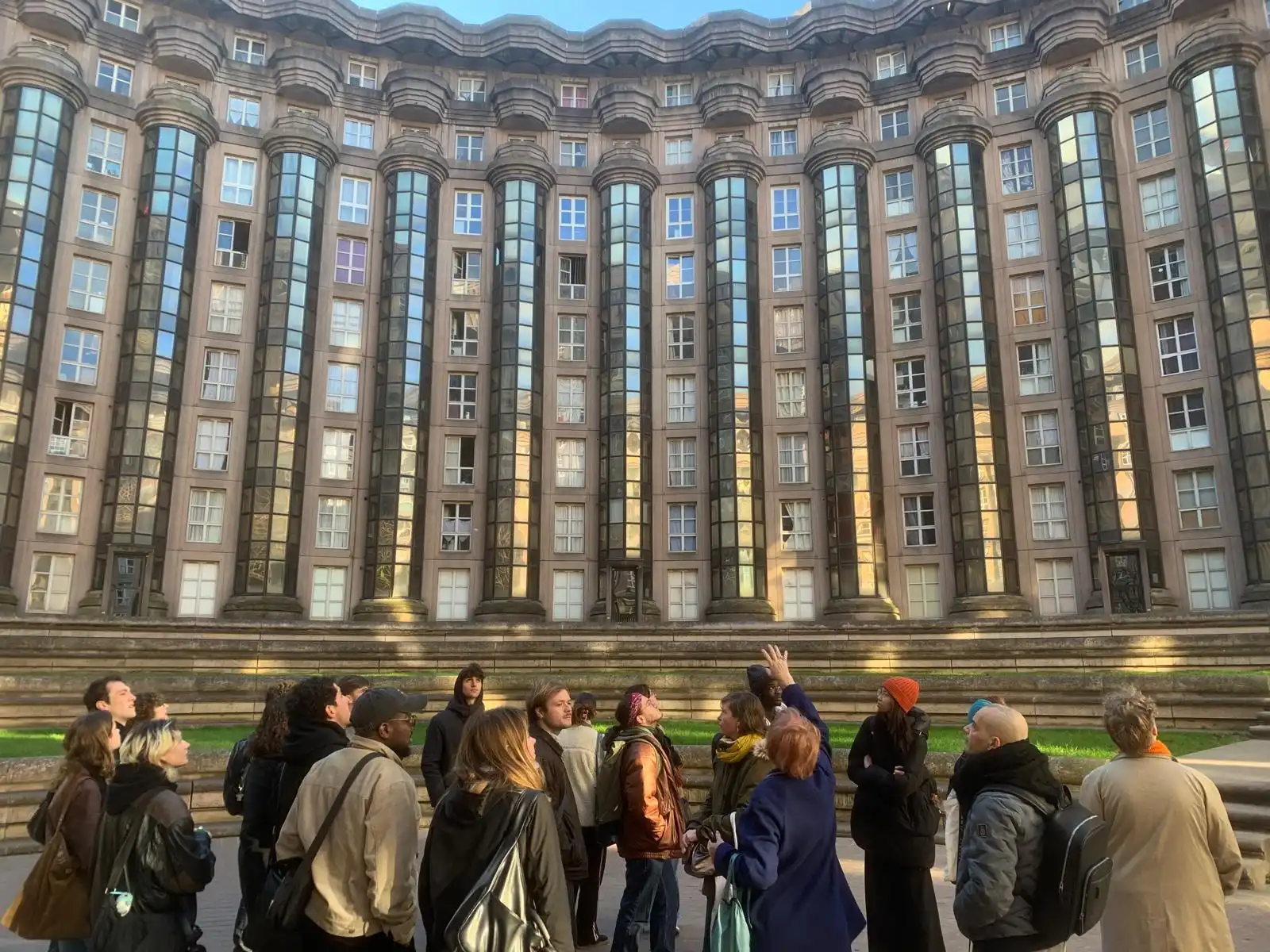
Visit to the Mont d’Est district in Noisy-le-Grand
Students from the Regional and Urban Strategy Master’s programme visited Noisy-le-Grand to explore ongoing urban projects in the Mont d’Est district. Designed in the 1970s and characterised by slab-based architecture, the area is currently undergoing a dynamic transformation driven by a renewed vision and adapted governance frameworks.
Drawing on institutional and professional contributions, complemented by site visits, the objective was to provide a cross-cutting analysis of the changes underway in different parts of the district. The visit addressed key issues related to urban planning and regeneration, mixed-use development, urban policy and social housing, urban innovation, and heritage enhancement.
Three parallel field visits were organised to illustrate these issues in concrete terms:
- Mont d’Est district and esplanade: former SK metro, ongoing construction sites and regeneration projects; challenges related to urban renewal, centrality and the opening up of the district.
- Urban farm, artistic trail and redeveloped office spaces: occupation and redevelopment projects promoting diversified uses, social innovation, and the social and solidarity economy.
- Les Espaces d’Abraxas district, designed by architect Ricardo Bofill: architectural heritage, redevelopment of social housing stock, and the role of residents and local associations in the district’s transformation.

Film screening & dicussion “Working together for a territorial agricultural and food transition"
Based on the documentary Douce France, which follows young people facing the urbanisation of agricultural land, this film screening and discussion explored the conditions required to establish shared governance frameworks capable of ensuring the long-term preservation of agricultural land.

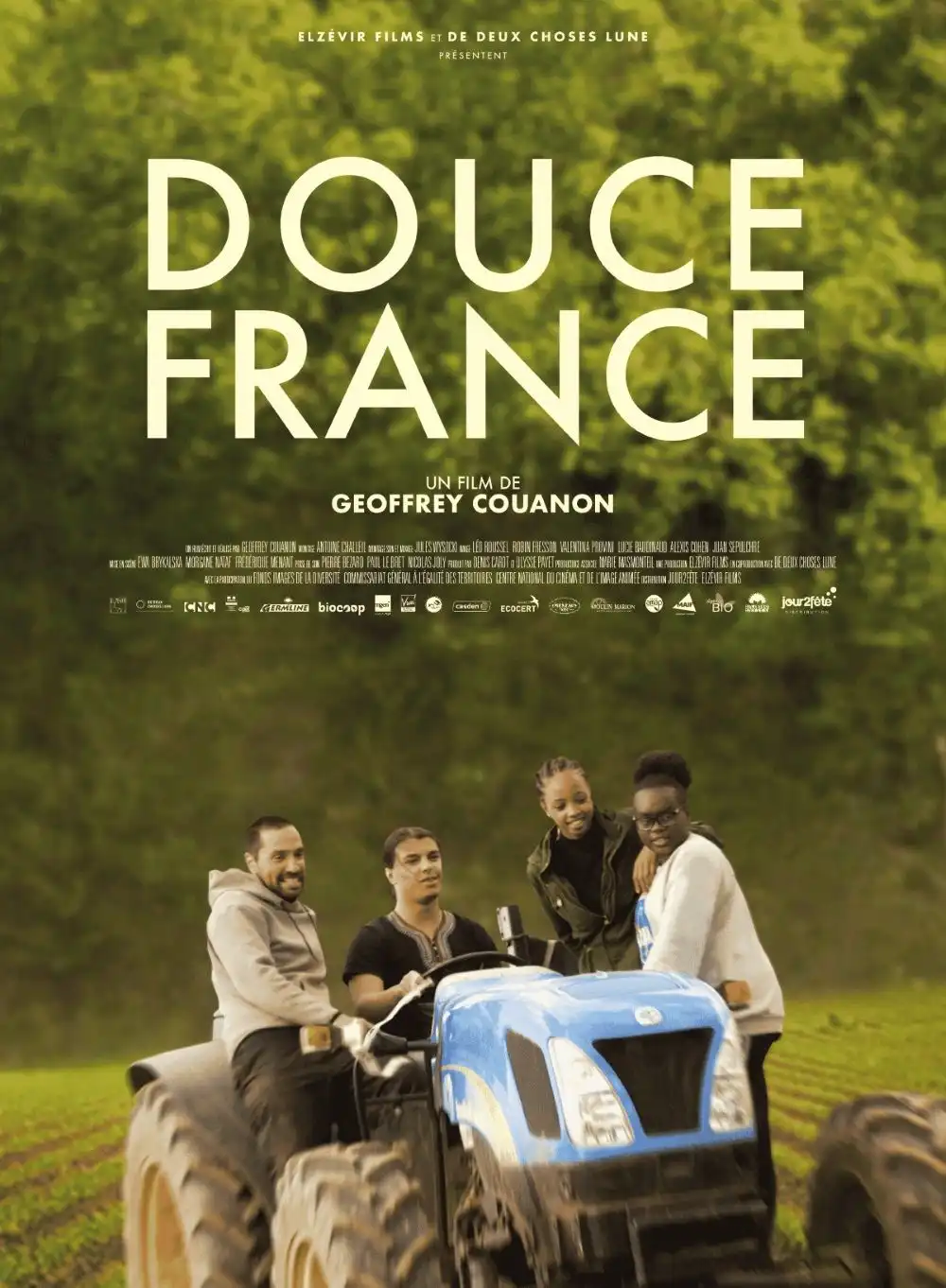
Synopsis of the film Douce France:
Amina, Sami and Jennifer are high school students in the Paris suburbs (Seine-Saint-Denis). With their class, they embark on an unexpected investigation into a massive leisure park project that would involve urbanising nearby agricultural land. But do you really have the power to act on your territory when you are 17? Curious and fearless, these young citizens take us on a journey to meet local residents, real estate developers, farmers, and even members of the French National Assembly.
A joyful and thought-provoking quest that challenges preconceived ideas and renews our connection to the land.
At the pivotal age of 17, as they begin to choose their future academic paths, Amina, Sami, Jennifer and their classmates raise universal questions: What do we produce through our work and our lives? What activities do we choose for our territories, and what impact do they have on our lives?
Masterclass: Co-producing the city in times of transition
The roundtable discussion “Co-producing the city and territories in times of transition” examined how ecological and digital transitions have profoundly transformed urban planning and governance practices. The discussions highlighted the now unavoidable integration of climate, environmental and resilience issues, as well as the growing impact of data and artificial intelligence in territorial analysis and public action.
Speakers discussed the opportunities offered by these tools—such as resource optimisation, improved risk anticipation and new forms of participation—alongside the associated risks, particularly in terms of ethics, data governance, algorithmic bias and digital divides. The discussion also addressed the evolving nature of urban co-production processes, the transformation of professional practices, and the new collaborative frameworks needed to build more sustainable, equitable and just cities.
Session 1: Territories, Data and Climate: How Are Transitions Redefining Urban Production?
Introduction to the roundtable and discussion moderated by Alexandra Huynh Lenhardt (Une Fabrique de la Ville) & Irène Mboumoua (Urban School)
- Laurent Pinon, Director of Métamorphose urbaine, urban planning and urban design agency
- Maxime Cloarec, landscape architect, Michel Desvigne Paysagiste (MDP)
- Mathieu Lafarge, co-founder of Floware, smart mobility expert
- Elisa Haddad, Head of Innovation, City of Noisy-le-Grand
- Emmanuelle Roux, Advisor to the Director General of the Institut national de l'information géographique et forestière (IGN)
- Talk by Hubert Béroche, founder of Urban AI
Session 2: Artificial Intelligence and Territories: The Materiality of the Digital and Democratic Acceptability
Introduction to the roundtable and discussion moderated by Clément Mandron (Île-de-France Mobilités)
- Loup Cellard, researcher, médialab de Sciences Po, editor of the technology criticism journal Tèque
- Gianluca Marzilli, Geodata Scientist, Observatoire francilien des Data Centers, Institut Paris Region
- Yaël Benayoun, researcher and independent consultant, co-founder of the association Le Mouton Numérique
- General conclusion by Pedro Gomes Lopez, Director of The Swann Initiative, PhD candidate at the Centre de recherche en gestion de l’École Polytechnique
Virtual Graduate Open House day, October 2025

On 17 October 2026: meet faculty members, students and representatives and learn more about our 30 Master's programmes.