“Architecture in Uniform,” which is the title of Jean-Louis Cohen’s excellent exhibition at the Cité de l’Architecture et du Patrimoine in Paris, presents projects both known and unknown that came into being between the Nazi’s destruction of Guernica in 1937 and the Allies’ atomic bombardments of Hiroshima and Nagasaki in 1945. The interest of ...

# 66 | Nineteenth Century Wars at a Distance | Sylvain Venayre
Historians, we are told by Sylvain Venayre, the author of La Gloire de l’aventure. Genèse d’une mystique moderne. 1850-1940, neglected nineteenth-century European wars. Those wars are eclipsed by the great deadly conflicts of the twentieth century. The preceding century was said to be, by comparison, almost peaceful. Now, nothing of the sort is actually ...
# 65 | The Great War of Images | Nicholas-Henri Zmelty
Nicholas-Henri Zmelty defended a noted thesis (winner of the Orsay Museum Prize) on France’s ca. 1900 poster craze. Here, he looks at the mass-circulation illustrated press in France, investigating its strong links with prewar culture from the standpoint of heroic, erotic, and humorous representations. Laurence Bertrand Dorléac Between 1914 and 1918, the French illustrated ...
# 64 | Debt | Thibault Boulvain
Thibault Boulvain studies here the work of Kader Attia, whose recent efforts are of fundamental importance for our reflections on how the events of colonial times and transfers between the African continent and the European one are committed to memory. Through his work, Attia investigates art’s role as the site within which conflicts are ...
# 63 | Strategy of Conversation | Estelle Zhong
Estelle Zhong studies here a very interesting case of artistic commitment undertaken in a new mode imposed by the contemporary international political context as it relates to war. Establishing “conversation” as a new political strategy does not necessarily culminate in an object that can be likened to a “work.” And yet, there really is ...
# 62 | Freud and War | Françoise Coblence
Freud was in a bellicose state of mind for just two weeks at the start of the Great War of 1914-1918. Very quickly thereafter, he began to devote himself to an attempt at understanding, doing so in an all the more singular way as he found himself faced with a radically unprecedented situation. The ...
# 61 | Rwanda | Nathan Réra
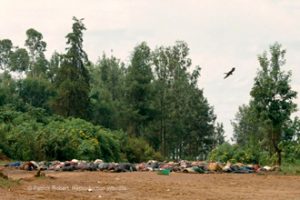
The staging of photographs is a practice that has always existed. As early as the American Civil War, Alexander Gardner and Timothy O’Sullivan, it is known, certainly moved corpses around in order to render their compositions more “striking,” just as they also reported their models to be “Yankee” or “Confederate” so as to suit ...
# 60 | Pillages and Restitutions | Bénédicte Savoy
Through her fundamental work on the despoliation of artworks, Bénédicte Savoy reminds us that this has been an issue of importance for people’s memories since the time of Antiquity. In fact, it already was such an issue in Aeschylus’ Agamemnon. In the present text, Savoy brings out for us the recurring motifs in debates ...
# 59 | The War of the Models | Michael Lucken
What kind of war do countries plunge themselves into when they claim to be the source of some sort of novelty? While exact reproduction may be more profitable, this does not suffice to ensure the reputation of a country or an industry that has to innovate in order to dominate. Michael Lucken studies Japan, ...
# 58 | Conjuring away War | Frédérique Goerig-Hergott
“I didn’t paint war scenes in order to prevent war; never would I have had that pretension,” Otto Dix told Otto Wundshammer in 1946. “I painted them in order to conjure war away. All art is conjuration.” In evaluating his own work more than twenty years after the Great War of 1914-1918, Dix subscribed to ...