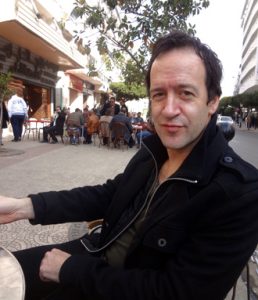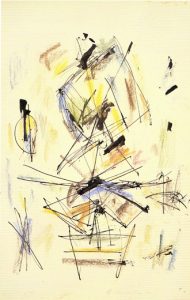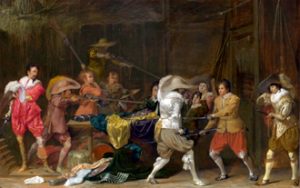
There was a time when war was so loved and considered so normal that history itself was thought to be made up especially of military battles, conquests, and heroism. That was the way it was in the seventeenth-century Netherlands, when the Dutch were victorious over the Spanish occupiers in 1648. Within a Reformation atmosphere, ...
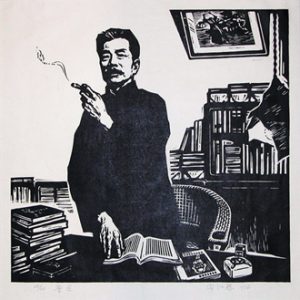
# 56 | Chinese Art | Estelle Bories
Estelle Bories, who wrote her dissertation at the Paris Institute of Political Studies (Sciences Po) on contemporary Chinese art, reexamines for us the historical context within which this issue emerged. She is interested in the origins of the Chinese avant-garde, in the Woodcut Movement, and in the internationalist standpoint adopted by the writer Lu ...
# 55 | Madness, Equality, Democracy | Laure Murat
Laure Murat is a historian and a professor in the Department of French and Francophone Studies at UCLA. She has published several outstanding books, the most recent of which, L’Homme qui se prenait pour Napoléon. Pour une histoire politique de la folie (Gallimard, 2011), is of fundamental importance. She reexamines for us the relationships between ...
# 54 | On French Colonialism | Nicolas Schaub
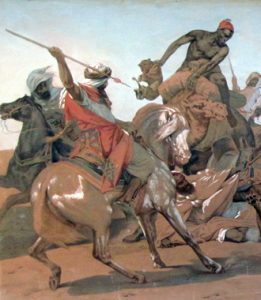
Between 1830 and 1870, at the time of the French colonial conquest of Algeria, more and more representations appeared. Yet, with few exceptions, these representations camouflaged the sufferings on both sides, and hardly anyone but Tony Johannot directly evoked the brutality of colonization. Johannot fixed in place the image of the “smoke out” from ...
# 53 | Social Question | Fabienne Chevallier
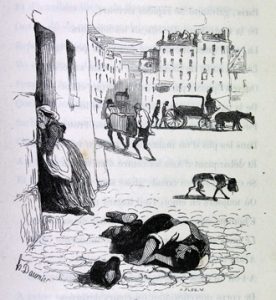
Fabienne Chevallier studies the connections between architecture, urban planning, hygienics, and politics. Here, she looks at the cholera epidemic of 1932 in Paris, where the inequality before life was confirmed to be a determining factor for inequality before death. The official decrees recommending expensive and inaccessible forms of nourishment—grilled meats and fish—were no more ...
# 52 | Masses and Culture | Rémi Baudouï
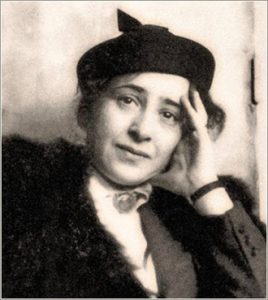
Rémi Baudouï is known for his studies on urban planning and his recent publication work editing Le Corbusier’s correspondence. He rereads Hannah Arendt for us, setting her writings on culture back into a broad historiographical context. The better to grasp her thought overall, he does not confine himself to the much-talked-about texts brought together ...
# 51 | Avoiding Racism | Todd Shepard
Todd Shepard, who teaches at Johns Hopkins University, devotes his research work to France and its colonial empire in the twentieth century. His first book, The Invention of Decolonization: The Algerian War and the Remaking of France (Ithaca, NY: Cornell University Press, 2006), was translated into French as 1962. Comment l’indépendance algérienne a transformé ...
# 50 | The Artist excepted | Nathalie Heinich
In her last book, De la visibilité. Excellence et singularité en régime médiatique, Nathalie Heinach studied “visibility capital,” which grants a form of superiority to those who possess it. This phenomenon, which was constantly growing in scope throughout the twentieth century, offered her the opportunity to reexamine the notion of the “total social fact,” ...
# 49 | The Rights of Works | Maureen Murphy
We are familiar with the foundational book written by Maureen Murphy, L’imaginaire au musée. Les arts d’Afrique entre Paris et New York de 1931 à 2005 (Les Presses du Réel, 2009). Here, Murphy reexamines how non-Western works of art have been treated, from the moment when they were placed on the bottom rung of the evolutionary ...
# 48 | New Patrons | François Hers
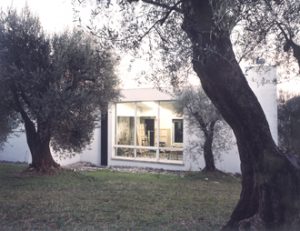
And what if art were capable of implementing democracy? That is the wager laid down by the New Patrons, who open thereby a new chapter in the history of art. The instigator is François Hers, who has been the initiator of many other transformations, such as participating in the creation of Viva photo news ...