


Home>Academics>Two-Year Master's Programmes>The 10 Policy Streams of the Masters>Master, Policy Stream: Economics and Public Policy
Master, Policy Stream: Economics and Public Policy
Virtual Graduate Open House day – 17 October 2026


Interested in joining a master’s programme at Sciences Po? Come and discover our 30+ master’s programmes across our eight professional schools, as well as the admissions process. Speak with our deans, academic coordinators and students, as well as our admissions teams.
General Objective of the Economics and Public Policy stream
The Economics and Public Policy (EPP) track at the School of Public Affairs is characterised by a clear disciplinary focus and aims at allowing future policymakers to develop a solid understanding of the theoretical, empirical and contextual foundations of modern policy-making. Students consolidate their understanding of foundational economic principles applied to public policy. Through the microeconomic approach, they deepen their understanding of, for instance, public goods, externalities, or the effects of taxes on the production/consumption of goods. In macroeconomics, students can reflect on questions of fiscal and monetary policy, or unemployment and growth. International economics also plays a key role, and students are exposed to crucial topics, such as the taxation of multinationals or international banking regulation.
In addition, they learn how to develop the necessary tools to conduct quantitative analysis of public policy, both in theory and in practice. At the theoretical level first, by discovering the array of modern econometric evaluation methods, and by understanding the fundamental importance of causality. At the practical level as well, in particular through the training in statistical and coding softwares.
Students will be challenged to harness and hone these and other professional skills through coursework that combines a series of projects and analytical tasks, and complete their core training with elective modules that further deepen acquired skills or encourage them to discover new areas/topics, as well as professional experiences through internship or apprenticeship.
The aim of the EPP stream is to prepare students for national, European or international level careers in which they will be able to demonstrate both their analytical rigour and their understanding of transversal and interdisciplinary issues.
Programme of the Economics and Public Policy stream
The Economics and Public Policy stream is a four-semester programme with three semesters of taught courses and a fourth semester dedicated to external personal and/or professional development.
- The first semester focuses primarily on the acquisition of and harmonisation of knowledge in foundational concepts and skills in microeconomics, macroeconomics, mathematics, quantitative/analytical methods and coding, as well as the development of a cross-disciplinary understanding of how economic policy is situated in the larger web of modern policy-making.
- The second semester focuses on connecting economic theory, empirical knowledge and applied skills with contextual case-studies and applied projects. Students further consolidate existing knowledge and skills, and the semester culminates in the presentation of a policy project that spans the first two semesters and a number of classes.
- The third semester focuses on specialisation in chosen economic subfields: international economics, macroeconomics and/or applied microeconomics, where the focus is applying more advanced knowledge
- The four semester allows students to use these skills in yet a new, more professional context – be it a 14-week internship, a personal project related to public policy, an exchange semester or a Master’s research thesis.
Over these four semesters, the programme of the Economics and Public Policy stream allows students to acquire, develop and hone mastery in a number of theoretical and applied subfields of economics. A non-exhaustive list of these subfields:
- Microeconomics and competition economics
- Macroeconomics
- Applied policy evaluation and econometrics
- Behavioural policy
- Political economics
- International finance and economics
- History of economic policy
Students can also expect to garner expertise in a number of specialised sectors, through access to electives from other policy stream as well as a selection of in-stream electives with intersectoral focus. A non-exhaustive list of these sectoral collaborations:
- European competition policy
- European economic challenges
- Growth and innovation policy
- Monetary policy at the central bank levels and risk analysis
- Health and economics of the public sector
- Education policy
- Labour and employment policy
- Social policy and policies against discrimination and inequality
- Development economics
- Economics of sustainability
While we have no explicit entry prerequisites for the policy stream, students are advised that a strong quantitative and economics background, independent of knowledge of analytical tools and coding, best places students to do well in this policy stream. While by no means prohibitively or exclusionary, please note that if you are interested in the Economics and Public Policy stream, the following mathematical and economic concepts will be assumed to be acquired by the start of the first semester during M1:
- Calculus (definition of a function; limit and continuity; derivatives and differentials; static optimization; integrating a function; sums and series)
- Matrices (matrix calculation; matrix transpose and inversion)
- Statistics (sets; probabilistic models; conditional probabilities; discrete, continuous and normal random variables; covariance)
- Econometrics (ordinary least squares estimator)
- Microeconomics (consumer and producer theory; market failures; basic notions of game theory)
- Macroeconomics (basic understanding of growth models; business cycles; fiscal and monetary policies)
A compulsory math and coding camp in the week preceding the first semester of M1 is designed to allow students to refresh their knowledge of these notions but is by no means a replacement to prior work on these notions.
Students also have the option to take certain classes offered by the School of Research from their second semester onwards, if approved by the academic advisors and according to space available. Nevertheless, it is important to note that a doctoral dissertation cannot be pursued at the School of Public Affairs; candidats who wish to follow this path are invited to apply to the School of Research directly.
Course Programme of the economics and public policy stream
Master in Public Policy - Economics and Public Policy stream:
Master in European Affairs - Economics and Public Policy stream:
Career opportunities after the economics and public policy stream
Graduates from this policy stream pursue careers in a variety of fields related to economic policy making in governmental organizations, international organizations, public agencies, development agencies, European institutions. It also meets the needs of highly trained economists working in the private sector, for instance in banking, audits/consultancy, corporate sector, public-private partnerships, or non-governmental organizations.
Scientific advisors of the economics and Public policy stream

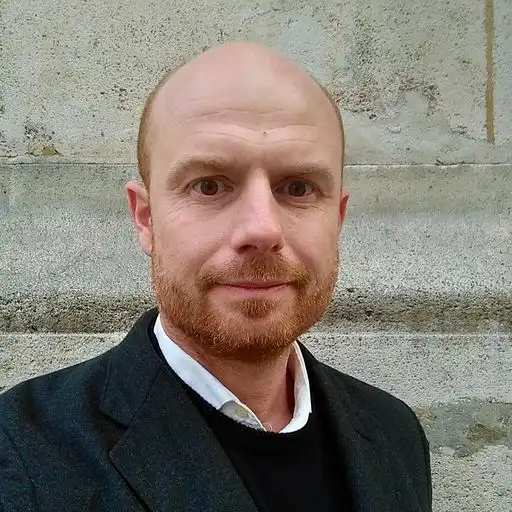
Roberto Galbiati - Researcher, National Center for Scientific Research (CNRS)
Roberto Galbiati's research is focused on the intersection between different social sciences and economics to understand the legal environment and how laws shape economic and social behaviour. He is published in major economics journals such as the Journal of Political Economy, the Economic Journal, the Journal of Public Economics and the American Economic Journal, among others. At Sciences Po he teaches courses in Law and Economics and in Social Economics.


Francesco Saraceno - Senior Economist, Deputy Director OFCE
Francesco Saraceno's main research interests include the relationship between inequality and macroeconomic performance, European macroeconomic policies, and the interaction between structural reforms and fiscal and monetary policies. He has published in the Journal of Public Economic Theory, the Journal of Economic Behavior and Organization, the Journal of Evolutionary Economics, and Structural Change and Economic Dynamics, among others. At Sciences Po he teaches courses on Economics of European Integration.
Contact
- Academic Advisor: Basile Boulay
- Academic Assistant: Ongoing recruitment