
Home>Congratulations to our new PhD graduates, Marcela Alonso Ferreira and Jens Carstens
23 January 2026
Congratulations to our new PhD graduates, Marcela Alonso Ferreira and Jens Carstens
As of January 13th, 2026, we are delighted to count two additional Doctors in political science among our research community. Congratulations to Dr Marcela Alonso Ferreira and Dr Jens Carstens on their brilliant PhD defences.
Marcela and Jens have both played a key role in the Centre's doctoral student community, representing their fellow PhD students. We thank them both for their dedication, and wish them all the best for the next stages of their careers!

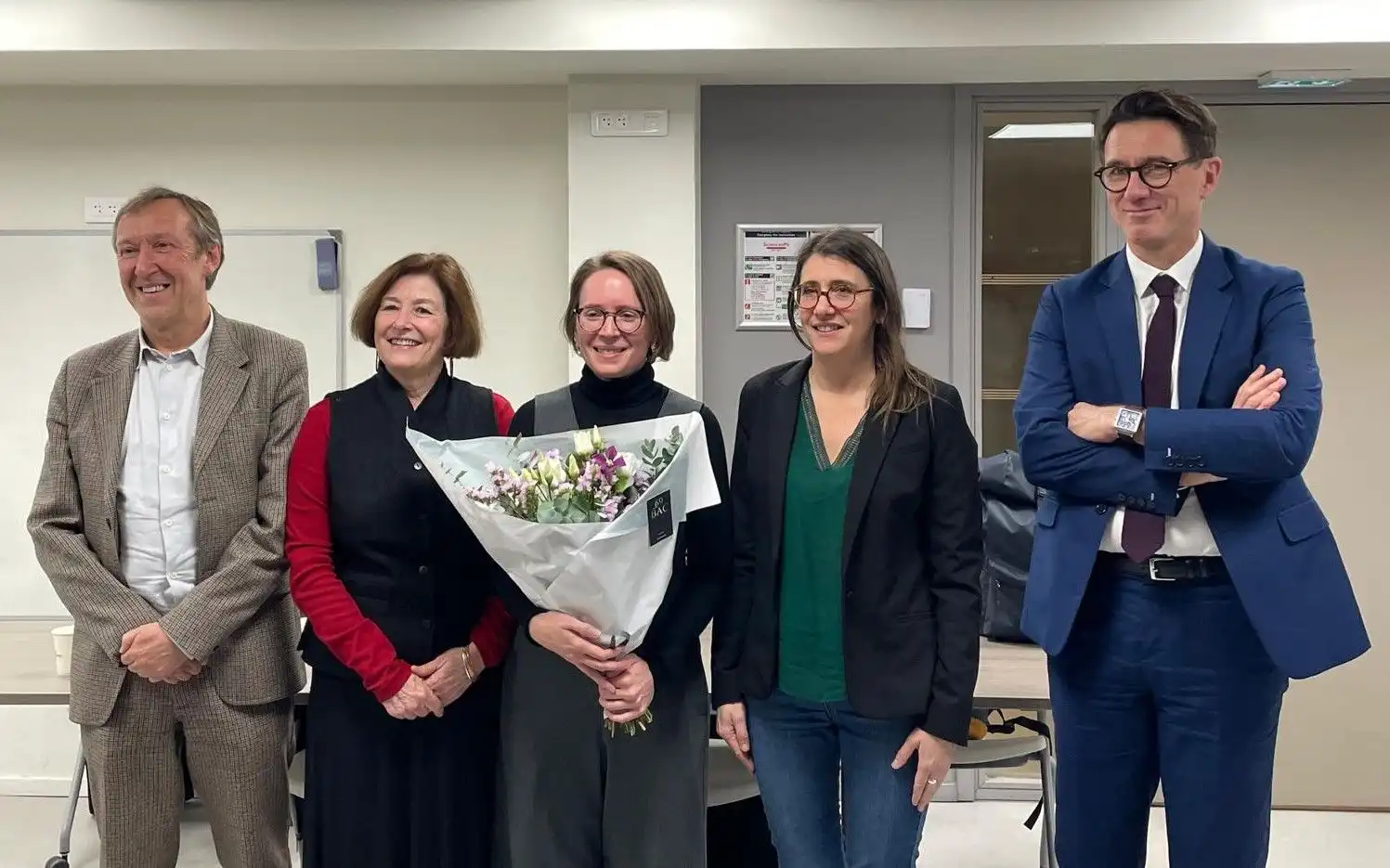
Marcela Alonso Ferreira wrote her thesis under the supervision of Patrick Le Galès.
In her dissertation, "Intercurrence and the Politics of Land Regularization in Mexico City and São Paulo (1970s–2020s)", she sought to explain why local governments grant land rights in informal settlements – and why they stop doing so. She embarked on temporal comparisons to uncover why land regularisation has stalled in recent years in Mexico City while expanding in São Paulo, despite similar processes of urbanisation, decentralisation, and democratisation.
Drawing on comparative historical analysis, over one hundred interviews and document analysis, her study traces five decades of policy development in Latin America’s two largest cities. She argues that their contrasting outcomes stem from “institutional intercurrence” – the coexistence and conflict of overlapping institutional frameworks – and from the interplay between policy advocates and veto players embedded across domains such as property law, urban planning, and environmental policy.
The thesis demonstrates how institutional frictions and power dynamics can influence policy implementation, shedding light on the tensions between redistributive and ecological goals in contemporary urban governance. It contributes to theories of urban governance, institutional development, and distributive politics, offering a lens to understand how the accumulation and interaction of diverse policies reshape public action in cities, where multiple sectors and levels of government converge.
During the course of her PhD, Marcela Alonso Ferreira took part in the 'WHIG' project ('What is governed and not governed in cities') led by Patrick Le Galès. She has taught at the Urban School of Sciences Po, where she has also been a convenor of the "Cities are back in town" seminar series.
She has been a visiting researcher at El Colegio de México and the University of Oxford, and is currently a lecturer at University College London.

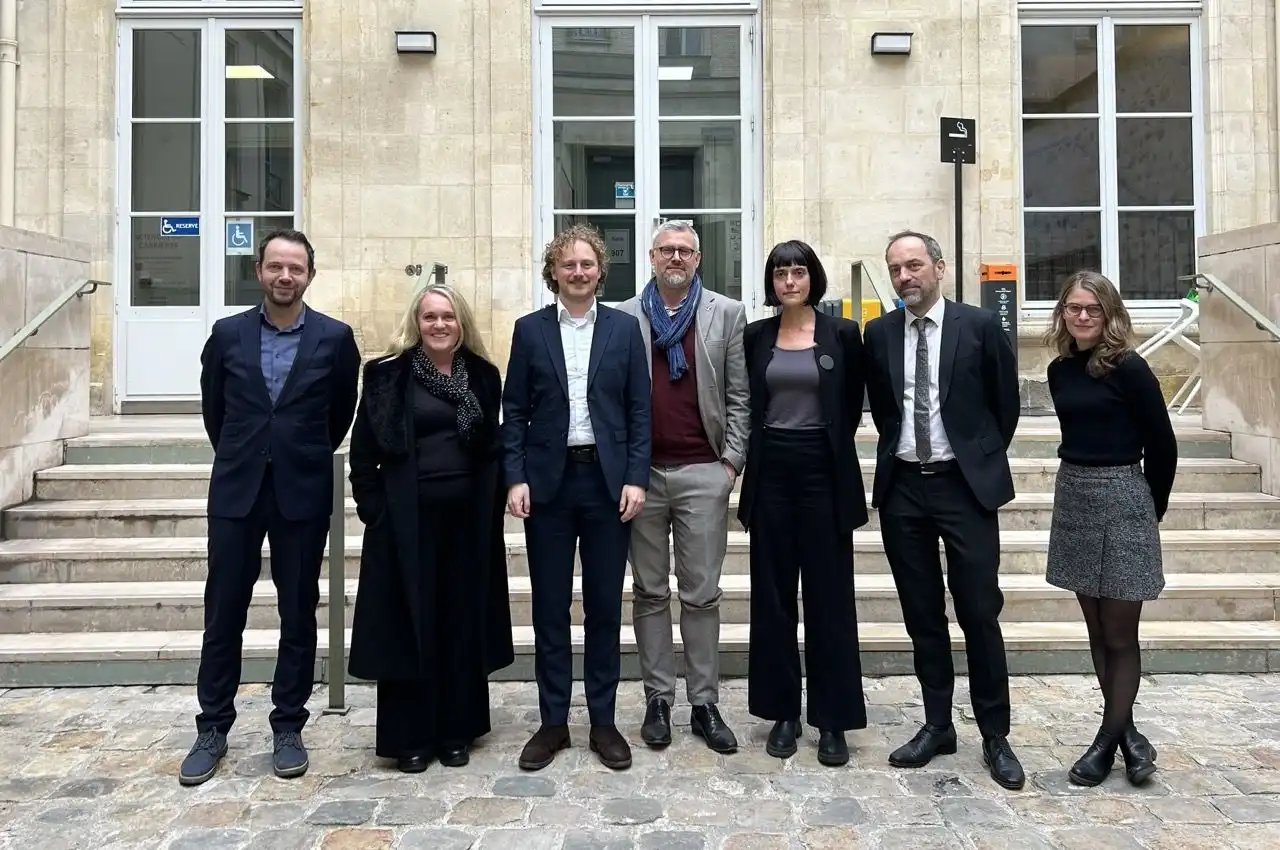
Jens Carstens wrote his thesis, "Place, Trust, and Vote. How the Geography of Discontent Undermines Democracy", under the supervision of Jan Rovny and Emiliano Grossman.
Political trust is the ink of democracy’s social contract, but that ink is fading across Europe. Jens Carstens’ dissertation examines where, how and why this is happening.
It argues that when people perceive their communities as neglected or in decline, their trust in political institutions erodes. This erosion often turns healthy scepticism into cynical distrust, detaching citizens from institutions and making them more receptive to far right appeals.
Drawing on cross-national, national, and local analyses from Europe, the UK, and France (including the European Social Survey, the British Election Study and the ELIPSS panel), the dissertation shows how place-based perceptions influence trust and voting behaviour.
It reveals a correlation between low levels of political trust and high shares of far right vote across Europe, except where the far right is already in power.
It also demonstrates that place-based resentment in the UK predicts cynical distrust, but not sceptical distrust. In France, feelings of local isolation and insecurity, as well as the loss of meeting places, erode trust and increase support for the far right. The closure of bakeries, which serve as both social infrastructures and cultural symbols, amplifies this effect in France.
Together, these findings reveal that trust is the missing microfoundation of the geography of discontent. This geography of discontent is not only material (i.e. objective deprivation) but relies on one's perception of their place, particularly in comparison to neighbouring affluent areas. Thus, rebuilding trust requires not only redistribution but the renewal of local agency: empowering communities to shape their own futures and reconnect with institutions that govern them.
During the course of his PhD, Jens has also worked with Laura Morales on the ActEU Horizon Europe project ('Towards a new era of representative democracy - Activating European Citizens’ Trust in Times of Crises and Polarization'), and coordinated AxPo’s young scholar seminar series.
He will soon start a position as postdoctoral researcher at the University of Bern, in Switzerland.