


Home>Academics>Master in Investigations, Analysis and Information Integrity
Master in Investigations, Analysis and Information Integrity
Two-year Master's
Programme in French
120 ECTS minimum
Virtual Graduate Open House day – 17 October 2026

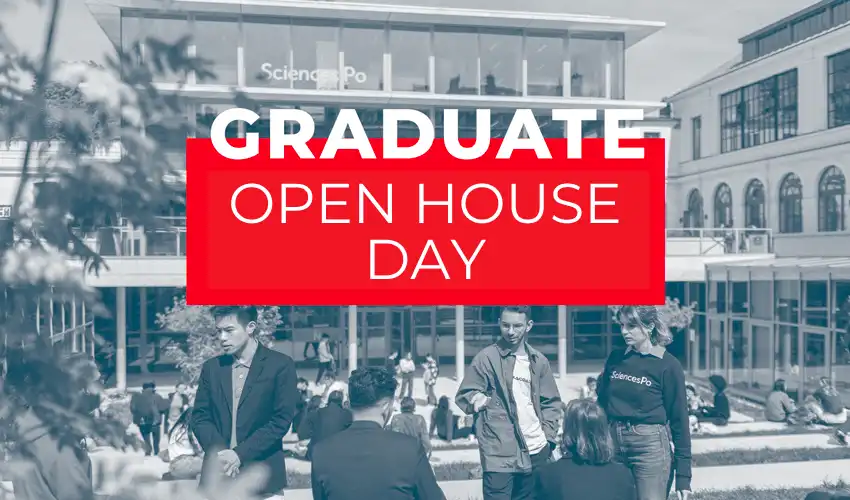
Interested in joining a master’s programme at Sciences Po? Come and discover our 30+ master’s programmes across our eight professional schools, as well as the admissions process. Speak with our deans, academic coordinators and students, as well as our admissions teams.
Disinformation campaigns, fake claims, propaganda, digital thread… These attacks on information undermine the fabric of our democracies, erode trust in electoral processes, and come at a massive economic and social cost.
Employers are recruiting information experts: analysts capable of handling information intelligence, sophisticated open-source investigation techniques and a deep understanding of geopolitical issues. The media, private companies, specialist consultancies and government departments are all seeking out these highly skilled professionals.
Launched by the Sciences Po School of Journalism in 2026, the Master in Investigations, Analysis and Information Integrity trains these ‘engineers of democracy’ with a unique set of skills.
The Master’s programme at a glance
- A Master’s programme created in 2026 in response to employers’ needs
- The first cohort welcomed at the start of the 2027–2028 academic year
- Up to 30 students per cohort
- A two-year Master’s programme
- A three-semester curriculum
- One semester of professional experience (work placement or apprenticeship during the second year)
Training the engineers of democracy
This two-year Master’s programme trains experts in risk analysis, online investigation and strategic monitoring. It is not recognised by the CPNEJ (National Joint Commission for the Employment of Journalists).
The curriculum is based on a three-part approach:
- Understanding (the issues at stake in information wars, power dynamics and balance)
- Analysing (data, open-source information, spreading mechanisms and virality)
- Producing (investigations, reports and other editorial formats)
Students will gain skills in:
- open-source intelligence (OSINT) investigation techniques
- an understanding of the dynamics of power and the dissemination of information
- cross-analysis of data and technology through ‘vibe coding’
- reasoned practices in artificial intelligence within a hybrid world
- techniques for identifying digital manipulation and interference
- strategies and informational countermeasures
- ethical and professional conduct
- the production and writing of reports, briefings, summaries and other editorial formats
At the crossroads of social utility and economic impact
The integrity of information is not just a matter for journalists. It is everyone’s concern.
Disinformation destroys value for private companies. It hinders the functioning of institutions. It prevents citizens from exercising their role in an informed manner.
Through this Master’s programme, future graduates are equipped to fulfil their social responsibility in the professional world. Jobs are being created to provide the media, businesses and institutions with professionals capable of identifying threats, detecting interference and countering information warfare.
Career opportunities
“Open-source” journalist - Investigative journalist - Data journalist - OSINT analyst - Information analyst - Risk analyst (reputational, geopolitical, country-specific) - Strategic Monitor - Threat Monitor - Strategy Consultant - Consultant-Analyst - Consultant-Investigator - Investigator - Forensic Investigator - Content Producer - Information Entrepreneur
What employers say
The Master’s programme was developed in close collaboration with employers and experts, from the media industry to private companies and public administrations, which chose Sciences Po as their partner of choice.
How to apply?
The Master’s programme in Investigations, Analysis and Media Integrity is aimed at candidates with a minimum of a BAC+3 qualification or equivalent, from diverse geographical, academic or professional backgrounds, who have an excellent academic record and a strong motivation for the world of journalism.
Several admission procedures are available, which vary depending on the applicant’s circumstances.
- National Applicants (for applicants holding a degree in France)
- International Applicants (for applicants holding a degree abroad)
- Sciences Po students (for students already studying at Sciences Po)


