
Accueil>Law, Epistemè and our Ontological Commitments: following* some threads
11.12.2025
Law, Epistemè and our Ontological Commitments: following* some threads
À propos de cet événement
Le 11 décembre 2025 de 12:45 à 14:15

Faculty Colloquium
Speaker: Horatia Muir Watt, Full professor at Sciences Po
Leading on from the presentation by Sebastien and Vincent of their fascinating New Natural Law project a short time ago in this faculty seminar, I will pick up the thread of the relevance of the epistemological dimension of any new thinking about law and legal studies. This thread runs through a (largely pedagogical) book: Forthcoming March 2026: Producing Legal Knowledge: Comparative Methods, Models and Schemes (co-author: Geoffrey H. Samuel, Elgar 2026) as well as my current research/book project: Law on the Borderline: Ontologizing Alterity. Rather than an exhaustive account of this work, I too will return (inter alia) to Foucault’s definition(s) of the epistemè, its relationship to law. As we know from the previous seminar, Foucault’s claim is that by the 18th century ‘a new mechanism of power’ is invented, a form of power that is, above all, nonsovereign, i.e. ‘absolutely incompatible with relations of sovereignty. This historically distinct technology of power functions in, as, through, and around the norm. For Foucault, the ‘juridical regression’ means we must pay more attention to norms, lest we blind ourselves to the importance of this new mechanism of power by trying to view it through the old juridical model. But what makes up our current epistemè, what exactly this has to do with law, and can there be such a thing as an epistemological revolution in the legal field?
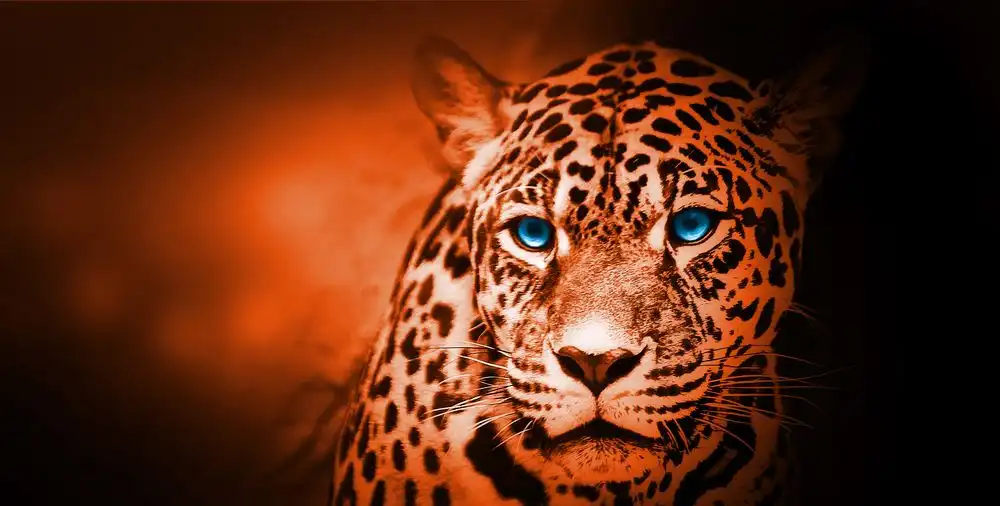
In attempting to respond to these questions, I follow the thread on to the ontological turn in comparative law and anthropology. Here we encounter the question of perspectivism. Vivieros de Castro explains that for the Amerindian inhabitants of the Amazon, “l’homme n’est pas le seul à être une personne au sens fort. Tous les habitants du cosmos sont des humains, sous le vêtement des espèces, des corps, des formes distinctes. Pour les Indiens, quand un jaguar se voit dans le miroir, il voit un homme”. In different, philosophical terms (but where does métaphysique start or end?), to understand this second, connected thread, one might remember Derrida’s L’animal que donc je suis. On page 17 (Essais Folio), he writes: … “je me rends des ‘fins de l’homme’ donc des confins de l’homme, au ‘passage des frontières’, entre l’homme et animal…à l’animal en soi, à l’animal en moi et à l'animal en mal de lui-même” (à ‘l’animal autobiographique’). Three random titles, in which (id.) “j’ai perçu une sorte d‘ordonnancement, comme un ordre pré-établi, sinon harmonieux, une machine providentielle comme dirait Kant au sujet de l’animal, justement, ‘als ein Maschinen der Vorsehung’, une obscure prévoyance, le procès d’une aveugle mais mais sûre préfiguration dans la préfiguration…”.
The thread leads thereafter to witches, scapegoats, colonised indigenous people, prisoners deprived of habeas corpus, homo sacer, bodies, quasi-objects…Crowding at the ultimate frontier of our current legal epistemè, they appeal to to to deal with the definition of human societies and the design of modern rationality.
* L’animal que donc je suis.
Venue: In person (Sciences Po, Room 410T, 4th floor, 13 rue de l'Université, 75007 Paris) and online.
Invite-only event.
