
Home>Meet our graduates: Thomas Harbor, class of 2020
17 March 2026
Meet our graduates: Thomas Harbor, class of 2020

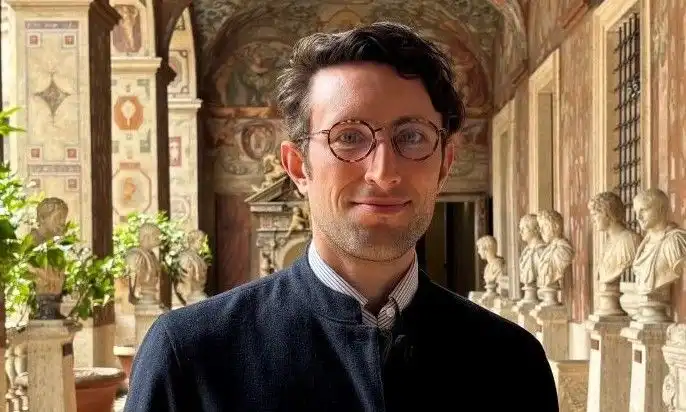
Could you describe your academic and professional background?
After graduating from high school, I joined Sciences Po as part of a dual programme in History with Paris‑Sorbonne University (Paris IV). Those years were marked by exposure to a wide range of intellectual fields and by formative extracurricular commitments. After a third year spent at the London School of Economics, and still hesitating between a career in the public or private sector, I enrolled in the HEC–Sciences Po dual master’s degree in Corporate & Public Management. This programme, at the crossroads of management and public policy, aims to train professionals able to move between both spheres: private‑sector actors sensitive to the public interest and public decision‑makers aware of business realities. I worked in an investment bank, in a strategy consulting firm, and at the economic department of the French Embassy in Beijing.
I graduated in 2020, after completing a final‑year internship largely remotely due to the Covid‑19 pandemic. I then decided to continue my studies at the Sciences Po Law School, via the lateral entry scheme that allows certain graduates of the School of Public Affairs to join the second‑year master’s in Economic Public Law. It was at that point that I confirmed my interest in competition law, a discipline that had already sparked my curiosity in the past.
I subsequently completed an LLM in European Law at the College of Europe in Bruges.
After several years of study and a relatively late pivot towards law, I began my career in 2022 in the antitrust practice of Cleary Gottlieb in Brussels, before joining Latham & Watkins in 2026. I am admitted to the Brussels Bar. In Belgium, admission to the Bar is possible provided that (i) you hold a degree that entitles you to sit the bar entrance exam in the country where you studied law, (ii) you have at least 18 months of professional experience in a law firm, and (iii) you pass an equivalence exam in Belgian law.
What have been the key stages in building your career plan?
I had never really thought of becoming a lawyer before 2020. My various experiences in both the public and private sectors indirectly led me towards this path. They made me realise that I needed a profession centred on argumentation and writing, close both to the life of companies and to the concerns of regulators. Competition law ticks all these boxes.
But this realisation would never have materialised without a few decisive encounters: Christopher Mesnooh, without whom I would never have become a lawyer; Agnès de Fortanier, through whom Europe became part of my daily life thanks to What’s up EU, the newsletter we launched in 2020; and Séverine Schrameck, who introduced me to competition law at Sciences Po before recruiting me at Cleary Gottlieb.
What are the main features of your current position as a competition lawyer?
The practice of a competition lawyer encompasses advisory and litigation work before national competition authorities, the European Commission, and both national and European courts. We help companies in their merger and acquisition transactions (merger control), when they are involved in or victims of anticompetitive practices (cartels, abuse of dominance), and when they receive or challenge public subsidies (state aid).
Competition law has broadened its scope in recent years with new instruments such as the Digital Markets Act (DMA) in the digital sector and the Foreign Subsidies Regulation (FSR), which seeks to restore a level playing field vis‑à‑vis companies benefiting from public support in third countries. My practice also covers foreign direct investment (FDI) screening in France and the coordination of matters with an international dimension.
On a day‑to‑day basis, my work involves drafting legal memoranda, preparing merger notifications, responses to requests for information from the European Commission or national authorities, and pleadings before the General Court or the Court of Justice of the European Union, as well as taking part in meetings with clients to define the most appropriate strategy. It also includes coordinating with counsel in other jurisdictions and managing communications with the authorities. The work takes place in an international, dynamic and demanding environment, where precision, responsiveness and an ability to engage in dialogue are essential.
How has your education at the School of Public Affairs, and more specifically the
dual degree with HEC, contributed to the position you hold today?
The legal profession is not the most obvious outcome for a graduate of HEC and Sciences Po without an initial legal background, and I could not have switched to the legal profession without subsequently pursuing formal legal studies. That said, the HEC–Sciences Po dual degree is a fairly unique programme, which provides robust analytical tools and hands‑on experience – through mandatory internships – in both the private and public sectors. I think it’s really useful to the daily life of a competition lawyer.
At the HEC, you become familiar with accounting, company valuation and corporate strategy; at Sciences Po, you are introduced to public law, economic policy and public finance. This rare and complementary combination proves particularly valuable in careers that require navigating across disciplines — such as competition law, which brings together economics, law and corporate strategy.
I do not believe that law should be seen as a “hard science” closed off to non‑lawyers. In many continental European countries, legal studies form a self‑contained track, from undergraduate level through to qualification at the Bar. The situation is quite different in common‑law countries, where legal professions remain broadly accessible after non‑legal studies.
In the United Kingdom, for example, one can qualify as a solicitor after studying classics or geography, by completing two years of professional experience and passing the SQE exam, which does not require a prior law degree. Likewise, admission to a Juris Doctor
in the United States comes after a bachelor’s degree in almost any discipline. From that perspective, law degrees are just one of several possible routes into legal careers.
Do you have any advice for students or soon‑to‑be graduates?
To students, my advice would be: allow yourselves to make mistakes. In Europe, particularly in Latin countries, our relationship to failure often remains overly guilt‑ridden. We internalise the idea that we must above all avoid choosing the “wrong” degree, internship or first job. Yet internships are an excellent way to try out different paths and to find out what you do not want to do, even if you do not yet know exactly what you want. Career choices are built through trial, error and course‑corrections.
Once this exploratory phase is over, the challenge is no longer just to dare to get things wrong, but to accept that you have to choose. The goal is not to keep every door open indefinitely, but to walk through one of them and stay there for some time. If you try too hard to preserve all your options, you may end up never really choosing. Making a reasoned bet on a field, committing to it for a few years and accepting to specialise is not a life sentence; it is a way of building a solid foundation from which you can reinvent yourself later on.
To recent graduates, I would add: stay curious and keep reading. A job, however interesting, will never be enough to sustain your entire intellectual life. A first position teaches you a great deal, but it can also narrow your field of vision if you never step outside it through reading, meeting new people or pursuing personal projects. Balancing this curiosity with demanding early‑career roles – in consulting, law or finance – is challenging, but it is also what allows you to maintain an intellectual life that is no entirely defined by your job.
FIND OUT MORE
Virtual Graduate Open House day, October 2025

On 17 October 2026: meet faculty members, students and representatives and learn more about our 30 Master's programmes.