# 86 | Things of Ancient Greece | Sophie Basch

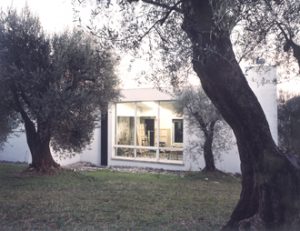
Sophie Basch is the autor of the powerful volume Rastaquarium, her recent book on the relationships between Art Nouveau and the Dreyfus Affair in Proust's work. In this summary of her talk given to the Arts & Sociétés seminar, she identifies for us the references to primitive Greece of this writer who, without being ...

# 82 | Something Else in the Orient | Christian Peltre

           Christine Peltre tells us of the status of “things” in the Orient imagined by nineteenth-centuries contemporaries: objects acquired in bazaars and souks, robes, cloaks, babouche slippers, turbans, headgear, carpets, etc. “Operators of belief, border agents, or reminders of proximity?” Everything would be a way of recalling sites and atmospheres, dazzling sights, even vain ...

# 80 | Concrete Presences | Marc Desportes

          After his Paysages en mouvement. Transport et perception de l’espace, XVIIIe-XXe siècles (published by Gallimard in 2005), Marc Desportes has taken an interest in the singular presence of objects in twentieth-century art. He proposes to clarify the various ways in which these objects are used by artists, in accordance with varying circumstances, as well ...

# 79 | The Art of Trenches | Bertrand Tillier

No tags 3

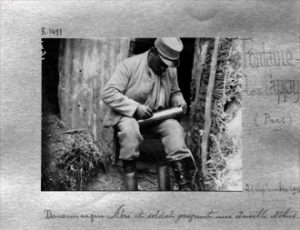
      As a historian of anthropological art, Bertrand Tillier studies objects of all sorts manufactured in the trenches by the combatants of all nations who were engaged in the bloody conflict of the Great War. Conscious of the reticence of art historians to include such unclassifiable and disturbing products, he directs his attention toward the ...

# 78 | Animals and the Paintings of Things | Armelle Fémelat

No tags 3

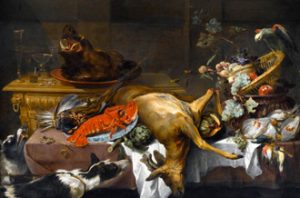
        Armelle Fémelat, whose dissertation on Italian equestrian portraiture from the thirteenth to fifteenth centuries is forthcoming, brings us into the world of representations of animals shown dead or alive, wherein things have lives of their own. She invites us to grasp, through the world of forms, the nature of animal otherness by crossing ...