
Home>Meet our graduates: Janine Ecker, Class of 2025
8 June 2026
Meet our graduates: Janine Ecker, Class of 2025
Can you describe your academic and professional background?

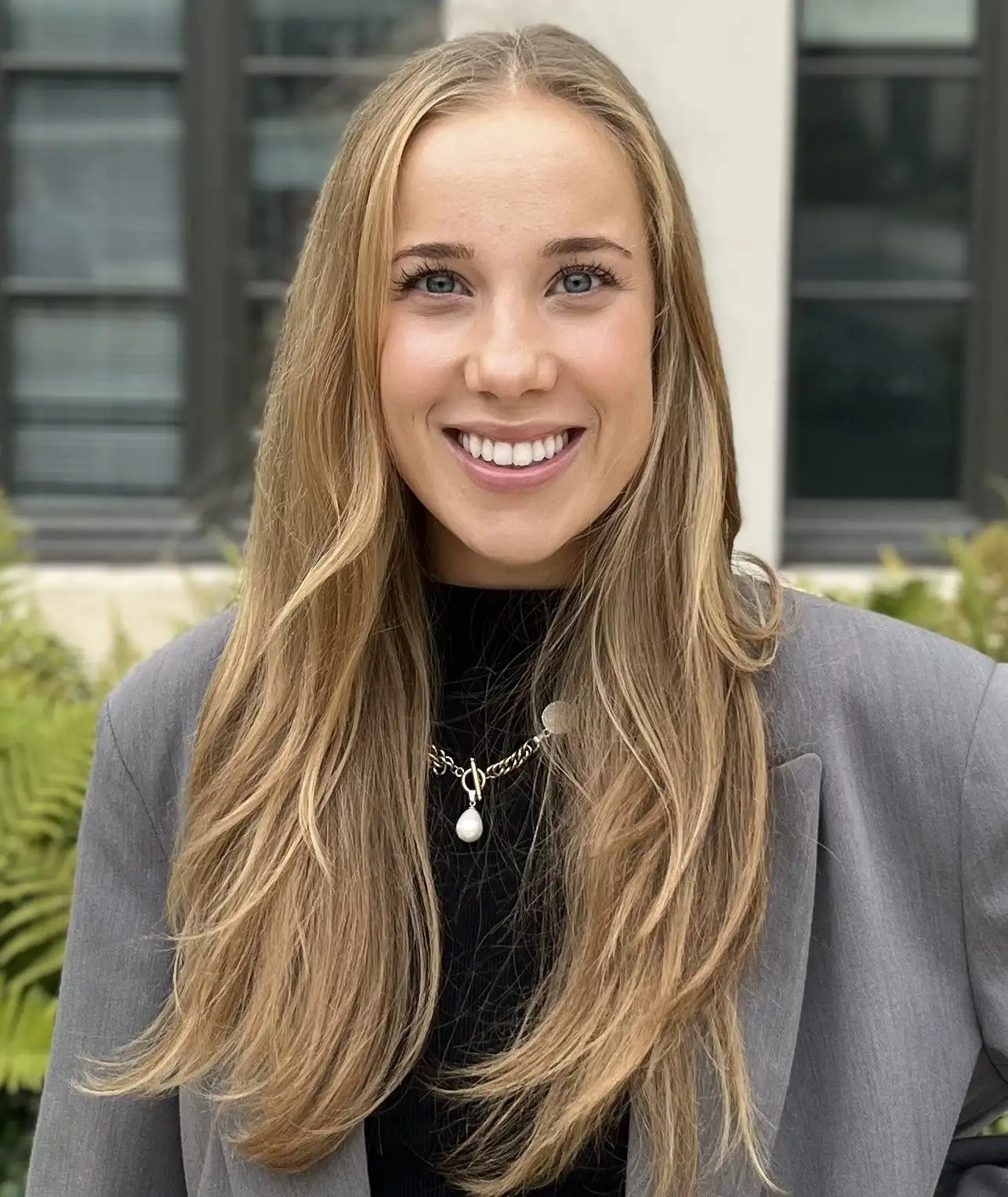
I like to describe myself as a 'translator' between three very different worlds: business, policy, and regulation. I’ve built my career to see this intersection from all different angles.
Actually, I started on the business side, with a degree in political science and business and early experience in the startup world and digital consulting at KPMG. That was a great foundation because it taught me the 'business-first' language of solving technical problems.
I eventually moved into the policy space with internships in the public policy teams of BMW and later at Amazon in Brussels to see how that business logic translates into the regulatory world. Navigating the early days of the EU AI Act there was a turning point for me: it’s where I realized I wanted to spend my career at the intersection of tech and policy.
To get the full 360-degree view, I did two things: I returned to academia to pursue a Master’s degree at Sciences Po, where I specialized in Digital and New Technology. And I experienced the regulator’s perspective during a traineeship at the European Commission’s newly created AI Office.
All this has led me to my current role as an EU Public Policy Analyst at Google in Brussels, focusing on AI and emerging technology.
Why did you choose to pursue this specific policy stream “Digital, New Technology and Public Policy”?
I chose the Digital, New Technology and Public Policy stream because it’s a one-of-its-kind, innovative program that was a perfect match for my interest in tech policy, offering to combine a Master of Public Policy with a deeper specialization. Additionally, in my field it’s rare to find a curriculum that actually keeps pace with the rapid changes and the stream is designed to be as agile as the technology it studies.
What really convinced me was the program's holistic approach. In digital policy, a single lens is never enough: you have to understand and connect the political, legal, social, and economic layers. The Masters promised to provide an interdisciplinary toolkit to look at these challenges from every angle and to bridge the gap between theory and practice.
How did your training at the School of Public Affairs contribute to get your degree and the position you hold today?
It offers a great balance between a broad policy foundation and the freedom to specialize. I knew early on that I wanted to focus on AI, so I took every available course on emerging tech while branching out into areas like economics to round out my perspective. One of the greatest assets was to not just to study the theoretical frameworks but learn directly from visiting practitioners - people actually working in the field.
I really appreciated that the program doesn't force a one-size-fits-all approach. In the final semester, you can tailor your own learning experience through an internship, a thesis, or an international exchange. In my case, I chose a semester abroad at IE University in Madrid, to complement my policy training at Sciences Po with a program focused on international business and economics.
Building my own path across these multifaceted disciplines helped prepare me for the reality and complexities of my job today, where I am bridging the gap between technical AI developments, business goals, and public policy.
What advice would you give to current and future students?
Make curiosity and interdisciplinarity your superpower. I used to worry that not having one singular 'passion' or niche was a limitation. But in a world where hard skills can be acquired faster than ever, the real value to me lies in the human side of things: being able to connect the dots, think critically, and draw your own conclusions.
Sciences Po is the perfect place to lean into this: with so many different schools and subjects, extracurricular offers, and students from all over the world with diverse backgrounds, you can always step out of your comfort zone and learn something new.
And it goes beyond the lecture hall: dive into the rich landscape of student associations and get involved. I co-founded the German Student Association, and it was honestly one of my most formative experiences. There is something incredibly rewarding about taking an idea from scratch and growing it into a permanent community that creates real value and connection for students. So, find your people, join a group, and don’t be afraid to start something of your own!
Where do you see yourself heading next or what do you see as your next challenges?
For me, the next challenge is moving from the theoretical to the practical work of shaping real world policy. In the era of AI - which I believe is nothing less than the biggest revolution of our lifetime - I feel incredibly fortunate to be able to work at the forefront of innovation.
Such a profound shift naturally brings complex challenges, but the opportunities it offers are immense. My goal is to contribute meaningfully to an EU tech landscape where regulation and innovation are not odds, but work together to ensure technology truly benefits people. I’m excited to keep building that bridge, making sure the digital future we are creating is one that works for everyone.
FIND OUT MORE
Virtual Graduate Open House day, October 2025

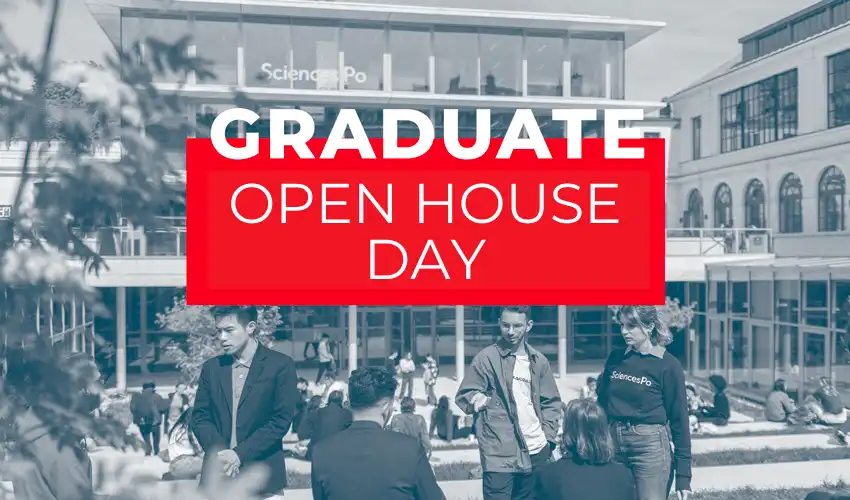
On 17 October 2026: meet faculty members, students and representatives and learn more about our 30 Master's programmes.