Traditionally, people have often wanted to leave the last word to writers. Since Antiquity, with Philostratus, this has been because the critic was supposed to go beyond the world of appearances by sifting out a meaning and a moral, whereas the artist was suspected of doing nothing but representing forms through the use of ...
# 26-1 | Commodities and Gifts | Fabien Danesi
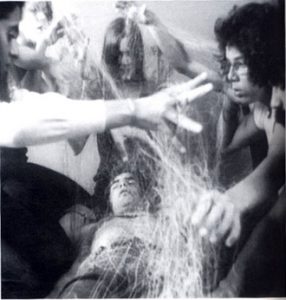
Christian Joschke invited us, during this seminar, to make the connection between avant-garde movements, on the one hand, and the practice of gift-giving and the social sciences’ take on the circulation of goods and assets, on the other. In doing so, he pointed out a peculiar development. In the 1930s, and again in the ...
# 26-2 | Commodities and Gifts | Christian Joschke
Christian Joschke invited us, during this seminar, to make the connection between avant-garde movements, on the one hand, and the practice of gift-giving and the social sciences’ take on the circulation of goods and assets, on the other. In doing so, he pointed out a peculiar development. In the 1930s, and again in the ...
# 25-1 | The Power of Artists | Elitza Dulguerova
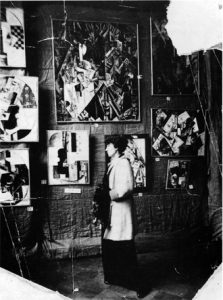
Traditionally, people have often wanted to leave the last word to writers. Since Antiquity, with Philostratus, this has been because the critic was supposed to go beyond the world of appearances by sifting out a meaning and a moral, whereas the artist was suspected of doing nothing but representing forms through the use of ...
# 24-1 | Icons | Jean-Claude Marcadé
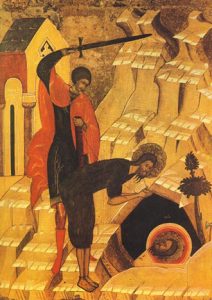
Icon comes from the Greek word for religious images of all kinds, in all materials, and of every dimension. Objects of worship but also objets d’art, icons are linked to the Orthodox faith but also to the history of art. They are the tokens of a worldview that has inspired theologians as well as ...
# 24-2 | Icon | Igor Sokologorsky
Icon comes from the Greek word for religious images of all kinds, in all materials, and of every dimension. Objects of worship but also objets d’art, icons are linked to the Orthodox faith but also to the history of art. They are the tokens of a worldview that has inspired theologians as well as ...
# 23 | Money | Elisabeth Lebovici and Caroline Bourgeois
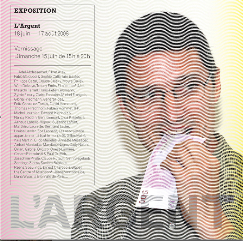
“Our way of life resembles a fair,” wrote the Stoic Epictetus. “The flocks and herds are passing along to be sold, and the greater part of the crowd to buy and sell. But there are some few who come only to look at the fair, to inquire how and why it is being held, ...
# 22 | Postwar | Serge Guilbaut
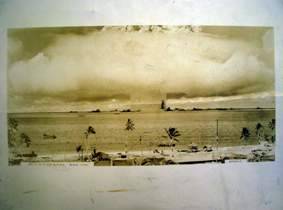
Contrary to what Barnett Newman declared, one never “starts from scratch,” even if it is true that “the old stuff was out” in the all-out crisis brought on by World War II and everything that preceded it. Two exhibitions have just offered fresh reexaminations of the postwar period. The most recent one took place ...
# 21 | Prehistories | Arnaud Hurel
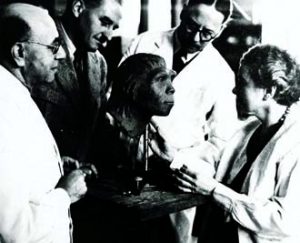
Arnaud Hurel gained a name for himself with the recent publication of a book on the history of his field of study. His volume La France préhistorienne de 1789 à 1941 (Prehistorians’ France from 1789 to 1941) examines this field starting from that paradoxical revolutionary moment when the notion of a “collective heritage [patrimoine ...
# 20-2 | Genius | Pierre-Michel Menger
Jean Starobinski sees the eighteenth century as the stage upon which an unprecedented freedom movement lit up and exploded in a tragic flash. This was the moment when Diderot made of the genius a personal, secret, and indefinable kind of soul, in the absence of which nothing beautiful or very great could be accomplished. ...