

Home>Jonne Kamphorst – Explaining and bridging political divides to strengthen democracy
12 March 2026
Jonne Kamphorst – Explaining and bridging political divides to strengthen democracy
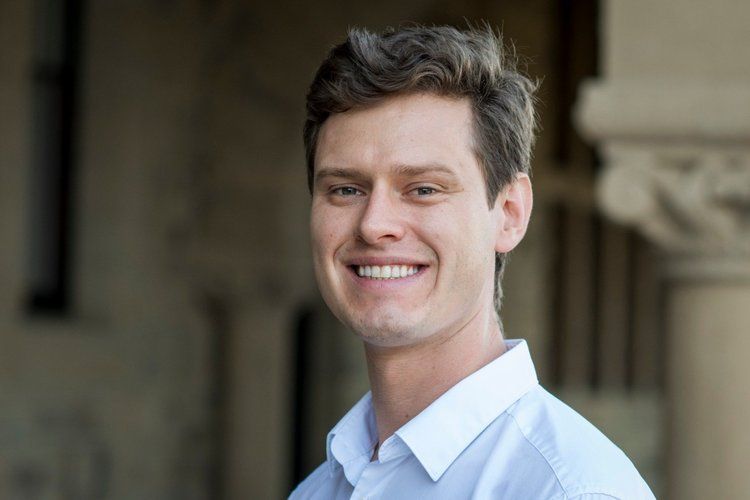
Our democratic societies are becoming increasingly politically divided. How can political science help to explain and bridge those divides? This is one of the research interests of Jonne Kamphorst, who joined Sciences Po’s Centre for European Studies and Comparative Politics (CEE) and Centre for Socio-Political Data (CDSP) in January 2026. The second strand of his research focuses on building AI-based research tools in the social sciences. He tells us more about his background and research in this interview.
Could you tell us about your academic background and give us an overview of your research?
Before coming to Sciences Po, I was a postdoctoral scholar at Stanford, working across the Computer Science and Sociology departments. Prior to that, I was at the European University Institute in Florence, where I earned my PhD.
My research sits at the intersection of two broader fields. On one hand, I work on political science questions about the origins of social divisions and how we can bridge them. My most recent project in this area looks at how working-class voters perceive left-wing parties as champions of “culturally elite” or “urban” issues, and how those perceptions strongly influence their voting behaviour.
On the other hand, a large part of my research agenda focuses on the use of Large Language Models (LLMs) and AI as research tools in the social sciences. One line of work we’re developing involves LLM-based voting advice applications. Instead of answering thirty or forty questions — most of which you don’t really care about — and then receiving some generic advice, users can have a personalised conversation with one of these bots, which then provides tailored information about candidates.
The other strand of my work in this field centres on what we call digital twins, or synthetic respondents. The idea is to use Large Language Models to simulate synthetic data and synthetic people, which can help in parts of the policy and research pipeline where you currently don’t have any data — particularly in the decision-making and design stages, before you move to pilots and testing with real people.
What made you choose to join Sciences Po?
Sciences Po is a place that is perfectly suited to these different research agendas. On one hand, it’s very close to policymaking — you can see that in the Masters Schools and the types of students the institution attracts. At the same time, it’s a place with real excellence in research, and I’m hoping to work together with many colleagues here to continue developing these different lines of inquiry.
What projects are you hoping to develop within the CDSP and CEE?
Here at the CDSP, we have access to excellent survey data from Europeans and people in France. One of the projects I’m developing with Emiliano Grossman and Mahendra Paipuri focuses on creating digital twins using data from France and the CDSP, with the goal of improving policymaking and the design of surveys — both here at Sciences Po and across Europe more broadly.
At the same time, I’m very much continuing my research on political divides. That’s where my affiliation with the CEE is especially valuable, thanks to the presence of outstanding scholars such as Caterina Froio, Jan Rovny, Diane Bolet, and many more.
I’m truly excited to be here — Sciences Po brings together everything I need to push these research agendas forward, and I couldn’t imagine a more fitting environment to do so.