


Home>Academics>Master Programs>Environmental Policy
Master in Environmental Policy
Two-year Master's
Programme in English
120 ECTS minimum
Virtual Graduate Open House day – 17 October 2026

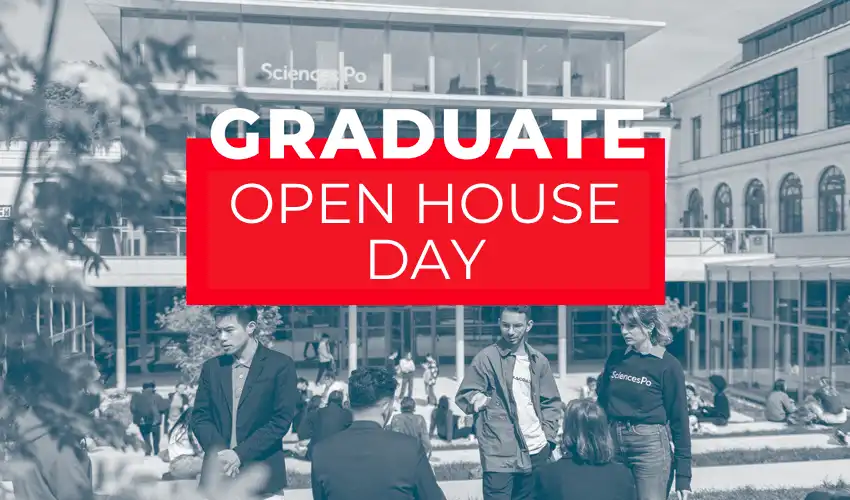
Interested in joining a master’s programme at Sciences Po? Come and discover our 30+ master’s programmes across our eight professional schools, as well as the admissions process. Speak with our deans, academic coordinators and students, as well as our admissions teams.
General objectives
The Master in Environmental Policy trains students to shape decisions that matter. Students learn how to navigate international and multi-scale settings, managing environmental projects and policies, and coordinating between governments, international organizations, NGOs and expert communities. Grounded in a necessary multidisciplinary perspective, the program aims to foster inclusive leadership, attentive to the systemic relations between environmental, social, cultural and economic challenges, and supportive of environmental justice.
The Master responds to an urgent need worldwide for critical understanding of the challenges related to biodiversity loss, climate change, natural resources governance and environmental negotiations. To this end, it provides students with an in-depth understanding of policy tools and processes while developing their literacy in earth sciences.
Main orientations and specific features
The Master in Environmental Policy at PSIA prepares students to lead global sustainable policies by combining rigorous academic training with real-world engagement. Our faculty includes both renowned scholars and experienced practitioners deeply embedded in the field. This dual perspective allows students to explore diverse approaches, to engage with cutting-edge debates, and to build practical expertise.
Students enrolled in the Master get exclusive access to unique international initiatives exposing them to original and creative approaches to environmental policy making. Through the activities of the CARE Program for Climate Leadership and the European Chair for Sustainable Development and Climate Transition, they can deepen their knowledge and skills, think “out-of-the-box”, and engage in real-life projects with partner organizations - drafting policy recommendations on just transition strategies, reflecting on climate finance mechanisms for example. They also have access to other Sciences Po wide research-related activities, including those provided by the Institute for Environmental Transformations.
Students can apply to join the dedicated law clinic “Environmental Justice and Ecological Transition” (JETE) in partnership with Sciences Po’s Law School. The JETE clinic allows students to act as professional consultants by answering pressing and current issues raised by actors from the field. (See the list of past projects on the dedicated page)
Finally, students in the Master are part of a wider community studying international affairs. They will choose one or two concentration(s) to follow alongside other PSIA students, allowing them to craft their own perspectives, looking into the intersections between environment and issues related to development, migrations, security, human rights or global economy.
Over the past fifteen years, the Master has evolved to meet the challenges of environmental policies and demands of the job market, while staying true to its objective of equipping graduates with the knowledge and skills needed to adapt, innovate, and drive change across sectors and geographies.
Program structure

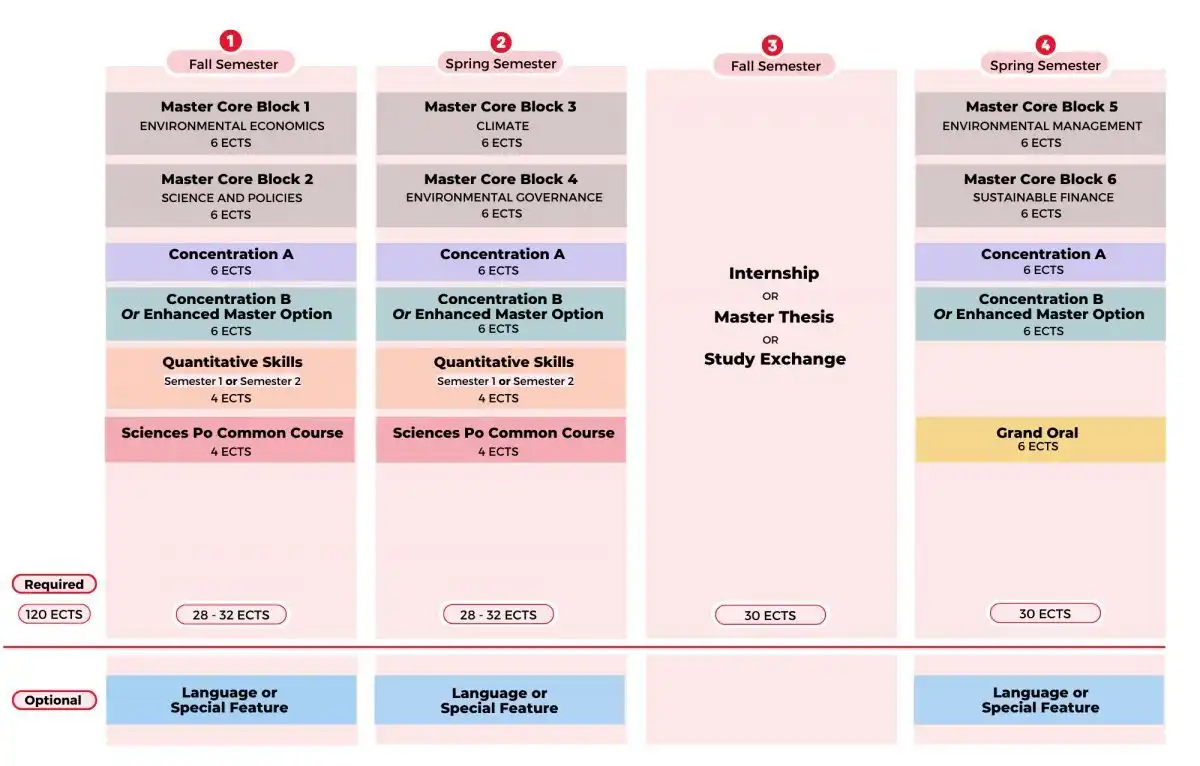
Download the Program structure (PDF, 64 Kb).
Further details regarding PSIA’s general program structure. The degree structure for students in the following programs can be found at: Dual Degree program, Joint Master program and One-Year Master program.
The “Justice Environnementale et Transition Ecologique” (JETE) Clinic is a selective program available to the students registered in the Master in Environmental Policy (including students registered in a dual degree or a one-year program). For more information, please visit the Law School Clinics page.
Courses
Career Opportunities
Throughout their journey, students in the Master in Environmental Policy benefit from personalized career support, including dedicated career advice, alumni mentorship, and access to Sciences Po’s global network. Master in Environmental Policy graduates successfully pursue diverse and impactful careers as policymakers, analysts, consultants, and advocates, working across the globe in governments, international organizations, NGOs, and the private sector.
Graduates from the Master in Environmental Policy engage in a diverse and exciting range of careers. Prospects span across the private and public sectors, as well as international organizations and the not-for-profit field. As environmental sustainability becomes an increasingly central issue to all aspects of politics and the economy, the degree is taking graduates towards an increasingly varied set of professional horizons.
The program prepares our graduates to work for international and national agencies, national ministries, and local administrations for positions involving the creation, management and assessment of public policies and projects concerning the environment and sustainable development, in the private sector, prospective employers include NGOs, corporations, consulting groups, and banks investing in sustainable development.
Other careers include journalism and communication on environmental issues for the media, internal and external communication services for companies, and consulting in communication for both private and public institutions on the environmental and social aspects of sustainable development.
Testimonials from graduates
- Paulina, Acting Head of the Climate Negotiations Unit, Ministry of Climate and Environment of Poland
- Irene, Climate Policy Officer, SEO BirdLife
- Mathieu, Founder of ECONOS
- Shadé, Global Energy Specialist, UNDP
- Francky, Policy Assistant, The European External Action Service (EEAS)
- Anna, Chargée d'interventions “international cooperation”, Agence de l'Eau Rhin-Meuse (AREM)
- Liudas, Business Controller, Johnson & Jonhson MedTech Nordics
- Malak, Consultant with a focus on water-food nexus policy analysis
- Emma, Junior Blue Carbon Consultant, EcoAct
- Fabian, Mercator Fellow on International Affairs
- Michelle, Director of sustainability, Condé Nast, London
- Marit, Climate Change Specialist, the World Bank's Climate Change Group
- Hélène, Associate Project Officer, UNESCO
- Jayasurya, Environment and Trade Consultant, UN Environment Program
- Cecilia, Content and Initiatives Officer, Women's Forum for the Economy & Society
- Lauren, Project Lead at the Commission for Environmental Cooperation
- Alejandra, Research Assistant, The European Chair for Sustainable Development and Climate Transition
- Maria, Economist, Peruvian Ministry of Finance
- Michaela, Communication and Membership Assistant, EUROPARC Federation
- Shashwati, Project Manager and Research Advisor, Autonomy Paris
Discover PSIA 2025 Summa Cum Laude:
CONTACTS
Scientific Advisor: Professor Shiv Someshwar
Academic Advisor: Aghiad Ghanem
Academic Assistant: Valentina Sampaoli
Secretariat open:
- Monday, Tuesday and Thursday 9:30-12:45 and 2:15-4:45
- Wednesday and Friday 9:30-12:45
Key information about the application process (requirements, documents, deadlines and calendar, etc) can only be found on Sciences Po’s Admissions website.
Sciences Po Live

Sciences Po organised a presentation of the Paris School of International Affairs' Masters programmes with the Director, students and alumni.


