


Home>Academics>LLM in transnational arbitration & dispute settlement
LLM in transnational arbitration & dispute settlement
One-year master's programme
Programme in English
Between 75 and 100 ECTS
Virtual Graduate Open House day – 17 October 2026

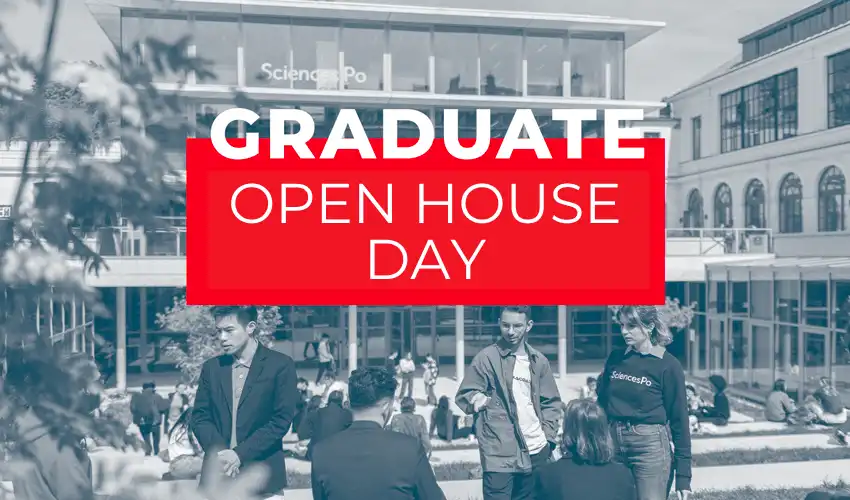
Interested in joining a master’s programme at Sciences Po? Come and discover our 30+ master’s programmes across our eight professional schools, as well as the admissions process. Speak with our deans, academic coordinators and students, as well as our admissions teams.
Why study arbitration in Paris?
Paris is one of the world’s leading centres for international arbitration, anchored by the presence of the ICC International Court of Arbitration. The city offers direct access to top global law firms and a vibrant community of renowned arbitration practitioners.
Why study arbitration at Sciences Po law school?
Founded in 1872, Sciences Po is a world-class university known for its internationally recognised degrees, cutting-edge research, and global network. Its Law School has built a strong reputation in international economic law and in all mechanisms of dispute settlement.
Each year, it hosts numerous arbitration-focused events featuring leading specialists from around the world.
Sciences Po teams consistently excel in international moot competitions and the Law School has organised its own international moot for more than twenty years.
What will you study in this LLM?
The TADS LLM offers rigorous training in both the theoretical and practical dimensions of arbitration and dispute settlement. Its core focus is transnational arbitration in all its forms, complemented by a broader study of international dispute resolution mechanisms—from litigation before the ICJ, WTO bodies, and regional human rights courts to mediation, online dispute resolution, and proceedings before domestic courts.
Beyond procedural tools, the program includes substantial coursework in public international law, international contracts, private international law, energy law, investment law, and human rights protection. This combined approach equips students to navigate the wide range of tribunals and courts operating worldwide.
Students complete mandatory and elective courses in small groups through semester-long and intensive modules. Practical workshops — taught in situ at partner law firms and at the ICC International Court of Arbitration — strengthen professional skills, while conferences, internships, and optional moot competitions deepen their engagement with the field. The program offers a uniquely immersive entry point into the global arbitration community.
Graduates benefit from a high-level education that makes them strong candidates for positions in international law firms, arbitration institutions, and international organisations.
Curriculum overview
Coursework is complemented by the choice of one of the following options:
- Full-time work placement, ranging from 14 weeks to 6 months from July to December following studies (30 ECTS) or
- Graduate Thesis, completed before the end of studies in June (30 ECTS)
Governance and faculty


In this LLM programme students have significant opportunities to learn the theory and practice of transnational arbitration, along with other means of dispute settlement, by concentrating on both substantial and procedural issues. By studying in the most important arbitration venue in the world, our students are taught by several of the most prominent scholars and practitioners in the field.
Diego P. Fernández Arroyo
Professor at Sciences Po
- Diego P. Fernández Arroyo, Courses on Transnational Commercial Arbitration, Sociology and Philosophy of International Arbitration, International and Transnational Litigation, and State Immunity in Litigation & Arbitration
- Makane Moïse Mbengue, Courses on WTO Law and Public International Law
- Gabrielle Kaufmann-Kohler, Seminar on ISDS Reform
- Gary Born, Course on International Commercial Agreements
- Alexis Mourre, Course on Divergences and Controversies in International Commercial Arbitration
- Stefano Azzali, Course on Strength and Weakness of Institutional Arbitration
- Franco Ferrari, Course on International Sales Law & Dispute Resolution
- Pierre Tercier, Course on Pivotal Moments of Arbitration Proceedings
- Chiann Bao, Seminar on Artificial Intelligence & Arbitration
- Laurence Burgorgue-Larsen, Course on Regional Systems of Human Rights
- Mark McNeill & Eduardo Silva Romero, Course on Investment Law and Arbitration
- José R. Feris, Course on Transnational Commercial Arbitration
- Arno Gildemeister, Courses on Negotiation and Mediation
- Christophe Seraglini, Course on French Arbitration Law
- Peter Rosher & Clément Fouchard, Course on Comparative Procedural Tools
- Franck Latty, Course on Sports Law & Arbitration
- Raëd Fathallah & José María Pérez, Course on Arbitration in Corporate and M&A Disputes
- José Manuel García Represa, Course on Damages in International Arbitration
- Caroline Kleiner, Seminar on Economic Sanctions in International Arbitration
- Giuditta Cordero-Moss, Course on Interpretation of International Contracts
- Hélène Ruiz-Fabri, Course on Procedural Law in International Courts and Tribunals
- Brooke Marshall, Course on International & Transnational Litigation
- Yannick Radi, Course on Investment Arbitration in the EU
- Bruno Sousa Rodrigues & Ghazal Miyar, Course on Human Rights in Arbitration
- Andrea Bjorklund, Canada (2026 Bredin Prat Distinguished Visiting Scholar)
- Catherine Amirfar, US (2026)
- Mohamed Shelbaya, Egypt/France (2026)
- Gabrielle Kaufmann-Kohler, Switzerland (2025 Bredin Prat Distinguished Visiting Scholar)
- Mohamed S. Abdel Wahab, Egypt (2025)
- Rodrigo Garcia Fonseca, Brazil (2025)
- Fausto Pocar, Italy (2025)
- Makane Moïse Mbengue, Senegal/Switzerland (2024 Bredin Prat Distinguished Visiting Scholar)
- Mariana França Gouveia, Portugal (2024)
- Adriana Braghetta, Brazil (2024)
- Payam Akhavan, Iran/Canada (2022, 2024, 2025)
- Juan Fernández Armesto, Spain (2023 Bredin Prat Distinguished Visiting Scholar)
- Alejandro M. Garro, Argentina/US (2019, 2021, 2026)
- Eleonora Coelho, Brazil (2022, 2023)
- Lucy Reed, US (2022 Bredin Prat Distinguished Visiting Scholar)
- Sean Murphy, US (2021)
- Anna Joubin-Bret (2021)
- Philippe Sands, UK/France (2020)
- Chester Brown, Australia (2020)
- Calixto Salomão, Brazil (2019, 2020)
- August Reinisch, Austria (2019)
- Emmanuel Gaillard (2018-2021)
- George A. Bermann (2017-2024)
- Yas Banifatemi (2022-2024)
- Bernard Audit (2019-2024)
- Alain Pellet (2018-2022)
- Luca G. Radicati di Brozolo (2018-2022)
- Jean-Marc Thouvenin (2021-2024)
- Olivera Boskovic (2019-2022)
- Jeremy Perelman (2018-2022)
- Brian McGarry (2019-2023)
Events
Students
Fully taught in English, this one-year, full-time LLM is designed for law graduates seeking an intensive academic environment and advanced expertise in arbitration and international dispute settlement. The program runs from late August to the June or December of the following year, depending on curricular design choices by the student. Upon successful completion, students are awarded a Diplôme d’établissement from Sciences Po.
Find out more about the Class of 2026.
Eligibility and admissions
To be considered for admission to the LLM, applicants must meet academic criteria, hold a law degree (Master 2, JD, LL.B., or their equivalent), and have completed a minimum of 18 months of full-time professional experience (including internships) by the time the programme starts (late August).
Experience in any field of law will be considered and does not need to be directly linked to arbitration or dispute settlement.
Find out more about the admissions procedure on the admissions pages of the Sciences Po website.
Please select "One-Year Master Programme" on your online application form for an LLM programme at Sciences Po Law School.
Financing your LLM studies
To ensure that admitted LLM students successfully complete their studies at Sciences Po, they are invited to consider the financial aspects of their studies in Paris for a 10 to 18-month period depending on curricular options.
The LLM tuition fees are €26,000.
You can find relevant budgeting information on the Create a budget page.
Admitted students are encouraged to consider diverse potential funding streams during the course of their LLM, including scholarship and grant opportunities at Sciences Po (see below), Scholarships or funding opportunities from one's home region/country, government, private businesses, (student) loans from a bank, or funding from current employers.
An overview of scholarship opportunities.
An overview of Sciences Po Partner Banks.
Should admitted students need to defer their admission offer, they are invited to present their reasons in a formal letter to the Dean’s Office via Kyle Schneider, Assistant Dean, during the admissions process.
Each year, a limited number of LLM scholarships and grants are made available to admitted LLM Students. Following is an overview of these opportunities for current and recently-admitted students:
The Squire Patton Boggs Research Excellence Grant
This annual award comprises a €6,500 excellence grant for a current LLM student who has demonstrated unique interest in the intersection of public policy and arbitration.
Selection for this grant is competitive and offered to current LLM students during the fall semester.
Squire Patton Boggs Grant Recipients: Akash Santosh Karmarkar (2021), Chitransh Vijayvergia (2022), Estefanía Delgado Franco (2023).
The Bredin Prat Excellence Grant
This annual award comprises a €6,000 study grant to an emerging arbitration practitioner.
Selection for this grant is competitive and offered to current LLM students during the fall semester.
Bredin Prat Grant Recipient: Arias Lim Jie (2021), Gustavo Delgado (2022), Amogh Srivastava (2023), Lorena Avendaño (2024), Zahra Hosseinpour (2025).
The CAM-CCBC International Arbitration Excellence Grant
In partnership with Sciences Po, this award comprises a €19,500 study grant and is awarded each spring, based on merit and need. Diversity will also be considered.
Successful grant recipients shall demonstrate their commitment to advancing the field of international arbitration with specific focus on past and future work in relation to Latin America and Portuguese-speaking markets.
For further information, consult the overview of the grant and the CAM CCBC-Sciences Po Law School Partnership.
Selection for this grant is competitive and offered to current LLM students during each spring, following admission.
CAM-CCBC International Arbitration Excellence Grant Recipients: Helena Acker Caetano (2023), Ana Luiza De Oliveira Viana de Castro (2024), Fernanda Falcone Crovetto (2025).
Supporting Women Practitioners in Arbitration from the Middle East Grant
This award comprises a €26,000 study grant and is awarded each spring, based on merit and need.
Successful grant recipients shall demonstrate their commitment to advancing the field of international arbitration with specific focus on past and future work in relation to the Middle East.
For further information, consult the overview of the grant.
Selection for this grant is competitive and offered to current LLM students during each spring, following admission.
ALUMNI PROFILES


Contact us
For queries regarding admissions eligibility requirements and procedures, you are invited to consult the admissions pages of the Sciences Po website. All other relevant questions can be directed to the LLM team below:
Kyle Schneider, Assistant Dean
kyle.schneider@sciencespo.fr
Sarah Louhichi, Academic Assistant
sarah.louhichi@sciencespo.fr