
Home>What Students Really Learn at the Paris Climate School: An Interview with Ariane Joab‑Cornu
25 February 2026
What Students Really Learn at the Paris Climate School: An Interview with Ariane Joab‑Cornu
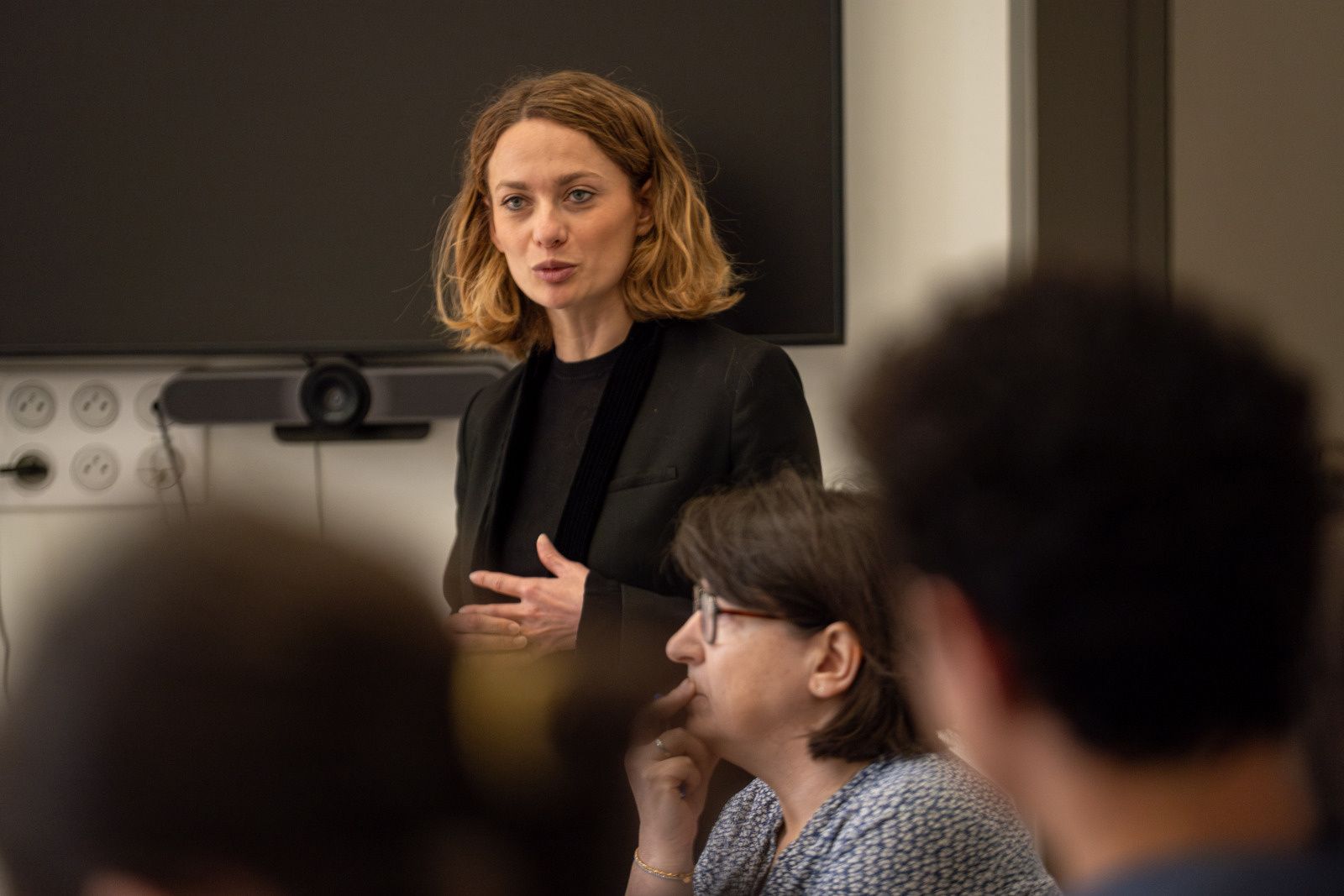
At Sciences Po, the Master in Ecological Transition, Risks and Governance is designed to train a new generation of professionals who can understand, navigate, and lead the ecological transition. To get a clearer sense of what students actually learn, and how the two‑year program unfolds, we sat down with Ariane Joab‑Cornu, Executive Director of the Paris Climate School.
What skills and knowledge do students acquire when enrolled in the Master in Ecological Transition, Risks and Governance?
Ariane Joab‑Cornu: What we want is for our students to become real strategic actors of the transition, people who can connect scientific knowledge, legal and economic expertise, and governance practices across all levels. We train them to become climate natives: climate isn’t just a topic they study, it becomes the lens through which they understand everything else.
To do that, we’ve built the program around six intellectual pillars. The first is this systemic vision: understanding how governance works from the local to the global scale. The second is interdisciplinarity, and I mean real interdisciplinarity. They get strong foundations in history, law, political science, economics, sociology, but we also teach them how to make these disciplines talk to biophysical sciences and engineering. That’s essential for the transition.
Then they dive into one of our three specialization tracks, “Financing the Transition”, “Value Chains & Industrial Transformations”, or “Adaptation, Risks & Resilience”, all deeply connected to professional practice. And finally, they learn methodologies and decision sciences, so they can actually design, evaluate, and implement transition strategies in the real world.
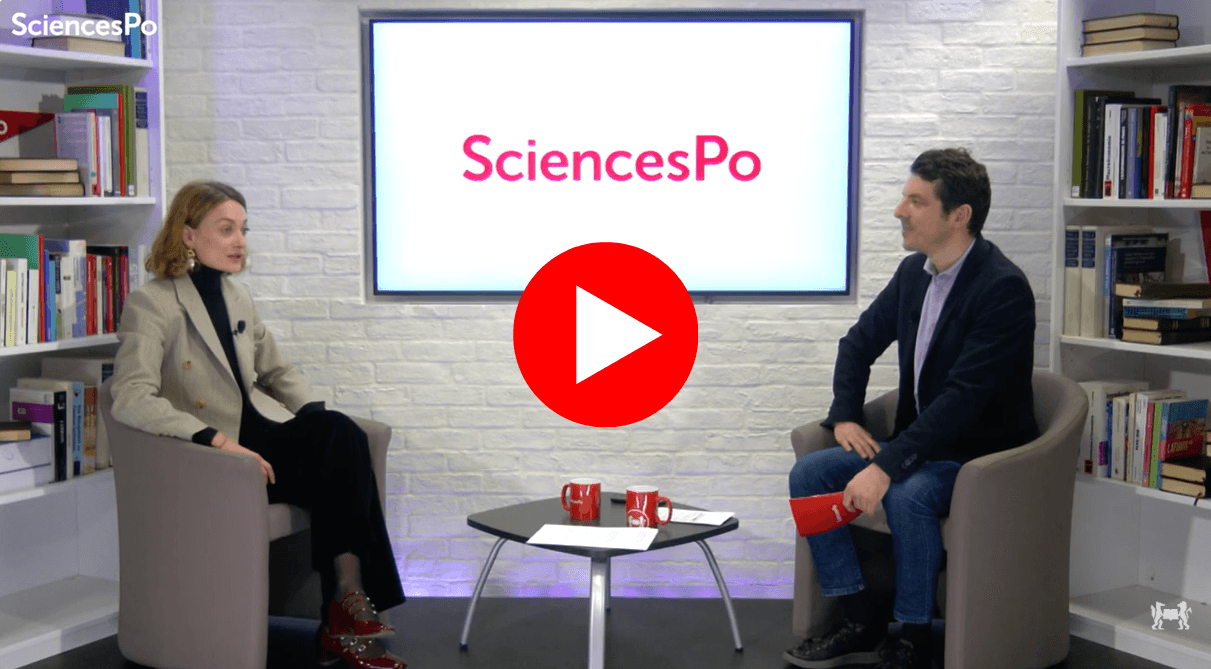
Ariane Joab‑Cornu presents skills and knowledge:
How are the two years of study organized?
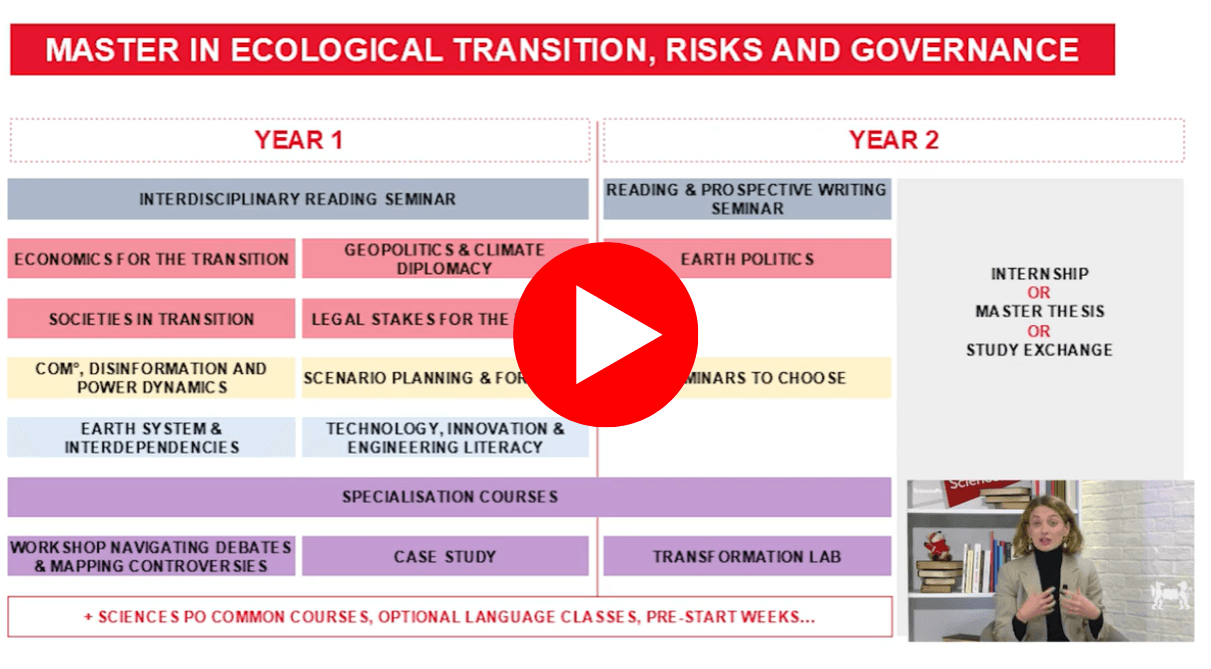
Ariane Joab‑Cornu: It’s a full two‑year program, entirely taught on our Paris campus. And we’ve structured it so that students progressively build both their academic foundations and their applied expertise. They start with core courses in economics, law, sociology, political science, especially political economy of the transition, and history, where they explore how societies transform themselves. They also take geopolitics and diplomacy classes to understand how a global issue like climate is managed at every scale.
Another important pillar is methodology: communication, misinformation, scenario planning, all the tools you need to navigate complex transitions. And then comes the specialization pillar, with one dedicated class and one case study per semester, really focused on professionalization.
Throughout the program, students take part in workshops, at the Transformation Lab, and apply exercises that mirror real‑world decision‑making. And the final semester is fully dedicated to an internship, a master’s thesis, or a study‑abroad experience. It’s the moment when everything they’ve learned comes together and prepares them for their next step.
Ariane Joab‑Cornu presents the two-year program organisation:
Information Sessions: Masters
Find out more about the Masters programs and the wide choice of specialisations offered by the 8 Schools of Sciences Po during our webinars dedicated to applicants.