
Home>Simulating a National Food Crisis Response at SciencesPo’s PSIA


17 June 2026
Simulating a National Food Crisis Response at SciencesPo’s PSIA
By Carla Muller-Elschner and Afiq Ahmad Fauzi
In early April, graduate students at SciencesPo’s Paris School of International Affairs (PSIA), in a course entitled The Politics of Global Food Security taught by former U.S. diplomat and CFS Executive Secretary, Chris Hegadorn had an opportunity to experience a custom-designed food system stress-testing simulation exercise. The stress test gave PSIA students a chance to move beyond lectures and course readings into the high-pressure dynamics of a real-life multi- stakeholder food crisis policy response. The simulation unfolded over two classroom sessions and included a feedback session with a ‘jury’ of outside technical experts.
The exercise was designed to give students a more realistic experience of food crisis management and to connect the intellectual content of their classroom lessons with current events. In that sense, the simulation aimed to equip tomorrow’s leaders with tools that are relevant both now and in the future.
The food crisis scenario focused on Senegal, with students taking on assigned roles as part of a fictional “National Food Security Emergency Advisory Council” supposedly organised under the authority of the President of Senegal. The scenario blended reality with fiction: conflict involving Iran and the Straits of Hormuz (with sharply-increased food, fuel, and fertiliser prices), along with a threat of a new variant of bird flu spreading from Southeast Asia to West African poultry and livestock farms, and (potentially) to humans. The scenario realistically considered a multiplicity of risks to both global and local food systems, including impacts from climate shocks, market over-concentration for agricultural inputs, and a highly-constrained fiscal environment.
Students were divided into five teams representing different interest groups:
- policymakers and politicians;
- food producers (including farmers, fishers, and manufacturers);
- retailers, wholesalers, transporters, and shippers;
- civil society and consumer protection groups
- researchers, scientists, and academics.
In parallel, one student served as rapporteur and another as an embedded journalist invited to join the Advisory Council. Each group had to prepare a policy brief identifying core concerns and potential policy responses, with particular attention paid to the six dimensions of food security and nutrition at national, regional and global levels.
The first session began with opening statements by each group setting out their concerns and preferred policy responses. The class was then organised into mixed Working Groups, each tasked with a specific policy focus area: short-term measures; medium-term trade-related measures; long-term finance-related measures; and, social equity, safety nets, and environmental issues. Rather than requiring immediate consensus, this first stage was designed to map the scope of the crisis, surface competing priorities, and initiate negotiations. The process quickly highlighted the interdependence of food security questions: emergency relief, fuel subsidies, fertiliser access, public communication, health governance, social stability, and rural resilience are all knit closely together.
Students were then encouraged to continue deliberating beyond the classroom, both within and among their interest groups, in order to build coalitions and identify possible compromises before the second session. This reflected one of the simulation’s broader pedagogical aims: not to reproduce reality perfectly, but to expose students to the complexity of food systems and to the perspectives of other actors involved in a complex crisis response.

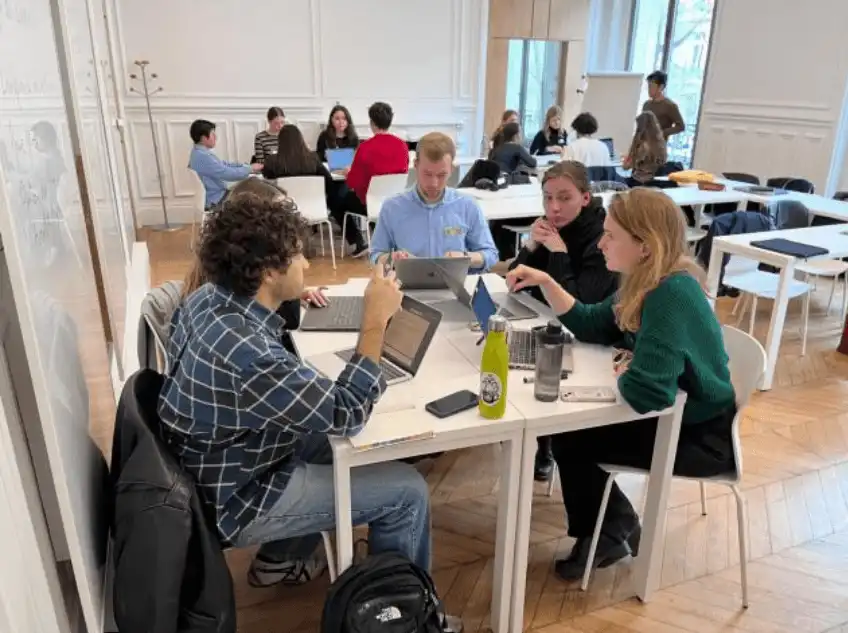
By the time of the second session (held supposedly 2 months later), the scenario had evolved through a combination of fictional and real-world developments. During the first session, students had already been asked to respond to three fictional news updates: extreme flooding, public protests, and announcement of a six-month rice export ban by Thailand. Before the second session, a real world development was also incorporated into the exercise: the announcement of a two-week ceasefire, allowing limited transits through the Strait of Hormuz.
The Council also received a briefing on developments in the bird flu outbreak by the science group. Students were then tasked with narrowing down and finalising three agreed policy recommendations per working group. The resulting talks pushed participants to move from brainstorming to prioritisation: what should be done immediately? what can realistically be financed? and, what forms of resilience can be built for the long term?
For the final stage of the simulation, an expert jury was invited to hear the working groups’ proposals, pose questions, and provide feedback. Dr Koen Deconninck of the OECD, Tatiana Hanks of INRAE, and Dr Cynthia Philipps, CEO/Founder of 22nd Century by Design lent the exercise an added professional dimension, by bringing outside scrutiny and practical concepts to complement the students’ policy recommendations.

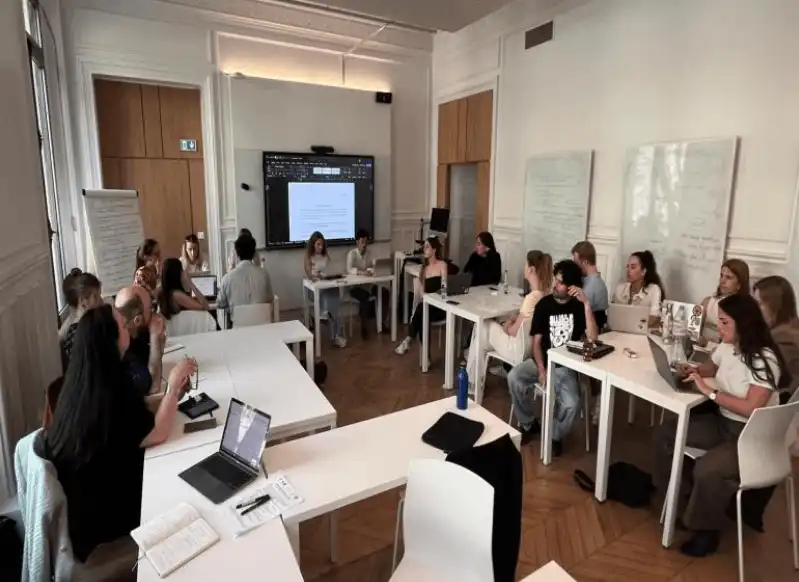
Placed within the broader structure of the course, the simulation served as a practical culmination of earlier class sessions on production, environment, climate, nutrition, pandemics, trade, conflict and rights. It translated these themes into an applied setting in which students had to negotiate under pressure, weigh various trade-offs, and think across sectors and assigned roles while attempting to achieve their objectives. More than just a classroom exercise, it offered a concrete introduction to the complex realities that shape real-world food systems governance, at a time where crises are proliferating and while emergency funding is contracting.
The simulation’s 12 final policy proposals reflected a steady progression from analysis to decision-making. Together, they sought to balance immediate crisis responses with medium- and longer-term food systems resilience objectives in the context of this Senegal-based crisis scenario. Of course, any country, sub-region or broader region can be studied, analyzed and simulated in the same fashion, adjusting as needed the different political-economic realities that characterize the geography under consideration. Such ‘stress-testing’ exercises will, ideally, familiarize participants with the complexities of food systems along with the inherent trade-offs that exist throughout those systems when they are compete with other complex systems. In this particular case, the priority policy responses recommended were as follows:
1 - Target emergency food relief, prioritizing IPC Phase 3+ populations;
2 - Combine food aid, cash transfers, and logistics support to facilitate food access;
3 - Establish a One Health Task Force for outbreak response;
4 - Compensate affected farmers and vulnerable households;
5 - Introduce temporary, targeted food access subsidies;
6 - Stabilise staple imports, storage, and food transport to ensure availability;
7 - Reduce post-harvest food losses through better practices;
8 - Strengthen cold-chain and rural food system infrastructure;
9 - Expand fertiliser supports and diversify sourcing of inputs;
10 - Mobilise international finance and oil capital windfalls for public expenditures;
11 - Expand rural credit instruments, especially for women and smallholder farmers;
12 - Build solar-powered irrigation systems to reduce fuel import dependency.
If you are interested in hearing more about this innovative simulation and the need to integrate stress testing into food systems governance, you can listen to a student-produced podcast here.