


Home>Research>Research Projects>Archive>Anti-Asian Hate Compared: Origins, Patterns, and Responses in the US and France
Anti-Asian Hate Compared: Origins, Patterns, and Responses in the US and France
About

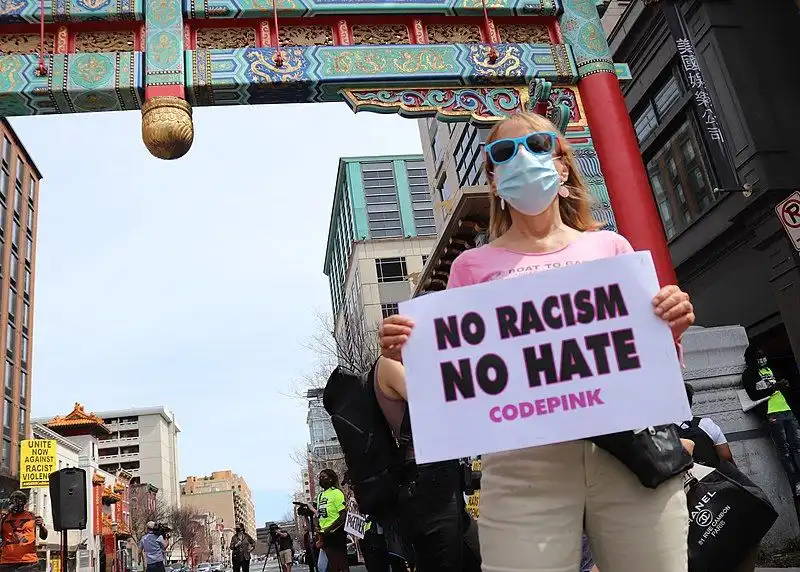
In this project, we study the origins, patterns, and responses to anti-Asian hate from a comparative perspective, focusing specifically on the United States and France. Both countries witnessed a spike in anti-Asian hate incidents since the onset of Covid-19, and both have also witnessed waves of mobilization to address anti-Asian violence and hate, yet no study to date has examined these patterns from a comparative perspective.
The central question we address is how do we explain the similarities that emerge in two different contexts? Relatedly, how does anti-Asian bigotry and hate incidents—and the responses to them—diverge in the US and France?
The Alliance Joint Project is the first step in discussing the potential for a comparative study of Asians’ experiences of bias, discrimination, xenophobia, and racism in the US and France It also aims to compare the reaction and actions of the civil society, in particular initiatives by journalists, artists, and NPOs’ activists of Asian descent.
Scientific coordination
Ya-Han Chuang et Hélène Le Bail
Partenaire scientifique : Jennifer Lee (Columbia University)
Partner
Works
Racisme "anti-Asiatiques", entre soupçon et altérisation
Ya-Han Chuang
Le Droit de vivre, 3 novembre 2022
La politique de Pékin et la pandémie ont avivé le racisme anti-Asiatiques. Les plus anciens stéréotypes sont mobilisés pour réduire les Asiatiques à d’éternels étrangers dont il faudrait se méfier. Les jeunes générations ripostent en affirmant leur appartenance citoyenne.
French Asian Youth Online
Hélène Le Bail et Ya-Han Chuang
23 juin 2021
As in many other countries recently, renewed racism targeting ‘Asians’ has fed new discourses and collective actions to fight against racist aggressions in France...
Anti-AAPI Hate : A conversation with Jennifer Lee
5 mai 2021
The rise in anti-AAPI (Asian American and Pacific Islander) hate incidents and hate crimes has finally started a national conversation on the history of anti-AAPI hate in this country, what might be driving the latest increase, and how to address it...
When the past becomes present: a legacy of Anti-Asian Hate
Jennifer Lee
Items, 22 avril 2021
The mass shooting in Atlanta on March 16 catapulted anti-Asian violence and hate onto the national spotlight. On that day, a 21-year-old White man murdered eight people in three massage parlors, including six Asian immigrant women: two of whom were Chinese, and four, Korean. Working low-wage jobs that required not only their physical presence but also their physical touch during a global pandemic, their lives laid bare the vulnerabilities at the intersection of race, gender, class, nativity, and citizenship...
From Silence to Action : The Chinese in France
Ya-Han Chuang, Hélène Le Bail and Emilie Tran
Global Dialogue
21 février 2021
As in other Western European countries like the UK and the Netherlands, the history of Chinese communities in France dates back to the beginning of the twentieth century. The early presence of the Chinese is linked to three main factors: colonization, the recruitment of Chinese laborers during World War I, and the sojourn of students in the interwar period. This early mobility had an impact on recent waves of migration: due to the renewal of former migration networks after 1978, Wenzhou in Zhejiang Province is nowadays the principal place of origin of Chinese migrants and their descendants in France...