

Home>Youth, Violence and Urban Margins: Ethnographic Research at the Intersection of Cities and Power


16.12.2025
Youth, Violence and Urban Margins: Ethnographic Research at the Intersection of Cities and Power
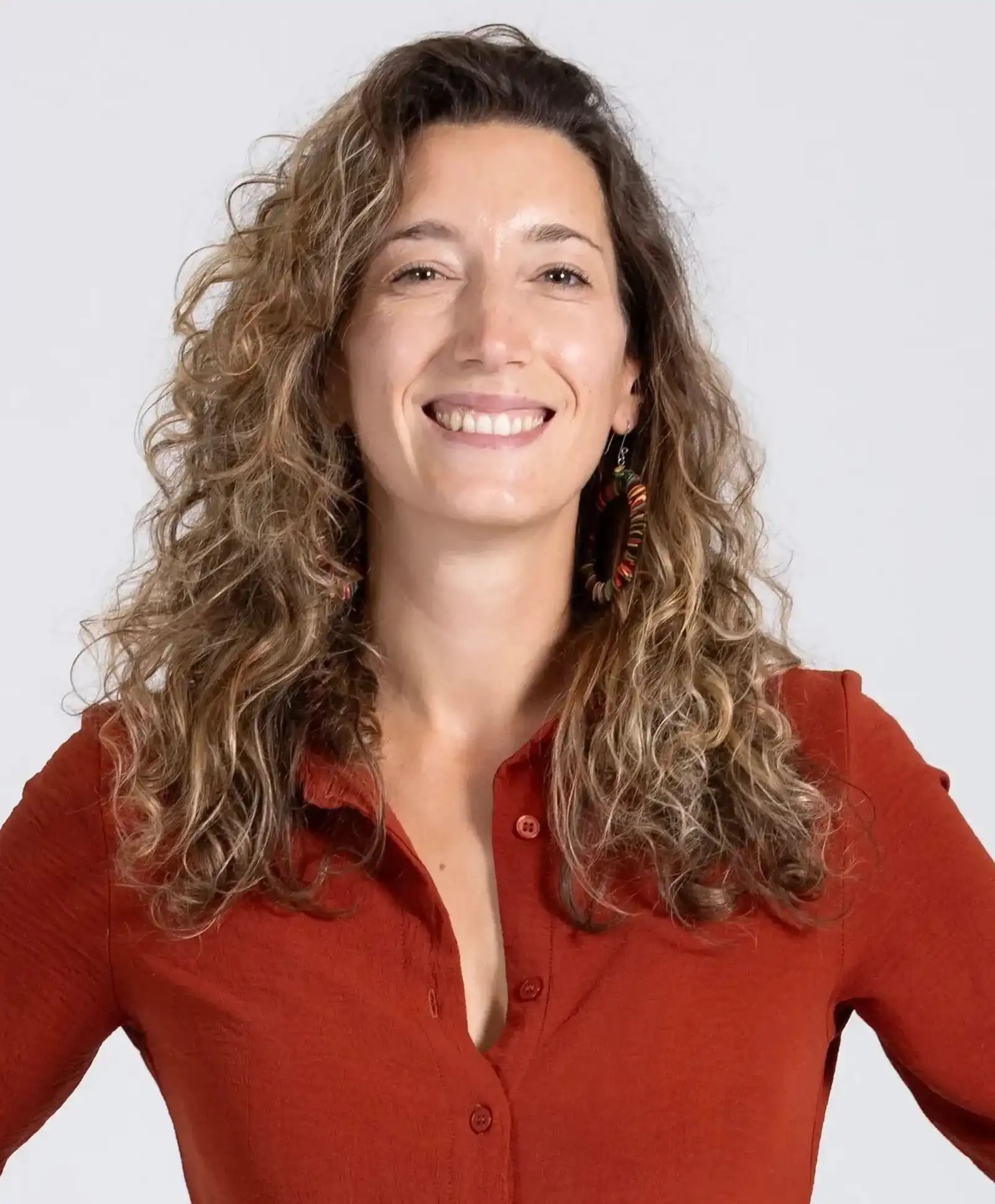
Elena Butti has recently joined the Centre as a researcher specialising in urban anthropology and Latin American studies. Drawing on long-term ethnographic research in Latin America, her work focuses on youth, violence, illegal economies and urban informality. Combining political and socio-legal perspectives with engaged and participatory methodologies, Elena's research explores the lived experiences of those most affected by structural precarity. In this interview, Elena discusses her research journey, current projects, and methodological approaches, reflecting on how her work aligns with CERI’s research priorities.
You have just joined CERI. Could you tell us a little about your background and the themes of your research?
I am an urban anthropologist with a background in political science and socio-legal studies. My research focuses on youth, illegal economies, institutional violence, organised crime and informal housing in Latin America. I completed my PhD at the University of Oxford (2019), conducting long-term ethnographic research with adolescents at the lowest level of Colombia’s drug economy. This was my first research experience in Latin America, and I have worked there ever since!
After spending some time working in the humanitarian sector, I took up a postdoctoral position at the Graduate Institute of Geneva, where I conducted research on the Venezuelan migration crisis and the processes of urban extractivism linked to informal housing markets in Medellín’s largest informal settlement. More recently, I started a new comparative project on ‘juvenicide’, bringing together scholars from Mexico, El Salvador, Colombia, Brazil and Argentina to examine patterns of lethal violence against young people in urban contexts, as well as resistance practices that emerge in response.
The common thread running through my various projects is an ongoing interest in the lived experiences of those deemed disposable under neoliberal capitalism, coupled with a dedication to documenting grassroots initiatives that challenge and transform these conditions. As an engaged anthropologist, I strive to produce research that is ethnographically grounded and politically attentive, engaging with the communities and collectives with whom I work.
You work on topics that could be considered sensitive. Could you tell us a little about your methodology?
Ethnography is an immersive methodology that seeks to get as close as possible to the people, places and situations one aims to understand. When working on sensitive topics or in sensitive contexts, the most important methodological principle is, in my view, allowing sufficient time. Allowing sufficient time to become familiar with a place, learn local grammars of safety and risk, and build relationships of trust ultimately makes research possible, safe and ethical, rather than relying on prior training or decontextualised, a priori safety protocols.

A second key principle is to follow what people themselves want to talk about. The ethnographer’s task is not to expose the hidden, but to document daily life. In the contexts I study, violence and illegality are not exceptional events, but part of everyday life. They naturally emerge in conversation without prompting. Methodologically, this requires resisting sensationalism. I often emphasise to my students – and to myself – that the most meaningful insights often emerge not from the exceptional or extreme, but from careful attention to the everyday. Methodological rigour lies in patience, attentiveness and nuance, not in courting risk or performing heroic acts during fieldwork.
As a woman conducting research on urban violence and illegal economies, I have had to negotiate access, ethics and safety differently. Unlike male researchers working on comparable topics, I could not build rapport through displays of toughness or masculine bravado. However, as a woman, I was able to establish relationships of trust, enabling me to access vulnerable, confessional and emotionally transparent narratives that would not usually be shared in male-to-male conversation. This highlights the distinctive contributions that women researchers can make to the field of crime and violence studies.
At Sciences Po, I would be excited to bring together a network of researchers interested in exploring the intersection of gender, fieldwork in sensitive contexts and academic precarity. This would facilitate reflection, mentorship and peer support for scholars conducting research in challenging environments.
What are your current research projects? How do they fit into the research conducted at CERI?
My current work is structured around three interrelated research strands.
First, I continue to work on youth engagement in illegal economies. My first monograph, based on my doctoral research and due to be published by NYU Press in 2026, considers adolescent participation in Colombia’s drug economy as part of broader processes of the precarisation of criminal work at its lowest levels.
Second, my research focuses on informal housing, migration and urban extractivism. I explore criminally managed informal markets of land and housing in Latin America’s urban peripheries as frontiers of housing market speculation.
Thirdly, I am engaged in theoretical and comparative reflections on the notion of ‘juvenicide’, seeking to conceptualise the systematic assassination of young people in the region as a specific form of homicide linked to the structural precarisation of young lives. This project involves an empirical comparative study across five cities – San Salvador, Ciudad Juárez, Quibdó, São Paulo and Córdoba – conducted in close collaboration with local researchers and social movements.
These projects closely align with CERI’s research streams on migrations, cities and territories; global economy, capitalism and extraction; and violence, war and peace. I am also keen to contribute to the research and documentation activities of the Observatoire Politique de l’Amérique Latine et des Caraïbes (OPALC) and to teaching at the Poitiers campus and the Paris School of International Affairs. I would also like to liaise with the work conducted at the Sciences Po Urban School.
Which collective projects are you involved in at CERI or elsewhere?
I am the co-founder of the Research Network on Juvenicide and Social Resistance (JUVIR), which unites scholars researching various facets of police abuse, vigilantism, violent suppression of youth protests, and gang- and drug-related violence across Latin America. The network analyses patterns of violence against young people from a comparative perspective.
I am also a co-convener of the Network on Illegal Markets within the Society for the Advancement of Socio-Economics (SASE), which aims to generate greater analytical attention to illegal markets within socio-economic research. As part of this, we organise an annual mini-conference during the SASE annual meeting.
Until 2025, I co-convened the Swiss Society for Latin American Studies (SSLAS), and I am still an active member of the Latin American Studies Association (LASA), the Society for Latin American Studies (SLAS) and the European Association of Social Anthropologists (EASA).
In my new role at CERI, I am keen to contribute to strengthening Sciences Po’s Latin America programme, building on the excellent work already carried out by OPALC and drawing inspiration from the School’s other regional programmes.
You have made several films with young people in your field sites. Could you tell us about these creations?
As a visual anthropologist, I am deeply committed to participatory and non-extractive research methodologies. This is why all my projects incorporate participatory video as a tool for co-producing knowledge. In 2025, for instance, I released El Sueño de la Casa Propia, a short documentary following a young Venezuelan family as they build their own home in an informal settlement on the urban periphery of Medellín. Earlier, in 2019, I co-produced the docu-series Realidades Juveniles, which was conceived as an advocacy and pedagogical tool and was later mobilised by young activists themselves. My first documentary, Somos (2016), which was filmed during my doctoral research, focuses on young people’s perceptions of peace in Colombia following the peace accords.
In my view, participatory filmmaking provides an effective entry point for working with young people, creating opportunities for connection that are often more accessible and less hierarchical than those of conventional research. However, I also approach this method critically: documentary representation is always partial, highlighting more publicly legible or compelling narratives at the expense of more sensitive or taboo aspects.
You have worked in the humanitarian sector within international organisations. Could you tell us about that experience?
After completing my doctorate, I spent a few years working in the humanitarian sector, primarily co-designing programmes to support young people in conflict-affected regions of Latin America, Africa and the Middle East. This experience gave me a practical insight into the shared challenges faced by young people in different settings and introduced me to the everyday complexities of humanitarian action in urgent situations. It also emphasised the distinctive role qualitative researchers can play in bridging the gap between local experiences and institutional logics thanks to our ability to listen, navigate different contexts, and engage with various stakeholders.
However, such collaborations demand continuous reflexivity around power, inequality, and decoloniality. Knowledge production is never neutral, and meaningful engagement requires attention to asymmetries of authority, voice, and accountability, as well as a willingness to challenge exploitative, paternalistic, or hierarchical practices. I very much look forward to discussing these experiences and reflections with students in the classroom!
Interview by Corinne Deloy, CERI.
