


Home>Academics>Two-Year Master's Programmes>The 11 Policy Streams of the Masters>Master, Policy Stream: Politics and Public Policy
Master, Policy Stream: Politics and Public Policy
General objective of the Politics and Public Policy stream
The Politics and Public Policy Stream examines how political institutions and mechanisms shape public policymaking. It analyzes the actors, institutions, and processes through which public policies are formulated, implemented, and evaluated, with a strong emphasis on comparative analysis and multi-level governance.
The stream operates at the intersection of two key dimensions of policymaking: an upstream and a downstream process. The upstream process involves the factors that define the political arena—its evolution, its actors, and the constraints under which these actors operate. The downstream process concerns the design, implementation, and evaluation of public policies.
Throughout the stream, focus is both on national, European, and international politics. The stream gives students both a specialization in a subfield of political science and rigorous research training.
Courses in the Politics and Public Policy stream
- Policy Design and Policy-Making
- The Politics of Policy
- Evidence-based Policy Evaluation
- Political Communication
- Cognitive Approaches to the Political Sphere
- Media and Politics
- Right-wing Extremism, Radicalism, and Populism
- Governing Better: A Political Economy of the State
Course Programme of the Politics and Public Policy stream
Master in Public Policy - Politics and Public Policy stream:
Master in European Affairs - Politics and Public Policy stream:
Career opportunities after completing the stream
The stream provides intensive training in analytical reasoning, research design, and quantitative methods, preparing students for public affairs careers that demand advanced political and social science expertise. The School’s research track supports students planning to pursue PhD studies. Graduates go on to positions in national and European institutions, non-governmental organizations, international organizations, and the private sector, and to leading doctoral programs in political science and related disciplines.
Scientific advisor
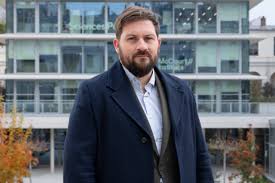
Cyril Benoît’s research focuses on how political institutions shape economic outcomes. His work examines these dynamics across advanced democracies using both qualitative and quantitative methods. He has held visiting appointments at leading research institutions in the United Kingdom and the United States. His current research explores the political economy of welfare state transformation, the ways legislative and regulatory processes channel resources to privileged actors and shape inequality and market power, and how institutional transparency and political favoritism affect democratic accountability.
Contact
- Academic advisor: Claudia Castiglioni
- Academic assistant: Delphine Schittone