Home>Hub hosts ITU & UNDRR Critical Digital Risks Workshop
15 April 2026
Hub hosts ITU & UNDRR Critical Digital Risks Workshop
On April 28, 2025, the Iberian Peninsula suddenly experienced a near total power blackout, leading to cascading failure of, among others, digital infrastructures that have become essential to our modern daily lives. This event, deemed to be the “first of its kind” by the European Network of Transmission System Operators for Electricity, may have costed hundreds of millions of euros to the Spanish and Portuguese economies, and at least seven direct or indirect casualties.
Such an exceptional event has been a painful reminder of the existing gaps in preparedness for the potential systemic failure of infrastructure, especially digital infrastructure we are growing increasingly dependent on. Are these gaps the result of political constraints or technical limitations? How can stakeholders build capacity to respond to complex, multidimensional crises across borders? And which values and sectors must hold priority in moments of systemic disruption?
Held on 30–31 March in Sciences Po, the Critical Digital Risks workshop marked the culmination of a multi-stage expert engagement process supporting an ongoing research project conducted in partnership between the PSIA Tech and Global Affairs Innovation Hub, the International Telecommunication Union (ITU), the United Nations Office for Disaster Risk Reduction (UNDRR). It brought together a group of experts from international organisations, academia, the private sector, and government to contribute to the elaboration of a comprehensive framework mapping digital infrastructure risks and outlining applicable preparedness strategies addressing critical digital risks.
This process began with a comprehensive review of the existing literature prepared by Jan Verlin (affiliated to the CSO-hosted CRISIS Lab), which identified systemic risks to digital infrastructures, existing approaches to preparedness and disaster response, to then outline key blind spots. Subsequent online workshops and in-depth individual interviews enabled structured dialogue, during which a strong consensus emerged across individual expertises: systemic risks are underexplored, require complex answers, and the most pressing barriers are not purely technical. Each stage of this research process, under the academic guidance of Jan Verlin, clarified priority risks and outlined recommendations across prevention, response, and recovery.

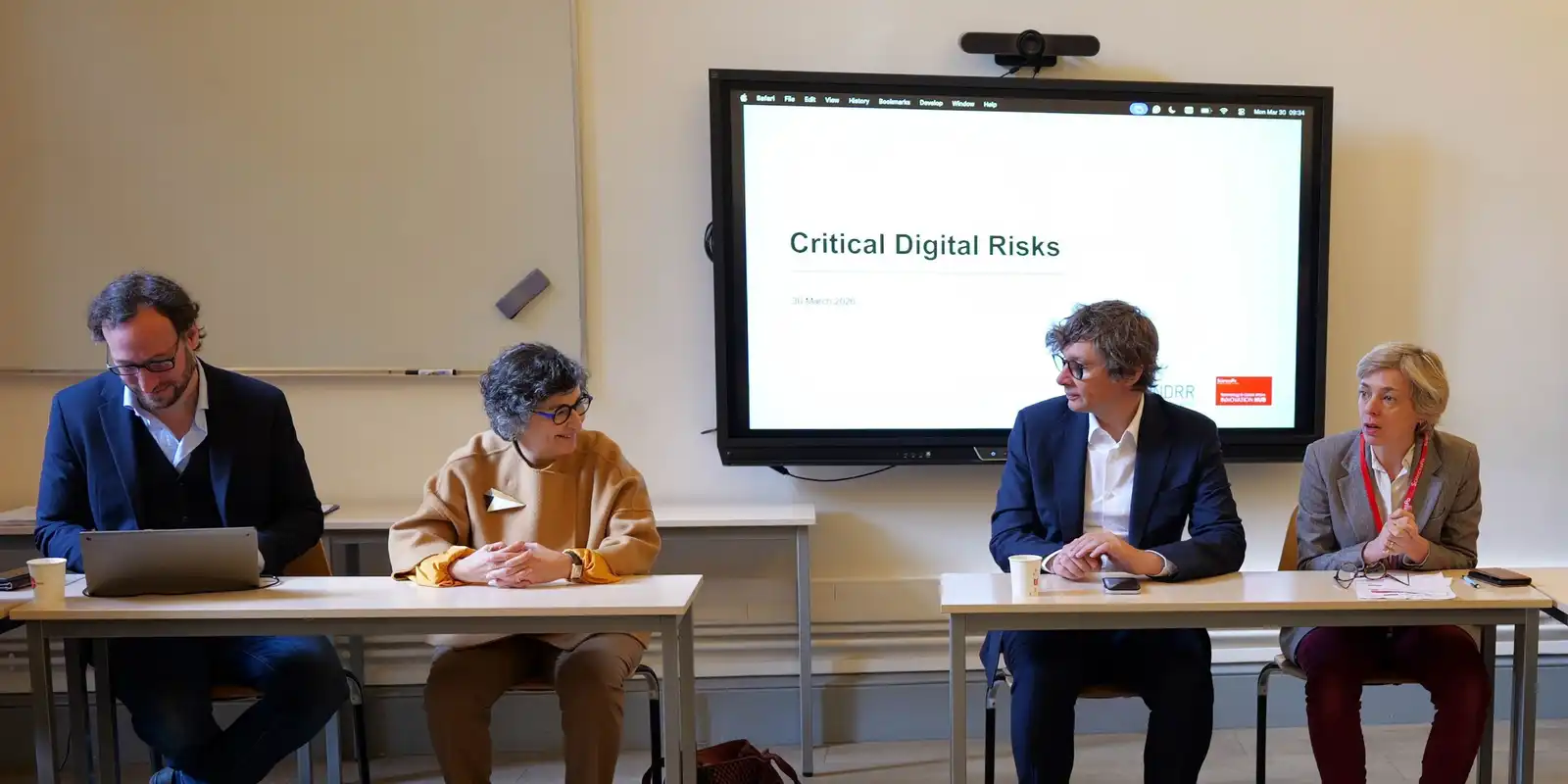
The in-person workshop, opened by introductory keynotes from Doreen Bogdan-Martin (Secretary General of ITU) and Kamal Kishore (Head of UNDRR) and a discussion between Arancha González Laya (Dean of PSIA) and Tomas Lamanauskas (Deputy-Secretary General of ITU), was the opportunity for participants to collaboratively discuss responses to realistic scenarios simulating compounding crises. They combined their expertise, sectoral focus, and regional point of view with prior findings from the working group into concrete, prioritised recommendations that were then discussed to outline points of convergence across scenarii.

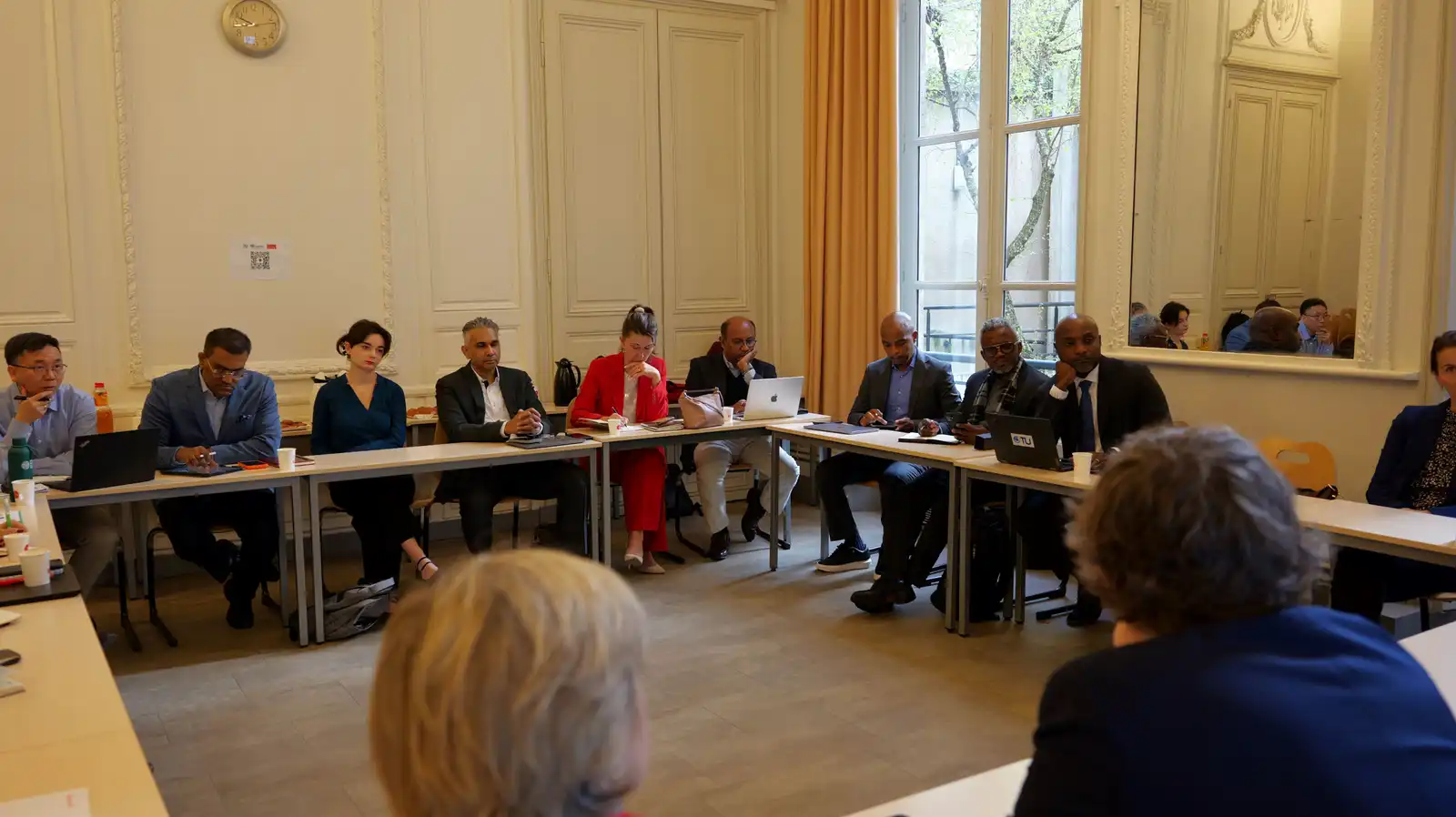
Special guests' contributions throughout the workshop allowed deep dives into specific risk domains. Andrés Fígoli (ITU) highlighted the fragility and geopolitical significance of submarine cable networks, while Jorge Ciccorossi (ITU) addressed the emerging risks linked to space debris and satellite infrastructure. Professor Dr James Peter Burgess offered a broader perspective on the material and societal dimensions of critical infrastructure.
Another distinctive feature of the workshop was the active involvement of Sciences Po students, especially from PSIA's Tech & Global Affairs and Global Risks masters, who prepared some contributions over the previous weeks and engaged directly with experts. Tasked with identifying and structuring the potential impacts of large-scale digital crises, students reflected on how policy recommendations could be implemented in practice. Their presentations created a valuable exchange, broadening the conversation, allowing for immediate feedback from practitioners, and reinforcing the link between academic analysis and real-world application.
The outputs of this process will form the empirical and normative core of a high-level report to be published in May 2026. This report will offer a set of validated compound scenarios alongside a prioritised framework for action.
For the Tech and Global Affairs Innovation Hub, this initiative reflects an ongoing commitment to advancing the multilateral and multistakeholder governance of digital infrastructure to foster better coordination across sectors and actors, at the service of global stability.