
Home>DIGILAW Clinic Students Visit BEUC: Generative AI, Consumer Protection and EU Enforcement
11.12.2025
DIGILAW Clinic Students Visit BEUC: Generative AI, Consumer Protection and EU Enforcement

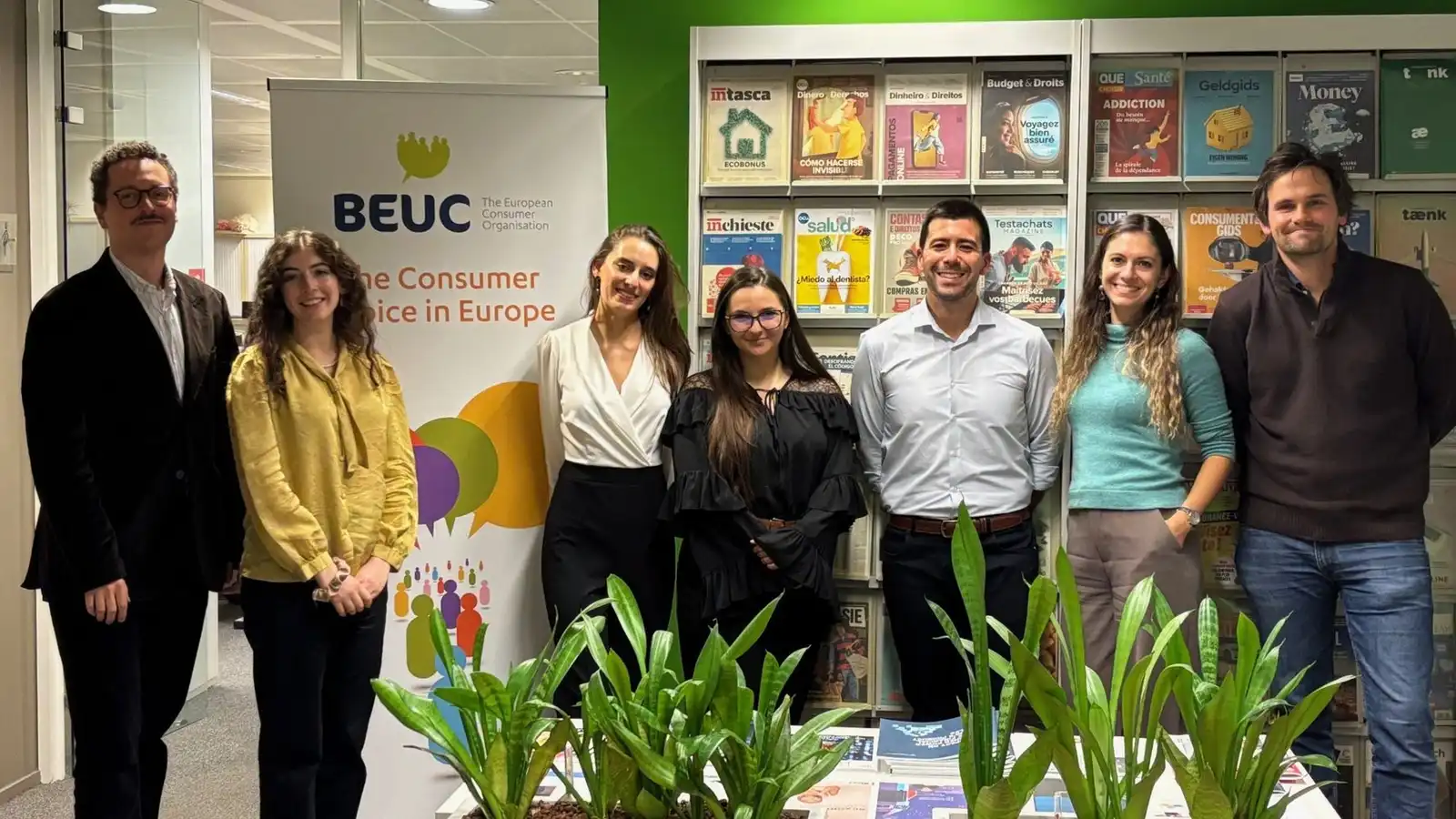
On 6th November 2025, students from the DIGILAW clinic programme visited the European Consumer Organisation (BEUC) in Brussels, as part of their clinic project “Generative AI and consumer protection”. The session was structured around the presentation of the students’ mid-term report and project findings to date, followed by an in-depth discussion with BEUC’s legal and policy team on how these insights can support enforcement and advocacy at the European Union (EU) level.
The DIGILAW clinic programme’s research on generative AI and consumer harms
The Sciences Po delegation, composed of DIGILAW clinic students: Tamara Bivol, Héloïse Croisille, Jenna Kaplan, under the supervision of Liubomir Nikiforov (clinic project tutor) and coordinated by Klaudia Klonowska and Anamaria Muñoz (course instructors/coordinators of the DIGILAW clinic programme), presented a comprehensive overview of their ongoing research on AI companion chatbots, deployed in consumer contexts.
Their work combines desk research and doctrinal analysis with structured testing of commercially available AI companions, focusing on how these systems respond to signs of vulnerability, emotional distress, risky behaviour or dependency. The mid-term report examined the role of potential dark patterns, how AI companion business models might qualify under the AI Act and UCPD, including risks of manipulative, misleading or aggressive practices, and the overlaps, tensions and gaps between consumer law, data protection law and platform accountability rules.
Exchange with the partner: BEUC
The BEUC’s team provided feedback grounded in their broader work on AI, digital fairness and coordinated enforcement by national consumer organisations. The discussion focused on how the DIGILAW clinic programme’s empirical findings and legal analysis can support strategic complaints and enforcement actions at national and EU level, inform future guidance and policy positions on AI companions and high-risk AI uses, and help refine evidence-collection methodologies, including the documentation of manipulative interfaces, escalation patterns and responses to vulnerable users.
The exchange also highlighted practical challenges in applying existing rules to rapidly evolving AI services, such as questions of jurisdiction, attribution of responsibility in complex value chains, and evidentiary standards for proving manipulative design or exploitative targeting. Particular attention was paid to users in situations of vulnerability (e.g. minors, people experiencing loneliness or emotional distress) and to the need for enforcement strategies that centre these groups rather than treating them as an afterthought.
Next steps until March 2026
In the next phase of the project, the DIGILAW team will refine and expand their testing framework for AI companions and other generative AI services, further develop their legal mapping of applicable EU instruments, identifying areas where enforcement is possible under current law and where regulatory gaps persist, and translate their findings into concrete recommendations and practical tools (e.g. checklists, testing protocols, case-building templates) that can be used by BEUC and national consumer organisations.
The final report will consolidate both the legal analysis and the empirical evidence gathered throughout the clinic, with a view to supporting ongoing and future actions aimed at ensuring that AI-driven consumer services in the EU respect consumer rights, data protection and fundamental values.
This year’s DIGILAW-BEUC collaboration illustrates the value of practice-oriented, interdisciplinary legal education in the field of AI governance. By bringing together students, practitioners and experts around real-world regulatory challenges, the project contributes to the broader European debate on how to make generative AI systems not only innovative, but also fair, safe and accountable.
