


Home>The Clinic>Environmental justice and ecological transition (jete)
The Clinic: Environmental justice and ecological transition (jete)
The purpose of the « Environmental Justice and Ecological Transition » (JETE) clinical course at the Sciences Po Law School is to introduce students to the great diversity of initiatives that use the law as a tool to resist environmental injustices and to transform our ecological and political systems at the local, national and transnational levels.
Based on a committed and transdisciplinary teaching method, it aims at providing students with the means to actively participate in this broad movement for the transformation of our societies, and to take a critical look at it in order to understand its limits and tensions.
Built in two phases, the JETE course will focus in the first semester on the current trend towards the development of environmental and climate litigation in France and around the world, and on certain emerging themes in international environmental law such as the recognition of the crime of ecocide or the (controversial) recognition of the "rights of nature". In the second semester, the course will focus on legal issues associated with ecological transition presented through the examination of concrete case studies.
Pedagogical team
The JETE clinic programme is taught in French and coordinated by :
- Aurélien Bouayad, course co-lecturer for the second semester and tutor
- Inès Bouchema, course co-lecturer for both semesters and tutor
- Sonia Fodil-Cherif, course co-lecturer for both semesters and co-coordinator of the JETE clinic programme for the second semestre
- Camille Fromentin, course co-lecturer for both semesters, co-coordinator of the JETE clinic programme for the second semestre and tutor
- Alice Messin-Roizard, course co-lecturer for the first semester
- Anaïs Morin Guerry, course co-lecturer for the second semester, coordinator of the JETE clinic programme for the first semester and tutor
- Luca d'Ambrosio, lecturer of the required JETE course
- Léa Charbonneau, tutor
- Manolo Clearc'h, tutor
- Morgane Fouillen, tutor
- Juliette Minjon, tutor
- Laura Monnier, tutor
- Mathieu Rateau, tutor
Projects 2025-2026
This year, the students of the Sea Legal Rise II project are working on a research paper, in collaboration with two researchers of the Euro-Mediterranean Center on Climate Change (CMCC Foundation), they are studying the issue of evidence and conflicts of truth and how it can force a transformative change of the law in order to respond to the challenges of climate litigation.
By producing a qualitative study of more than 10 cases of climate litigation, the project aims to understand how courts recognize and acknowledge mobilized knowledge as evidence in cases concerning environmental and climate-related harms in coastal regions in European climate litigation.
- Partner: Euro-Mediterranean Center Climate Change (CMCC Foundation)
- Tutor: Mathieu Rateau
This project lies at the intersection of environmental injustice and antisiganism, focusing on the cumulative effects of land use policies on people living in mobile homes. It aims to document how legal standards in urban planning and the environment can, under the guise of neutrality, produce systemic forms of exclusion of Travellers.
In line with its previous investigations, the ANGVC wishes to produce quantitative and qualitative data to shed light on the dynamics of integrating Mobile Residences constituting Permanent Housing (RMHP) into local policies. The inclusion of all types of housing in the 2014 ALUR law had raised hopes for better consideration of people living in mobile housing, particularly Travellers. However, more than ten years later, the situation remains largely unchanged. The integration of this type of housing into local areas is hampered by multiple legal and administrative barriers, particularly with regard to urban planning documents, the regulation of Travellers' parking – whether in designated areas or off-site parking – and settlement on private land.
A national study conducted by the ANGVC in 2012 among local authorities, via questionnaires, revealed that more than 95% of them imposed an absolute and general ban on caravans in their urban planning documents, thus creating territorial exclusion and a legal vacuum for the people concerned.
- Partner: Association Nationale des Gens du Voyage Citoyens (ANGVC)
- Tutor: Aurélien Bouayad
- Partner: Institut de la Transition foncière
- Tutors: Inès Bouchema and Camille Fromentin
The project, conducted in partnership with ClientEarth for the period 2025-2026, continues the characterization of "Climate Framework Laws" carried out last year based on European cases, by studying the climate law of Central African states. After identifying climate laws across the board to compare their substantive and procedural elements, the clinical project team is attempting to understand their effects through the study of two typical areas of application: the regulation of the mining industry and carbon markets, analyzed comparatively between Gabon and the Republic of Congo using interviews.
- Partner: ClientEarth
- Tutors: Anaïs Morin Guerry, PhD and Léa Charbonneau
The project “The forest delights us”" explores the legal challenges of setting up agroecological farming in forest areas. At the crossroads of rural, forest and environmental law, this farming activity raises numerous questions. What counts as a forest? What status does the landowner hold, and what constraints will apply to their activity? Could “agricultural forests” emerge and develop in France?
According to the FAO, farming causes 90% of worldwide deforestation, and half of France’s forests are monocultures. This work thus analyses, through the study of a real-life case, the potential of a new farming model that reconciles food production, nature protection, and economic and social viability.
- Partner: SAS Matlot
- Tutor: Juliette Minjon
This project—through legal research and interviews with key stakeholders—analyzes how the ecological emergency is reshaping the rights, obligations, and freedoms of civil servants. It aims to understand how the statutorily imposed principles of neutrality, loyalty, and discretion can coexist with the growing obligation to take environmental considerations into account in public decision-making.
This study thus sheds light on the scope of action available to civil servants, the legal tools that can be mobilized, and the limits imposed by the disciplinary and judicial framework. It also addresses protection mechanisms, particularly those relating to whistleblowers, as well as the disciplinary and legal risks associated with civil servants' environmental expression or engagement.
- Partner: Le Lierre
- Tutor: Laura Monnier
Cloud seeding is a technology aiming to alter the normal course of rainfall by spraying chemical compounds into clouds. Even if it has been used in France and worldwide for decades, sometimes frequently, there is hardly any political discussion surrounding this practice, to the extent that regulations on the subject are barely existent. To raise awareness on this matter, the International Cloud Day was created in 2022, by Mathieu Simonet, who invites everyone to observe the clouds and write down what they see on the 29th of March each year.
For the first year of collaboration with the Law School Clinic, the project’s main target is to take the necessary steps for the International Cloud Day to be recognized by UNESCO.
The project combines both research and action. The research aims to highlight the numerous scientific, geopolitical, cultural and legal issues involved in cloud preservation, to connect these issues with UNESCO’s area of expertise and to identify the different procedural stages of the recognition of international days by this UN agency. The actions undertaken aim to consolidate the support network for this initiative by contacting various actors involved in the recognition process, from civil society to delegations representing UNESCO Member States.
- Partner: La société des nuages
- Tutor: Manolo Clearc'h
This project lies at the intersection of law and sociology. It aims to question and understand the factors that influence judges' decisions to acquit when faced with cases of environmental civil disobedience: the methods used by activists, the arguments put forward by the prosecution and the defence, the case law of the Court of Cassation, the judges' level of knowledge the climate crisis, etc.
Thanks to data collected by the MSDE association, which, since its creation, has been collecting data on these trials throughout France, the students first draw up an inventory of the judicial repression of environmental disobedients in France (by date, by jurisdiction, and by type of activist action taken), before conducting interviews with criminal court judges to question their perception of these hearings and the reasons for the acquittals handed down.
- Partner: Mouvement de Soutien aux Défenseur·es de l’Environnement (MSDE)
- Tutor: Morgane Fouillen
PFAS and the Chemical Valley: students' clinical experience

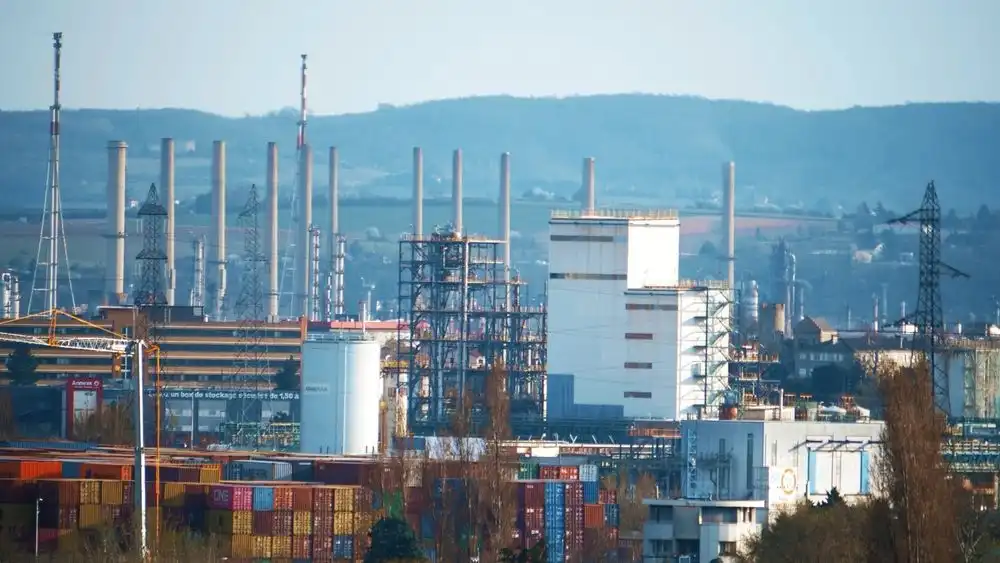
A project led by Aimée Boukandja-Beaudeux and Connor Milton, supervised by Philippine Garrigue, within the Environmental justice and ecological transition (JETE).