


Home>The Clinic>Human rights, economic development and globalization (hedg)
The Clinic: Human rights, economic development and globalization (HEDG)
The Human Rights, Economic development and Globalization (HEDG) clinic programme focuses on issues relating to the promotion, protection and realization of human rights, the responsibility of actors in globalization and economic development, and on sustainable and equitable development.
As part of this programme, students follow a clinic course in relation to these themses, and consisting of intensive training, both theoretical and practical. In addition to this course, students spend time working as a team on a clinic project. Project work is carried out on behalf of a partner : NGOs, judicial and quasi-judicial institutions, international or professional organizations or even law firms specializing in issues related to human rights and economic globalizationon a transnational scale and in developing countries. The work produced by the students takes various forms : reports, memoranda, guide books and practical tools, or even advocacy tools or amicus briefs. Each team is supervised by a tutor who supports and guides the students in their work throughout the year.
The HEDG clinic is open to second year students enrolled on the Master in Economic Law and to first year PSIA masters students. It benefits from regular interventions from professionals working for associations, NGOs, international organizations, law firms and the business world.
Curriculum development and pedagogical support for the RISE and HEDG clinic programmes falls under the supervision of Professors Jeremy Perelman and Horatia Muir-Watt.
Pedagogical team
The HEDG clinic programme is taught in English and coordinated by :
- Sylvain Aubry, course co-lecturer
- Lucie Chatelain, course co-lecturer
- Sandra Cossart, course co-lecturer
- Katharina Rall, course co-lecturer and HEDG clinic coordinator
- Gabrielle Genser, teaching assistant and tutor
- Gabriel Araujo, tutor
- Dorothea Boettcher, tutor
- Hina Fathima, tutor
- Philippine Garrigue, tutor
- Dorcas Goabga, tutor
- Margaret Harris, tutor
- Christos Zois, tutor
Projects 2025-2026
Comprehensive sexuality education (CSE) is the international term for curriculum-based teaching that provides children and young people with knowledge, skills, and values that will equip them to realize their health, well-being, and dignity; develop respectful social and sexual relationships; and understand and ensure the protection of their rights throughout their lives. The right to CSE stems from a combination of the rights to education, health, information, science, non-discrimination, and freedom of expression.
The human rights consequences of inadequate sexuality education are dire: children are denied lifesaving information about their bodies, health, identities, and rights, including crucial information about discrimination, consent, and healthy relationships. Children whose rights are already jeopardized by structural discrimination, including girls and LGBT children, are disproportionately harmed. Concerted attacks on CSE also have a detrimental impact on parents, teachers, and civil society, including defenders of women’s rights, LGBT+ rights, and child rights.
Authoritarian and populist leaders around the world are attacking children’s right to CSE for political gain. Backed by fierce, well-funded, and coordinated anti-rights actors, policymakers and officials in many countries and regions, and across multilateral fora, are using disinformation and censorship to weaken and ultimately prohibit teaching a rights-based sexuality curriculum, as part of broader “pro-family,” “parental rights,” so-called “public morality”, and “anti-gender” movements. Anti-CSE advocacy has become part of the authoritarian playbook in various contexts and coincides with broader attacks on civil society, the rule of law, and the separation of powers.
Human Rights Watch has been building a body of research for years, looking at the human rights consequences of inadequate sexuality education. These country and issue-specific projects have had an individualized and important impact. They have also affirmed the growing strength of a global opposition movement purporting to “protect” children by undermining CSE and depriving children of the information and tools they need for their safe and complete development. This year will see the beginning of a new global project that will build on existing work and help bring attention and visibility to CSE, as described below.
The goal is to help bring visibility and public attention to UNESCO’s country-level research on the right to CSE worldwide during a time when they are navigating funding cuts and attacks from the Trump administration.
Building on work carried out by a children’s rights intern in July and August 2025, students will use a set of human rights indicators to review some 100 countries’ efforts on CSE at the national level. The intern developed a preliminary list of indicators and a model for evaluating them. Students will review and discuss this model, refine it as needed, and review UNESCO’s profiles on ~100 countries to evaluate their overall efforts on CSE. Human Rights Watch will publish this analysis online as an interactive index (similar to an interactive index on pregnant and parenting adolescents in Africa and an index on corporal punishment in the Middle East and North Africa) that provides a comprehensive snapshot of the status of the right to CSE globally.
The project’s first part consists of finalizing the database with all countries and indicators according to the UNESCO survey, using tables and finding a quantifying value for each indicator we want to score. The second part of the project involves visualizing the index through maps and other tools, while developing an advocacy and PR campaign.
- Partner: Human Rights Watch
- Tutor: Dorcas Goabga
Despite banning the use of many hazardous pesticides within its territory, the European Union continues to allow the production and export of these same substances to third countries, predominantly in the Global South. This regulatory inconsistency has contributed to the large-scale export of chemicals recognised as harmful to human health and the environment. Although the European Commission committed, in its 2020 Chemicals Strategy for Sustainability, to ending such exports, no concrete regulatory or legislative measures have followed to date. As a result, a significant policy gap persists between the EU’s internal standards and its external practices.
Since 2019, a coalition of European non-governmental organisations (the End Toxic Pesticide Trade Coalition), including ActionAid, the Veblen Institute, PAN Europe, Public Eye, Corporate Europe Observatory, and others, has been actively engaged in political advocacy to close this policy gap. As part of this broader effort, the coalition now seeks to explore whether legal action at the European and, where relevant, international level could be used to challenge the EU’s current export policy.
The primary outcome of the project is a research report identifying and assessing the legal avenues most likely to succeed. Students analyse whether existing EU law, particularly in the fields of public health, environmental protection, food safety, and trade, can be mobilised to contest the legality or coherence of the EU’s export regime. The project also considers complementary international and human-rights-based avenues, including engagement with UN mechanisms, where these may reinforce litigation or advocacy strategies.
- Partner: ActionAid and Veblen Institute
- Tutor: Gabriel Araujo
The international legal landscape is currently undergoing a transformation through the introduction of multiple advisory proceedings on climate change. By July 2025, the International Court of Justice (ICJ), the International Tribunal for the Law of the Sea (ITLOS), and the Inter-American Court of Human Rights (IACtHR) have all issued landmark advisory opinions on the obligations of states under international law and human rights in the context of the climate crisis. These advisory opinions have already started acting as interpretative guidance for States in relation to climate change and their normative value is expected to grow even more in the following years turning international legal pronouncements on actionable domestic and regional climate policy. Additionally, a fourth advisory opinion is expected to be delivered by the African Court of Human and Peoples’ Rights (ACtHPR) within the next year further strengthening the normative matrix regarding the climate obligations of States.
In parallel, there is growing momentum from civil society—especially youth movements— who are turning to courts to hold states accountable through litigation for their lack of climate action. The advisory opinions issued by the various international courts have engaged in a holistic understanding and explanation of the co-existence between many existing treaties on the environment and biodiversity, such as the Paris Agreement, the Convention on Biological Diversity, the BBNJ Agreement, and regional instruments like the Escazú Agreement which often suffer from a lack of enforcement mechanisms, legal clarity, or ambitious interpretation. This way the courts have provided a strong basis of determining the existing legal obligations of States while also serving as an invitation to reinterpret and strengthen the implementation of international climate and environmental agreements and creating a fertile ground for crafting new arguments for the protection of climate.
The World’s Youth for Climate Justice (WYCJ) is a global youth-led movement that brought the challenge of climate change before the world’s highest court, the International Court of Justice (ICJ). WYCJ has played a central role in the successful campaign for the ICJ advisory opinion. They have mobilised youth across Africa, Asia, Europe, Latin America, the Caribbean, and the Pacific, and collaborated with civil society to support state and public participation in this historic process, culminating in the ICJAO hearings in December 2024. As the process is entering the next phase, the focus shifts to the implementation and impact of advisory opinions from the ICJ, the Inter-American Court of Human Rights, and the International Tribunal for the Law of the Sea. WYCJ aim to ensure youth initiatives and processes remain central through advocacy, capacity building, storytelling, and strategic litigation. With the latest UNEP report warning that current policies could lead to a 3.1°C rise, the consequences for vulnerable communities—especially youth—are dire. WYCJ continues to push for accountability and action, ensuring international legal obligations are upheld.
Against this background of dynamic developments, the project tries to determine the potential impact of the advisory opinions on three jurisdictions, namely Chile, Brazil and France. The students will be called to focus on analysing national legal and policy frameworks, identifying to what extent such frameworks adhere to the international obligations as clarified by the advisory opinions, and exploring how these upcoming and existing advisory opinions can serve as catalysts for climate action, in the context of national advocacy, strategic climate litigation, and international negotiations. In cooperation with the partner organisation, the students will examine to what extent these advisory opinions on climate change can serve as legal foundations for youth-led strategic litigation in the selected jurisdictions and what the feasibility of and risks associated with such actions are.
- Partner: World's Youth for Climate Justice
- Tutor: Christos Zois
Since 2022, pollution from per- and polyfluoroalkyl substances (PFAS) has emerged as a major public health and environmental protection issue in France, highlighting a significant lag compared to the United States. Used for decades in numerous everyday products, these fluorinated chemicals, described as "perennial pollutants" due to their extreme persistence, cause long-term contamination of water, soil, air, and the food chain. Present in the bodies of the entire French population, PFAS are associated with serious health risks, particularly as endocrine disruptors.
For several years, the association “Notre Affaire à Tous” has been conducting in-depth research on PFAS, in partnership with residents' associations in southern Lyon and public health stakeholders. These actions initially focused on the urgency of the situation: controlling industrial discharges, holding polluters accountable, and the need for more ambitious regulatory frameworks.
However, as this work progressed, a central question emerged: the attitude and responsibility of public authorities, both at the local (regional health agencies, DREAL, prefectures) and national levels, in the face of a pollution phenomenon that has been documented over a long period of time. In 2025, this issue was raised at the international level, notably by the United Nations.
Continuing this work, this clinic project aims to dedicate in-depth analysis to the responsibility of public authorities in managing this health and environmental scandal. The objective is to examine the role of the State as regulator of economic activities and guarantor of the protection of water resources and public health, through the preparation of a report intended to inform public debate.
- Partner: Notre Affaire à Tous (NAAT)
- Tutor: Philippine Garrigue
The project aims to strengthen the understanding of the right to education by contributing to the development of a dedicated UNESCO case law database focused specifically on this right.
As part of the project, students actively contribute to the collection and analysis of judicial decisions related to the right to education. Their work focuses on the Europe and North America (ENA) and Asia-Pacific (APA) regions, covering case law across all levels of education, from primary to higher education. By examining national and regional court decisions, students assess how the right to education is interpreted, enforced, and operationalized in different legal contexts.
During the first semester, students will populate the database with relevant case law, conducted legal analysis, and identified emerging trends and patterns in judicial reasoning. The second semester builds on this foundation, with a focus on reporting and synthesizing findings, including cross-regional insights and thematic observations.
The ultimate objective of the project is to support the development of a global case law database on the right to education, led by UNESCO in partnership with multiple universities worldwide. By grounding this global initiative in rigorous, comparative legal research, the project contributes to translating the right to education from a normative commitment into a concrete and enforceable reality.
- Partner: United Nations Educational, Scientific and Cultural Organization (UNESCO)
- Tutor: Margaret Harris
The project with Ghett-Up, a community-based organization in Seine-Saint-Denis amplifying the voices of working-class and racialised youth, aims to investigate how climate change can contribute to poor or substandard housing and worsen existing problems in racialised communities. The project will focus on the Gabriel Peri neighborhood in Saint Denis (93200).
Ghett’Up offers students in-house workshops to familiarize them with the organisation, its research methodologies, and how to conduct community research. During the first phase, students will be conducting legal research and analysis, such as, what are the rights at stake and how is the problem of substandard housing discussed in legal cases in Europe. The next phase of the project will focus on interviewing government officials, academics, experts, followed by grassroots organizations working in Seine Saint Denis and residents of the Gabriel Peri neighbourhood. These findings, along with the legal analysis, will be presented in a report that will be used for bottom-up advocacy and building community awareness about climate injustice and substandard housing in Seine Saint Denis.
- Partner: GHETT'UP
- Tutors: Hina Fathima
The project addresses the growing global trend of shrinking civic space and the increasing criminalization of human rights and environmental defenders. As the Agence Française de Développement (AFD), together with its subsidiaries Proparco and Expertise France, plays an increasingly central role in France’s economic diplomacy, its operations in authoritarian contexts raise critical questions regarding compliance with the obligation to “do no harm” to human rights.
Carried out in partnership with CCFD-Terre Solidaire, the project aims to examine the practices and legal frameworks governing the development policies of AFD and its subsidiaries in repressive environments. It seeks to assess how these public actors identify and address risks of fundamental rights violations, particularly those affecting human rights and environmental defenders, and to explore whether effective duty of vigilance mechanisms apply to public development actors.
Throughout the 2025–2026 academic year, students will engage in legal and analytical research on existing regulatory frameworks and on selected development projects implemented in sensitive contexts. This work will contribute to a broader reflection on the human rights implications of public development action and on the contours of an appropriate duty of vigilance for public actors.
- Partner: CCFD-Terre Solidaire
- Tutors: Dorothea Boettcher
In conflict zones with minerals, armed groups finance international crimes through their illegal extraction, needed for the production of batteries, solar panels, and consumer electronics. The revenues from the mines directly support war crimes, including mass killings, sexual violence, and forced displacement.
Despite increasing regulatory obligations, actors along the mineral supply chain—including international commodity traders and downstream tech companies—continue to benefit from and facilitate this trade in conflict zones. Through purchasing, financing, or negligent sourcing, many of these actors remain insulated from legal accountability. Communities harmed by conflict-linked extraction rarely access reparations or redress.
This project seeks to examine how illicit profits derived from atrocity-linked supply chains can be frozen, seized, and confiscated and then redirected toward reparative justice. By connecting asset recovery to community reparations, the project fills a critical gap at the intersection of corporate accountability, conflict finance, and transitional justice.
This project is divided into three phases. First, students will work to identify profit-generating stages in the mineral supply chain in a specific conflict zone, controlled at its source by armed groups, mapping out the actors, human rights violations and illicit revenues. Second, students will focus on legal analysis and assess the applicable mechanisms under national law, including tort liability, devoir de vigilance, asset recovery mechanisms, and international frameworks through a case law review, identifying the best options for litigation. Finally, drawing from the factual and legal analysis, students will draft a legal submission calling for the redirection of conflict-linked corporate profits toward community reparations.
- Partner: LexCollective
- Tutors: Gabrielle Genser and Pierre Farcot
Past projects
- HEDG projects carried out in 2024-2025 (PDF, 136 Ko)
- HEDG projects carried out in 2023-2024 (PDF, 160 Ko)
- HEDG projects carried out in 2022-2023 (PDF, 155 Ko)
- HEDG projects carried out in 2021-2022 (PDF, 135 Ko)
- HEDG projects carried out in 2020-2021 (PDF, 125 Ko)
- HEDG projects carried out in 2019-2020 (PDF, 330 Ko)
- HEDG projects carried out in 2018-2019 (PDF, 261 Ko)
- HEDG projects carried out in 2017-2018 (PDF, 317 Ko)
Learning by Doing: Human Rights and Climate Change in Kenya

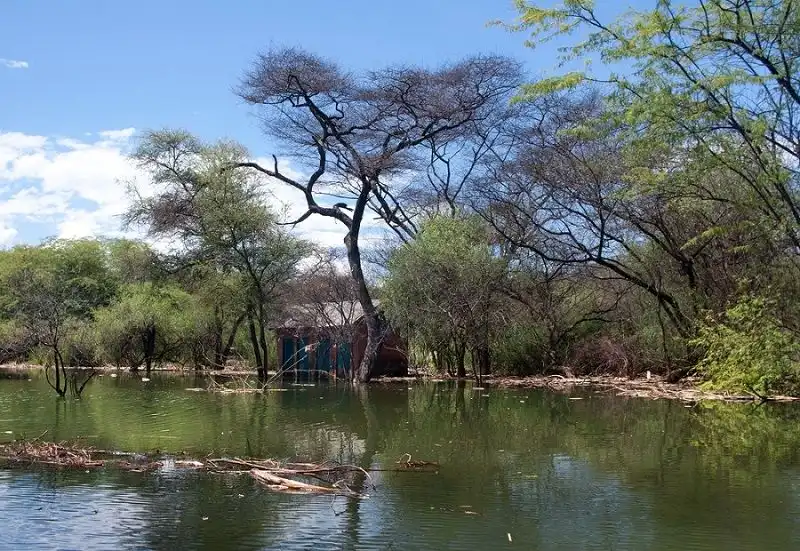
Three students collaborate with Human Dignity to document the impact of climate change on women’s right to health in Kenya and advocate at the United Nations level.
Meet Katharina Rall, coordinator of the Human Rights, Economic development and Globalization (HEDG)


As a coordinator of the clinic programme, Katharina oversees the academic and practical components of the clinical work.
A Case Study in Corporate Accountability in Mozambique

Casandra Arias Roux, Chiara Chiarelli, Mathilde Humen and Léo Ruesche Neggia share their experience with us.