
Home>Corporate Governance in a Complex Geopolitical Context
6 July 2026
Corporate Governance in a Complex Geopolitical Context
Managing a company within an ever-shifting environment is a daily challenge. To raise your awareness of the decisions you make, we draw on the power of social and human sciences through an expert lens, in the new Corporate Governance section of our newsletter.
In today’s era where geopolitical fracture lines are compounded with health crises and rising economic tensions, supervisory boards cannot afford to negate the role played by geopolitics.
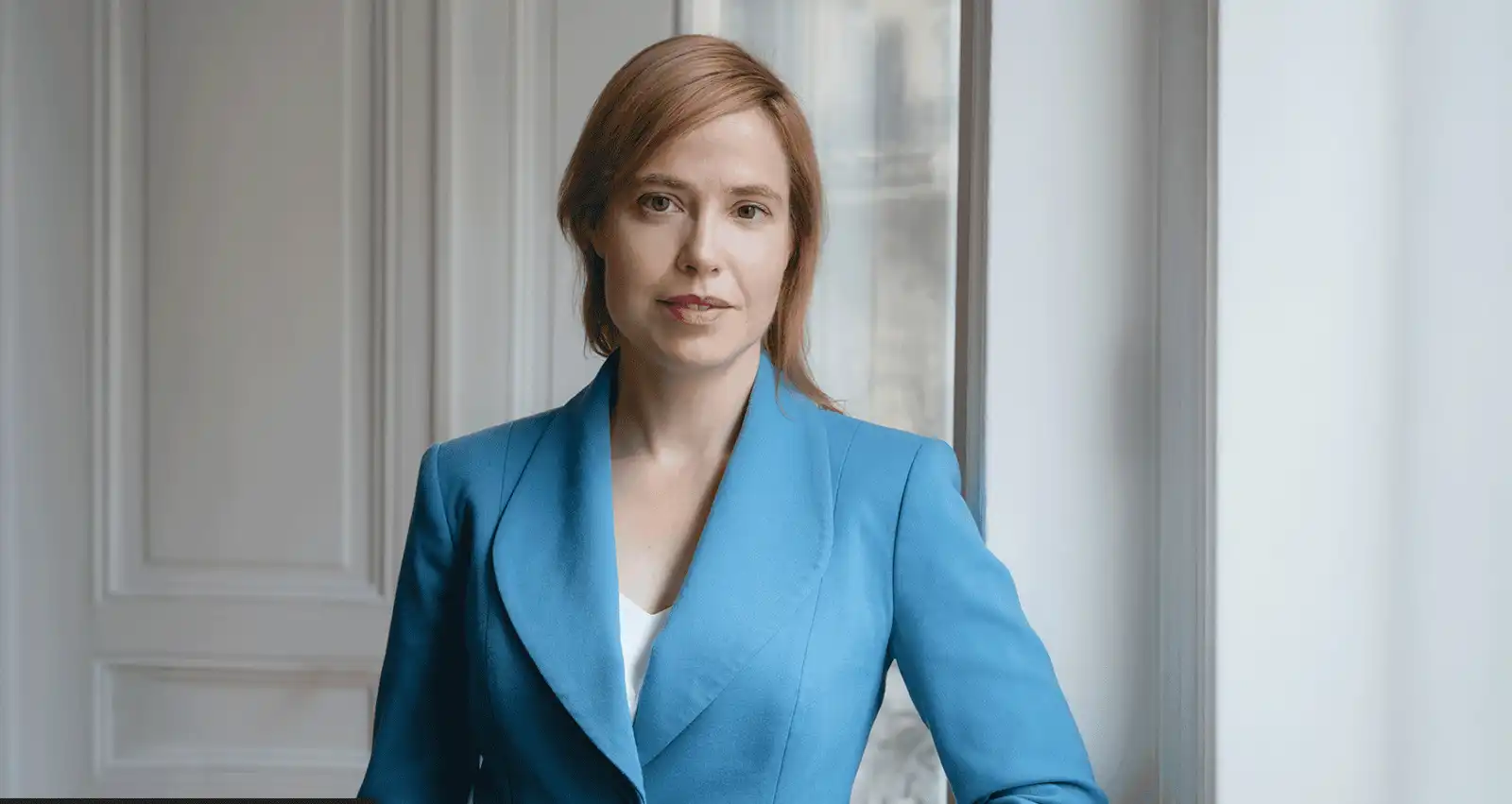
In this new edition, Dr. Alexandra de Hoop Scheffer, President of the transatlantic German Marshall Fund of the United States Think Tank in Washington, a trailblazing trainer and strategic supporter of directors and company boards on geopolitical risks, and leader of one of the Board Director Certificate’s modules co-developed by Sciences Po Executive Education and the French Institute of Directors (IFA), shares with us the leverage that bold geopolitical agility can provide in driving sovereignty and competitiveness.

Companies, new instruments of national sovereignty
Over the past few years, the line between economic interests and national security challenges has continually blurred, particularly in “strategic” sectors. Behind Europe’s dependence on Russian energies and American and Chinese technologies, the issues of state security, sovereignty and resilience have come to the fore, as has the competitiveness of businesses. As a result, governments are increasingly claiming the right to oversee key strategic decision-making within major groups - factory location, supplier choice, technological partnerships - forcing them to weave geopolitics into the fabric of their strategic decisions.
Dutch company ASML exemplifies this. Under pressure from Washington to limit the exportation of its most advanced lithography systems to China, while remaining dependent on a large Chinese market and American components, the Dutch Group had to revise its business strategy, divide its offering - between “cutting-edge” technologies and less sensitive equipment - and adapt its manufacturer network. This type of decision-making - straddling market access, alignment with allies and managing the risk of Chinese retaliation - shows how companies are becoming both vectors and levers of state power strategies.
Governing Under Ongoing Crises with Shortened Timeframes
The conglomeration of health crises, major regional conflicts and tensions between major powers has also obliterated strategic timeframes within companies. Steering is now taking place in a turbulent cockpit: risks have to be prioritised in real time, first protecting vital “internal reserves” to ensure business continuity (liquidity, cybersecurity, essential supply chains) while also agreeing to pend or temporarily drop some less critical “external reserves” (deferrable innovations, non-strategic markets, the implementation pace of certain ESG targets).
In practical terms, during Covid, many manufacturers chose to secure the procurement of their key components, by reallocating their budgets and temporarily pending product launches and non-vital geographical expansion to prevent the complete shutdown of their factories.
This prioritisation entails widening the supervisory boards’ perspective beyond pure economic and financial business. It is based on dynamic risk mapping that is regularly updated by audit, risk and strategy committees and on the board’s acceptance of the reversibility of decisions.


« Geopolitical Agility Has Become a Clear Competitive Advantage for Boards Exposed to Ongoing Crises. »
Dr. Alexandra de Hoop Scheffer
Board “Geo Decision-making”: Turning Risks into Opportunities
When leveraged well, geopolitical scenarios give companies a clear advantage in anticipating disruptions, adjusting their decision-making and becoming more responsive. To illustrate this, Michelin and General Motors use digital twinning of their supply chains to test crisis scenarios (closure of logistics routes, sanctions, component shortages, new regulations), to measure the cost impact and to relocate or diversify their sources, before the crisis breaks.
A growing number of European manufacturing giants are diversifying or locating their supply chains outside of China: duplication of capacities in central Europe, in the Mediterranean or Mexico, signing contracts with alternative suppliers in India or Southeast Asia, and building buffer stocks in the EU to reduce dependency on a single Asian hub and limit exposure to the ripple effect of sanctions or logistics disruptions.
Incorporating Geopolitical Expertise in Corporate Governance Foundations
Anchoring geopolitical intelligence in corporate governance first requires expanding the mandates of audit, risk and strategy committees. As is the case for financial and cyber risks, it is vital to incorporate geopolitical risks, critical interdependencies and disruption scenarios.
Boards can also draw on three additional levers. Firstly, expand how they are composed and trained: onboard individuals steeped in a true social sciences culture and introduce “area studies”, while also offering administrators regular training on topics including regional dynamics, authoritarian regimes, and the risk of sanctions to equip them to challenge management on these issues. Additionally, call on external experts and predictive tools (scenarios, war games, dependency network analyses) to drive strategic debate, rather than handle geopolitics as a simple “context slide”. Finally, a rising number of financial institutions and major groups are considering creating dedicated roles - Chief Geopolitical Officer, Chief Geopolitical Strategist or a “geopolitical intelligence” team - associated with the CEO or board, mandated with continually conveying geopolitical analysis into operational decision-making (investments, M&A, supply chain, establishment, communication).
Whichever model is chosen, the challenge is to incorporate geopolitical risk at all levels within the company, and make geopolitical agility instinctive when it comes to corporate governance. Sciences Po Executive Education’s programmes help with this by training administrators and leaders so that they are capable of making a connection between weak signals, megatrends and operational decision-making.
TO FIND OUT MORE
- Bright Insights, Episode 1 - 5 keys to impactful governance
- Bright Insights. Episode 2 - Five principales for building effective and legitimate boards.
- Bright Insights. Episode 3 - Should the Separation of Powers in Companies Be the Gold Standard?
- Bright Insights. Episode 4 - The CEO as a “total media” leveraging executive voice to shape influence and govern impact
- All our Governance programmes